Highlights
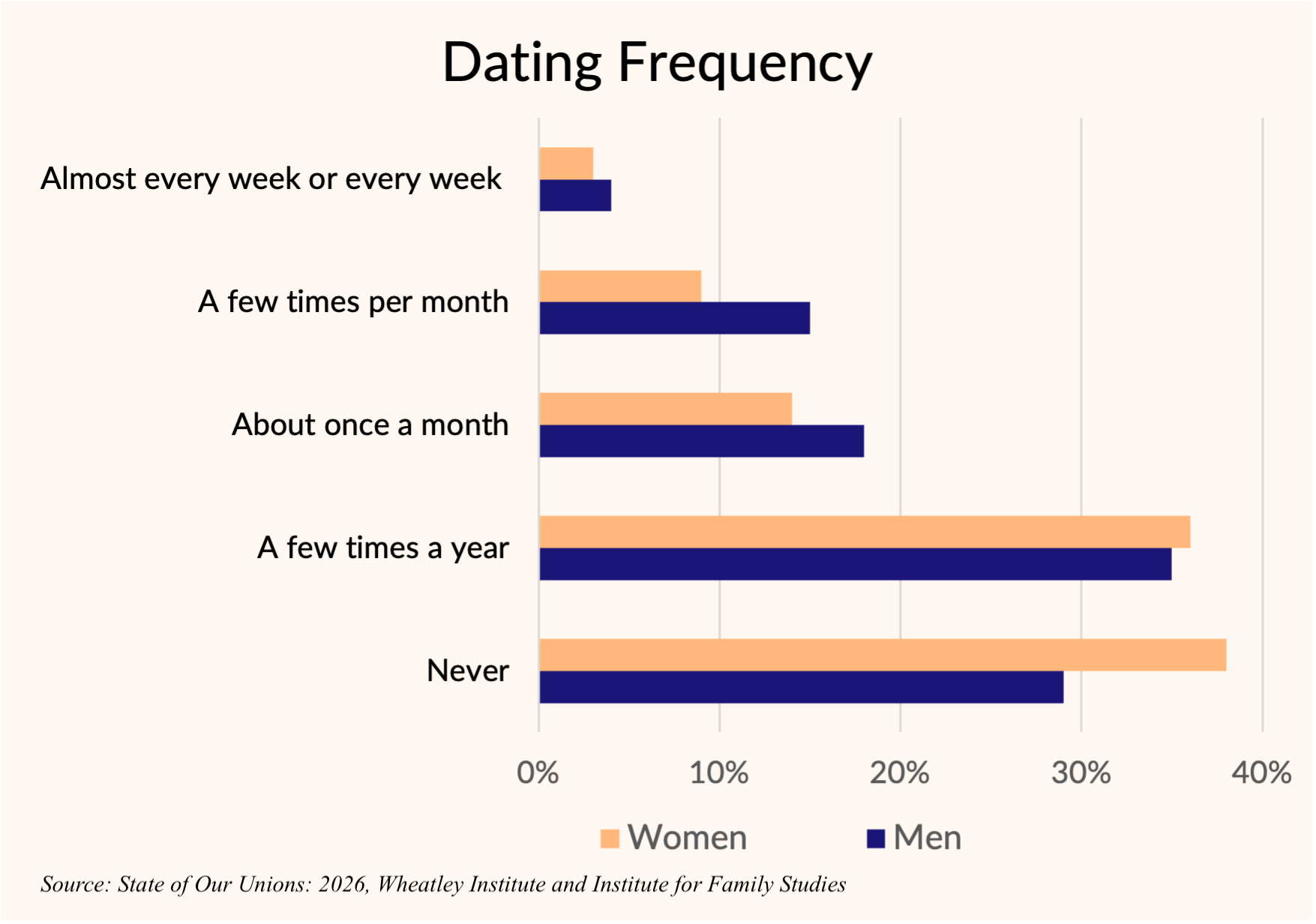
- Three-quarters of women (74%) and nearly two-thirds of men (64%) in our survey reported they had not dated or dated only a few times in the last year. Post This
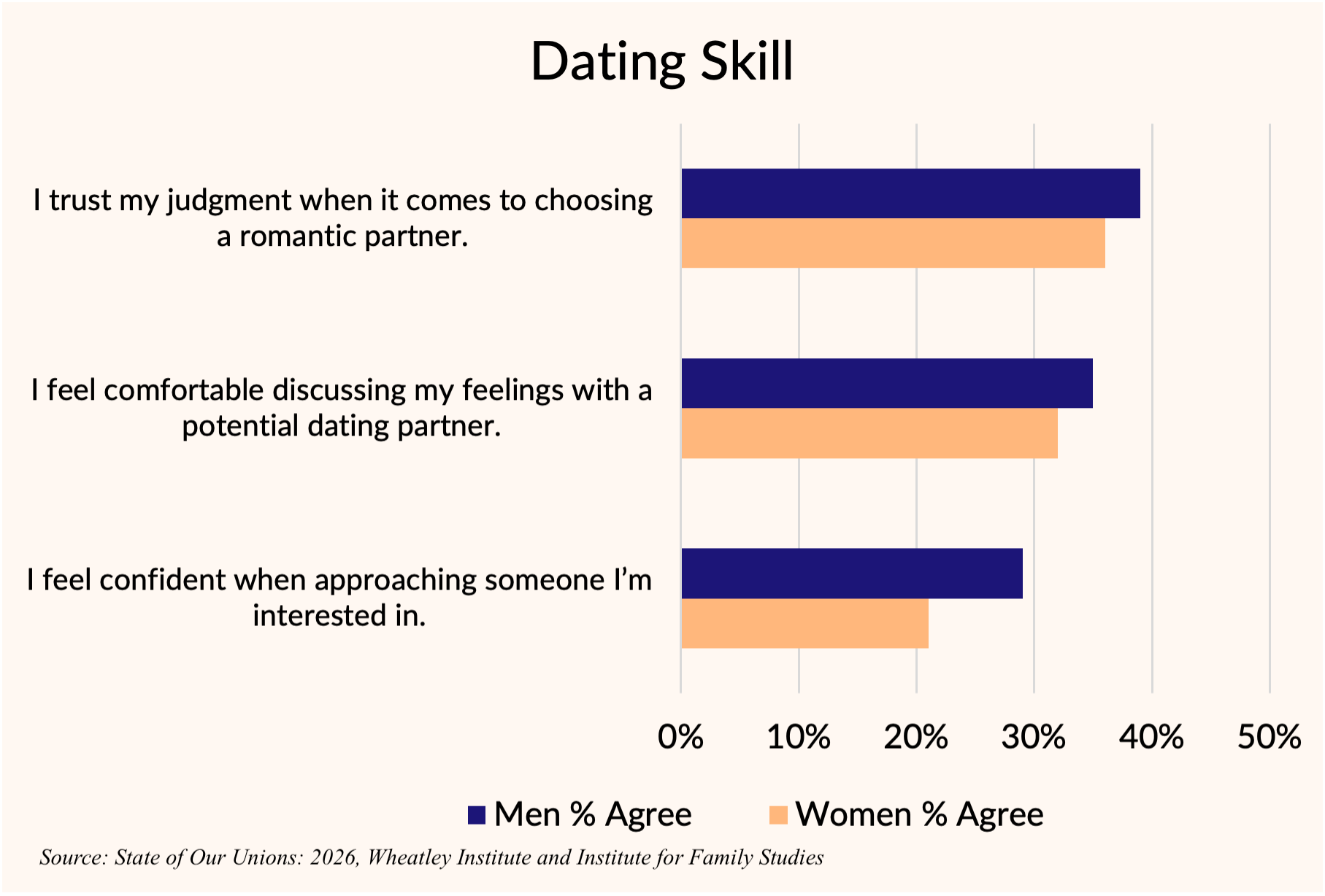
- Among the rising generation, dating confidence is low, with only about 1-in-3 young adults expressing much faith in their dating skills. Post This
- Young adults need effective road maps that guide them to and through the dating experiences that will connect their marital expectations to actual unions. Post This
Young adults today are living in a depressed dating economy. That is our conclusion after analyzing findings from the 2025 National Dating Landscape Survey, a nationally representative sample of 5,275 unmarried young adults in their prime dating years (ages 22–35) in the United States. Our analyses focused mostly on the dating experiences of those single young adults who expect to marry someday, or 86% of our sample. Our findings are detailed in the 2026 State of Our Unions report released today by the Institute for Family Studies and The Wheatley Institute. So, what did we learn?
Only About 1-in-3 Young Adults Report Actively Dating, Either Casually or Exclusively
When asked how often they were dating, only 31% of young adults—a quarter of women (26%) and a little more than a third of men (36%)—reported that they were active daters (dating once a month or more). So, three-quarters of women (74%) and nearly two-thirds of men (64%) in our survey reported they had not dated or dated only a few times in the last year. And only about half (51%) of these young adults expressed interest in even starting a relationship.
Young Adults Lack Confidence in Their Dating Skills
Among the rising generation, dating confidence is low, with only about 1-in-3 young adults expressing much faith in their dating skills. Less than 4-in-10 (37%) said they trusted their judgment when it comes to choosing a dating partner. A similar minority of young adults expressed confidence in their ability to discuss feelings with a dating partner (34%) and picking up on social cues on dates (36%).
Young Adults Desire a Dating Culture Aimed at Forming Serious Relationships
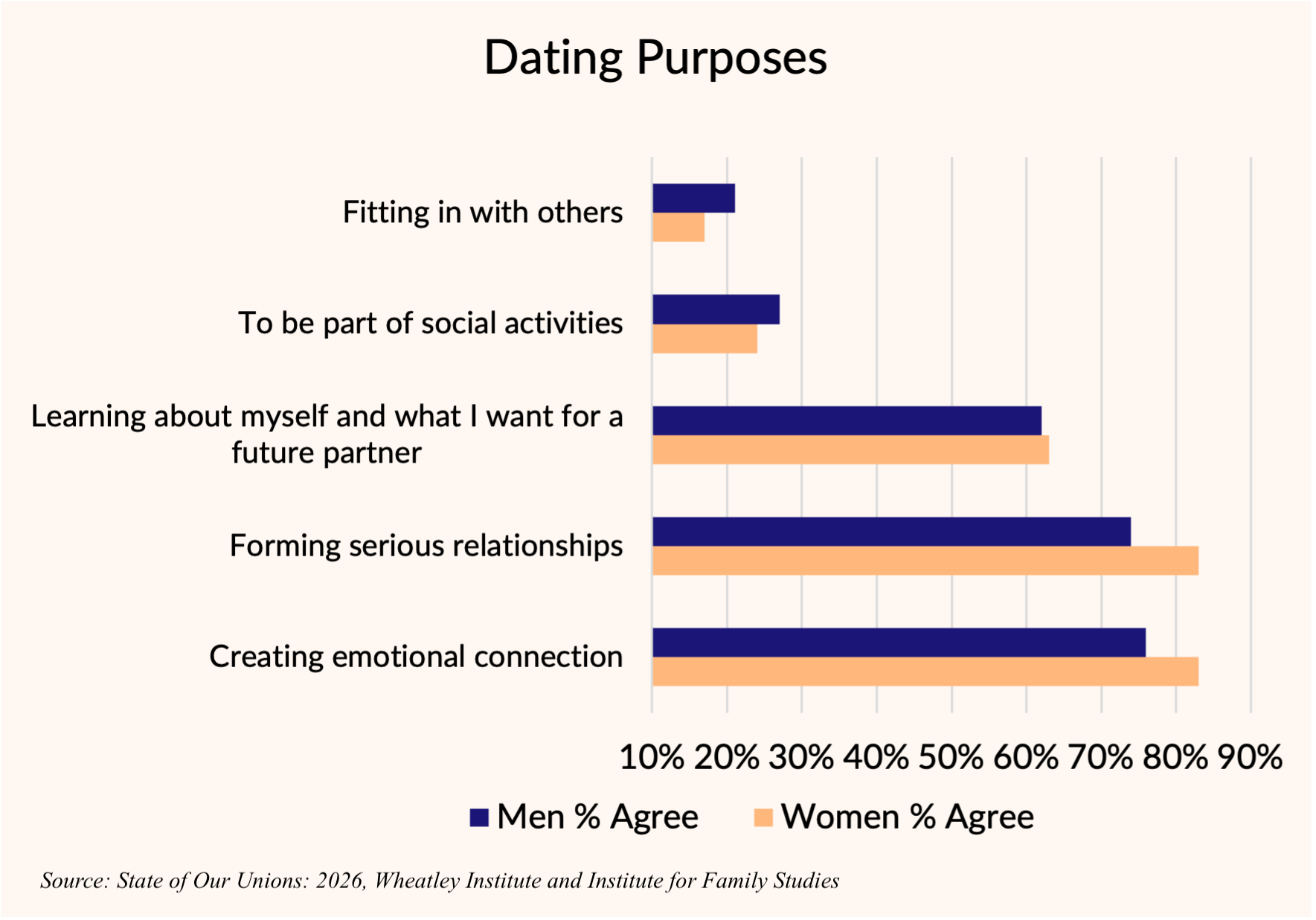
Despite a common narrative that young adults are only interested in casual dating and hooks-ups, we found that young adults—both women and men—strongly endorse a dating culture focused on forming serious relationships, creating emotional connections, and learning what they want for a future partner. While dating frequency may be low, most young adults seem to yearn for the connection of serious dating. The social purposes for dating (being part of social activities, fitting in with others, etc.) were endorsed by less than a quarter of young adults.
Money Worries, Self-confidence, and Past Experiences are Big Barriers
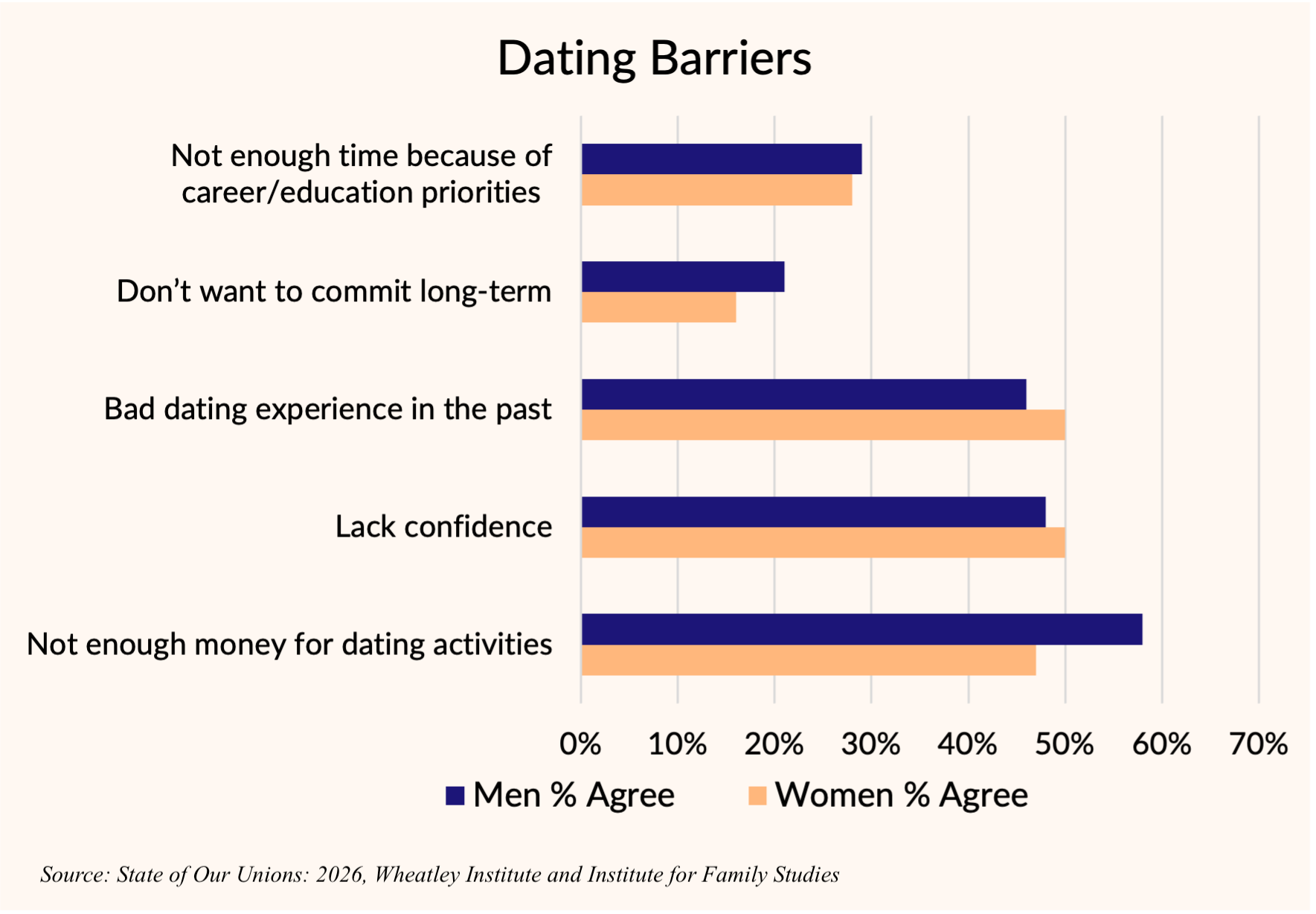
Young adults reported significant financial and social/emotional barriers to dating. The biggest barrier to dating was not having enough money, endorsed by more than half (52%) of respondents. Contemporary dating is often focused on commercial activities, and young adults often feel they can’t afford to date in this way. Respondents also frequently reported that personal factors get in their way of dating. At the top of this list were lack of confidence (49%) and bad dating experiences in the past (48%). Relatively few express fears about long-term commitment or interfering with career/education priorities.
We also found that dating resilience is low among young adults. Nearly half of young adults (45%) agreed that their relationship breakups have made them more reluctant to begin new romantic relationships. Half reported that their breakups have left them with negative feelings about relationships in general.
The Dating-Marriage-Skills Gap
Our study shows that there is a marital-expectations vs. dating-skills gap for most young adults today. Their desires and attitudes are not the problem. They want to build real human connections, form serious relationships, explore what they want in a future long-term partner, and desire the personal growth that comes from forming serious attachments. And contrary to common beliefs, most are not afraid of commitment or losing personal freedom. Moreover, few fear that dating will interfere with their educational and career plans. Young adults need effective road maps that guide them to and through the dating experiences that will connect their marital expectations to actual unions.
Accordingly, a straightforward implication of our study is that young adults could use some basic help in building dating skills. Few are regularly dating. They report being unprepared and having a low sense of dating efficacy. They lack experience, social and emotional confidence, and need to stretch their basic social skills. They struggle to know how to express their interest to a potential dating partner and to communicate effectively on a date. And they are discouraged by the cost of dating.
Young People Need Dating Education
Yet these are hardly unsurmountable barriers. Motivated young adults can learn the dating skills they need to form healthy relationships that eventually lead to marriage. Unfortunately, relationship educators—who provide basic relationship literacy to teens, marriage prep classes for engaged couples, ongoing marital enrichment workshops for married couples, and even intensive retreats for struggling couples—are not meeting the needs of young adults. Relationship educators need to develop a new niche: dating education. Generic relationship skills education does not sufficiently address the A-B-C’s of how to date.
This lack of dating experience is a deficit of connections that prime young people's souls for one of the richest experiences humans can have—romantic love and long-term marriage.
Our report provides specific recommendations for creating effective dating education, including:
- Offer creative dating “bootcamps” for young adults to learn and practice skills and boost their confidence.
- Provide online delivery platforms, including social media, that appeal to contemporary young adults’ preferences for informal learning.
- Grab young TikTok eyes and minds with engaging “infotainment” that enhances traditional didactic instruction.
- Build greater dating resilience by including preventative training on how to deal with bad dating experiences and painful breakups.
- Provide lists of creative dating options with cheaper price tags to avoid the sticker shock.
- Remind young adults of the connection between dating and their future expectations for marriage.
Many of the challenges young adults face in their dating lives can be surmounted with better knowledge and concrete skills. We are optimistic that talented relationship educators will rise to fill this void, assisted by parents, social media influencers, religious leaders, and others. The alternative, we believe, is an ongoing dating recession that will depress future marriage rates and all the known benefits of healthy marriages for adults, their children, and their communities.
This dating recession is more than just another challenge facing young adults today. Their lack of dating experiences is a deficit of connections that prime their souls for one of the richest experiences humans can have—romantic love and long-term marriage. With this dating recession, young adults risk more than they realize by not falling in (and out) of love during this formative time of life.
Read the full report here.
Alan J. Hawkins is an emeritus professor of family life at Brigham Young University. He is currently a member of the Utah Marriage Commission and Vice-chair of the National Alliance for Relationship and Marriage Education. He also is an affiliated scholar with Wheatley Institute at Brigham Young University.
Brian J. Willoughby is a professor in the School of Family Life at Brigham Young University where he currently serves as the Associate Director. He is also a fellow at the Wheatley Institute.
Jason S. Carroll is the Director of the Marriage and Family Initiative at the Wheatley Institute at Brigham Young University. He is also a Senior Fellow at the Institute for Family Studies.
W. Brad Wilcox is a Senior Fellow and the Director of the Get Married Initiative at the Institute for Family Studies. He is also a Visiting Scholar at the American Enterprise Institute and the Director of the National Marriage Project at the University of Virginia.
*Photo credit: Shutterstock