
Highlights
- We find that young men care about their status, want to contribute, and are distressed by the gap between their current circumstances and what they desire for their life. Post This
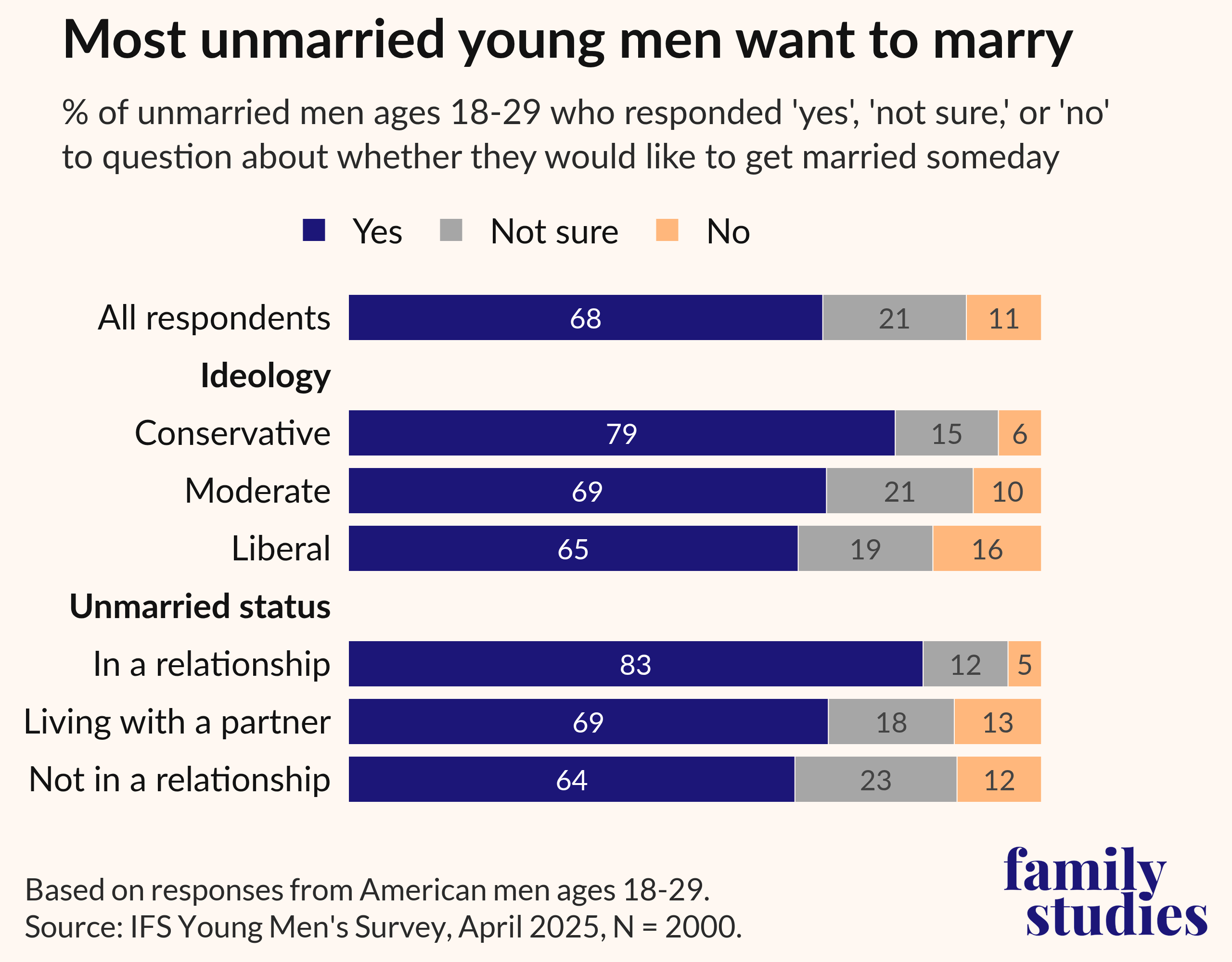
- 59% of young men were not in a romantic relationship at the time of the survey. However, most men who are not in a relationship are open to dating. Post This
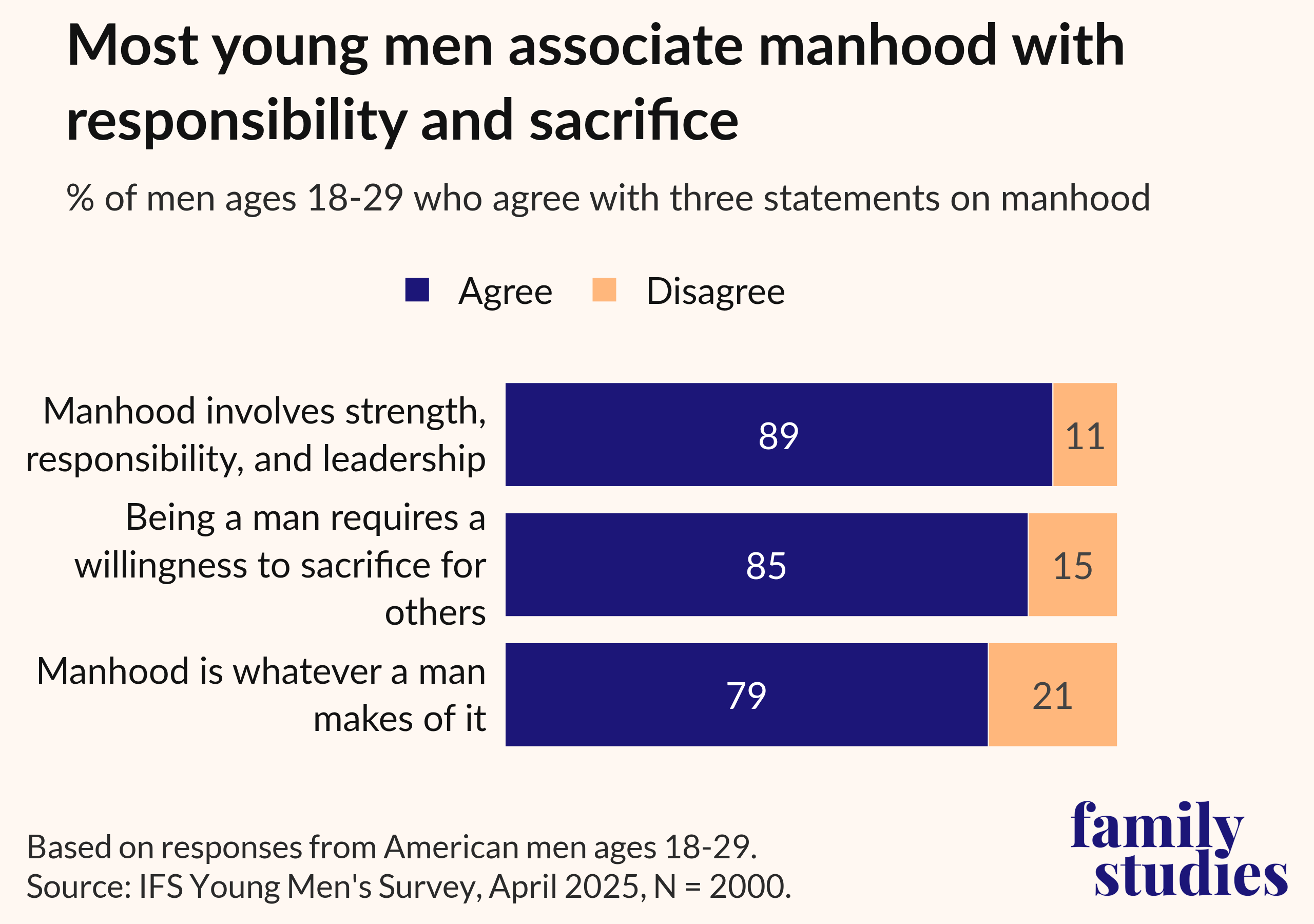
- Most young men's understanding of masculinity is not the toxic masculinity of the manosphere. Post This
Young men are the subject of growing public attention. They are often described as languishing compared to earlier generations of men and young women, and both popular and academic writers have turned a bright light on their struggles. As commonly told, the story is one of crisis, combining negative social and economic data about their situation with disconcerting claims about what is happening among them.
Accounts of this crisis emphasize several troubling trends. Fewer young men go to college, for instance, and fewer of them come away with a degree. Just 41% of degrees are now awarded to men. Young men have higher rates of conditions such as ADHD and autism and have more problems with drugs, gambling, pornography, and the law. Many young men today have lower earnings and career prospects compared to earlier cohorts. They have fewer friends, socialize less, and are less civically engaged. Fewer are making a timely transition to adulthood by meeting such milestones as having a full-time job, being financially independent, living away from their parents’ home, and getting married and having children.
These general trends have been well documented. In a new IFS survey of young men—conducted by YouGov between April 7 and 15, 2025, with a representative sample of 2,000 American men ages 18 to 29—we find them, too. But what do these trends mean? That’s the crucial question, and to offer an interpretation, we asked both how young men are doing at this time of their lives and why so many are facing the challenges they do.
We wanted to hear from young men on these matters because their voice is often absent from this discussion. What does “coming of age” mean to them, or masculinity, or going to college? What are their goals and hopes? Who are their role models? What kinds of struggles have they faced, what obstacles do they see in their way, and with what attitude do they confront their future? Our findings are detailed in a new report released today, America's Demoralized Men, Part 1: Worthy Aspirations, Trying Circumstances, which is the first in a two-part series.
Major Findings
Here are some of the most important things we learned from our survey of young men:
1. The defining standards of adulthood have continued to change for young men.
Once conventional benchmarks, like marriage and parenthood, long ago moved to the bottom of the list. But in the past two decades, the formerly central place of completing formal education has slipped as well, now considered extremely important by only 31% of young men, far below newer standards like being independent personally (51%) and financially (53%). And, although defined in individual terms, the feeling of having reached full adulthood is, paradoxically, highly correlated with the old benchmarks: being married and a parent, working full time, and completing college or trade school. Hence, even among men ages 24-29, less than half (41%) report “definitely” feeling like adults.
2. Young men are having a hard time in matters of love.
In fact, 59% were not in a romantic relationship at the time of the survey. However, despite obstacles ranging from job instability to doubts about the availability of suitable partners, most men who are not in a relationship are open to dating (74%), most unmarried men desire marriage (68%, with another 21% unsure), and most childless men would like to be a parent in the future (62%).
3. Young men view college with a great deal of ambivalence.
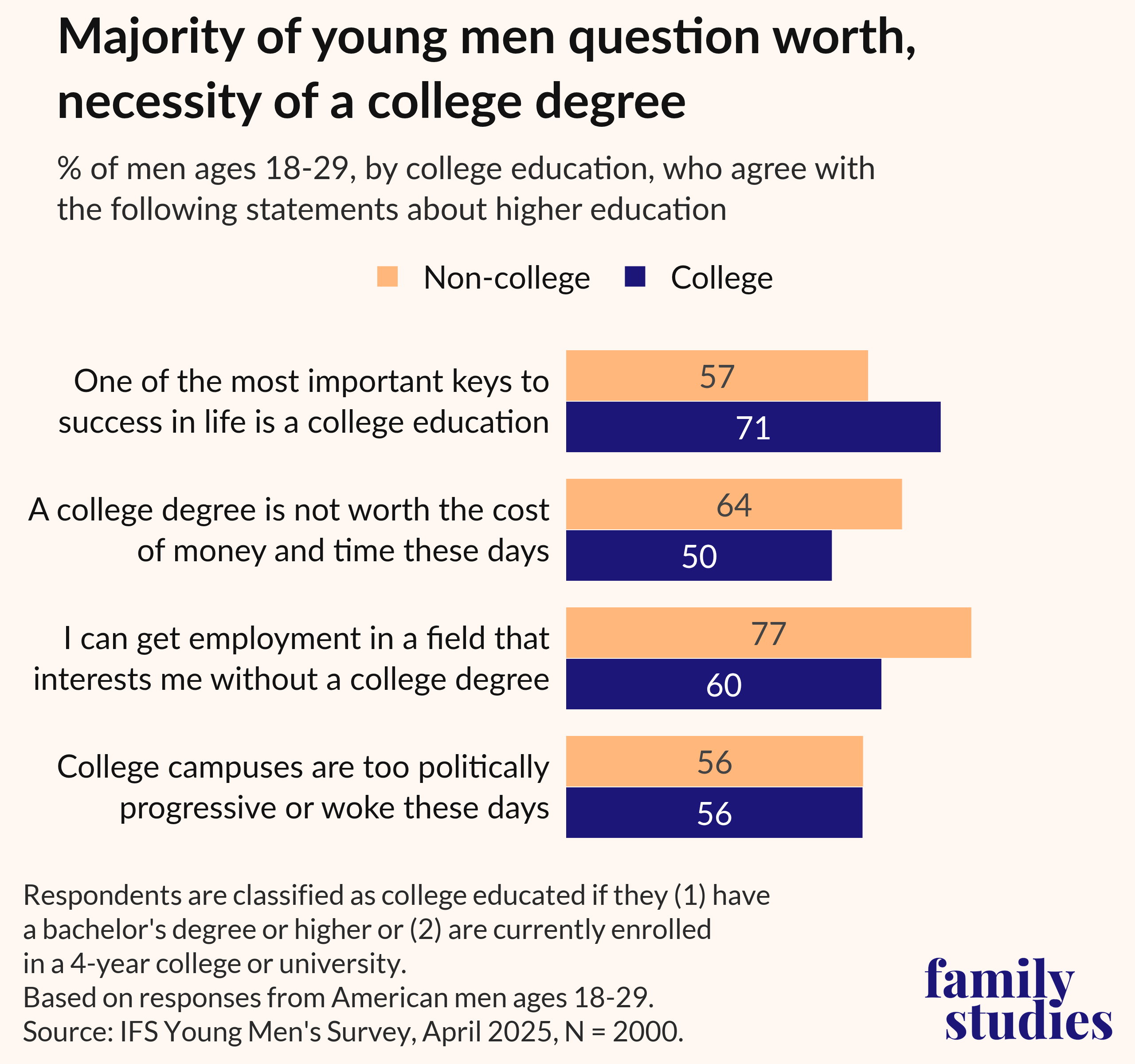
Young men who have not gone to college or dropped out before graduating are the most skeptical of its value. But even among young men who are attending college or have a degree, half either strongly (17%) or somewhat (34%) agree that college is not worth the time or money, and 60% either strongly (19%) or somewhat (41%) share the view that they could get a job that interests them without a college degree.
4. Trade school/apprenticeship is a valuable path to adulthood.
While these skilled men are often overlooked entirely, we find that those without a bachelor’s degree who have completed such programs are employed full time or self-employed at rates (77%) very similar to those of college grads (80%). We also find that, compared to men without a bachelor’s degree who did not enroll in or finish trade school, young men who did are much more likely to be married. Moreover, these programs may be more accessible—or appealing—to young men with certain learning-related conditions. Those who have experienced autism, ADHD, or learning disabilities like dyslexia are about as likely to have graduated from a trade school or apprenticeship program as those without a history of these disorders. Meanwhile, four-year college graduation rates are much lower for men with learning-related conditions.
5. Young men are not enthralled by on-line influencers as role models.
When we asked who they most looked up to as role models, mothers (79%) and fathers (69%) topped the list, followed by coaches and teachers (57%). Among prominent figures from the worlds of tech, politics, entertainment, and religion, the most admired role model was former president Barack Obama, whereas the least was online influencer Andrew Tate.
6. Their understanding of masculinity is not the toxic masculinity of the manosphere.
When asked if “being a man requires a willingness to sacrifice for others,” and whether “manhood involves strength, responsibility, and leadership,” 89% of young men endorse the first statement, and 85% endorse the second statement.
7. Finally, young men are not apathetic.
Rather than easy accommodation to their circumstances, our findings suggest that young men’s hopes are being frustrated. For instance, they want a job that provides them with an adequate standard of living. When asked about their most significant challenge in life so far, many young men’s answers concern money and finding a good job. The same concerns play a role in some men’s hesitancy toward pursuing marriage. We find that young men care about their status, want to contribute, and are distressed by the gap between their current circumstances and what they really desire for their life.
Read the full report here.


