
Highlights
- Family instability can be as predictive of key child outcomes as other variables—such as race and poverty—that often get more attention in federal and state surveys and reports. Post This
- Federal and state agencies should require that key surveys and reports on children routinely measure family structure and report how it is linked to key outcomes. Post This
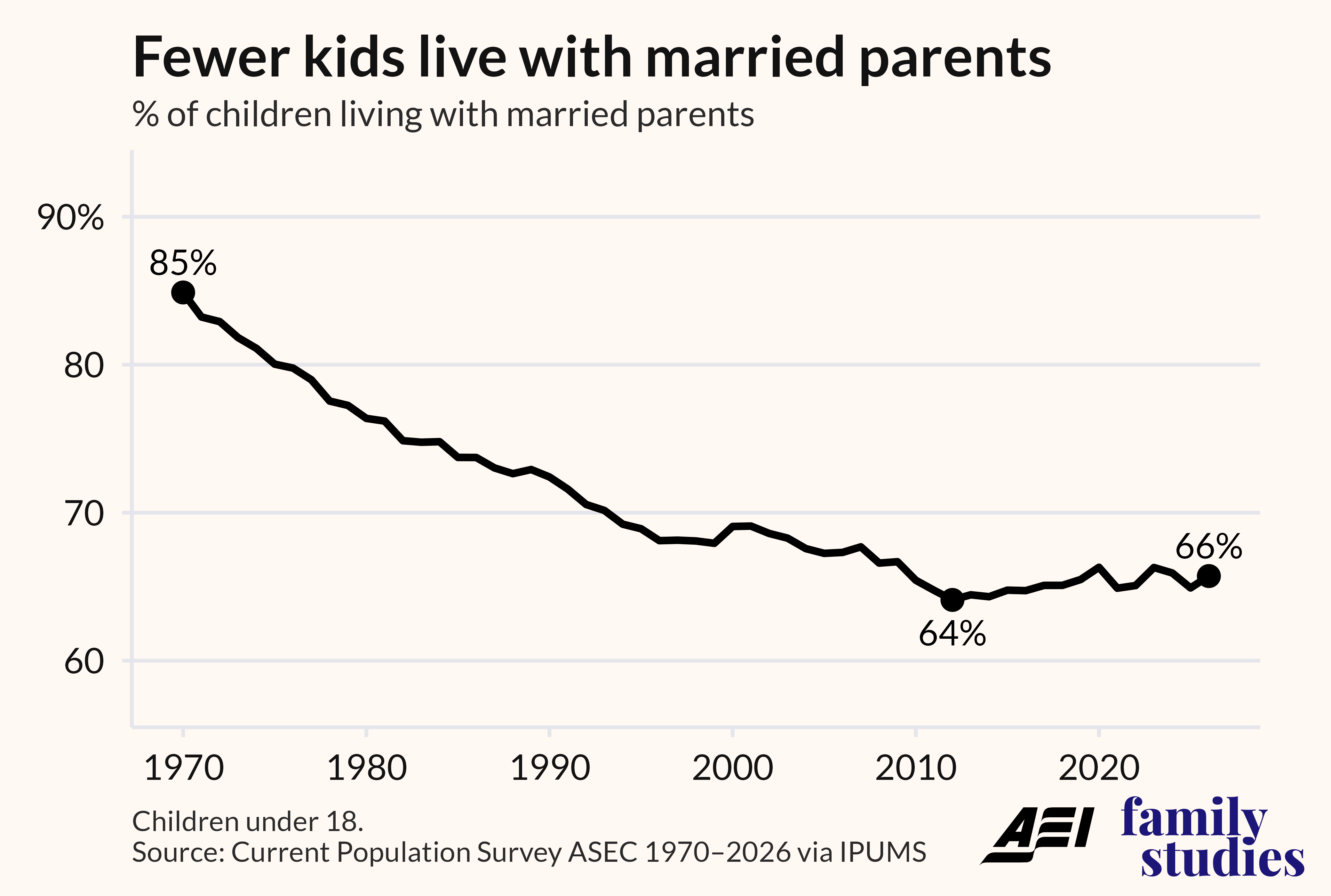
The decades-long retreat from married-parent families has ended. The share of children living with married parents fell to a low of 64% in 2012 and has climbed to 66% today. Still, slightly more than 4 in 10 children will spend time outside of an intact married family, in a range of family forms.
This family instability can be as predictive of child outcomes like school failure, college graduation, depression, and incarceration as other variables—such as race and poverty—that often get more attention in federal and state surveys and reports.
Consequently, federal and state agencies should require that key surveys and reports on children—from the National Assessment of Educational Progress (NAEP) to the CDC’s Youth Risk Behavior Survey and the federal America’s Children indicators report—routinely measure family structure in detail and report how it is linked to the outcomes that matter most for the rising generation.
In our new research brief, "The Family-Structure Blind Spot," we explain why tracking this information on the shape of America's families matters to both individual and community well-being.
Read the full IFS/AEI research brief, here.


