
Highlights
- The share of births occurring outside marriage has changed little over the past decade, but the demographic composition of those births has changed substantially. Post This
- 2024 was the first year where the birth rate to unmarried women ages 40-44 was higher than the birth rate to unmarried teens. Post This
Marriage, childbearing, and economic security have become increasingly linked, making births outside of marriage a useful indicator for understanding inequality. The percentage of births to unmarried mothers in the U.S. has stayed relatively stable—hovering at around 40% of all births for over a decade.
This initially seems like a remarkably stable statistic in an era marked by shifting birth and marriage rates. But beneath that stable statistic, a demographic transformation is underway. It passed a quiet milestone in 2024 when the birth rate to unmarried women ages 40 to 44 surpassed the birth rate to unmarried teenagers.
Births to unmarried mothers are stereotypically thought of as occurring to young women. This is still true—but increasingly less so. In recent years, the age profile of unmarried mothers has changed due to shifting birth rates. Birth rates to young, unmarried women are declining, while birth rates to unmarried women over 35 are increasing.
Young Women Drive the Decline in the the Unmarried Birth Rate
Overall, birth rates to unmarried women have been declining. The birth rate to unmarried women, ages 15 to 44, declined by 19% in the decade between 2014 and 2024—from 43.9 births per 1,000 unmarried women in 2014 to 35.5 births in 2024. As we see below, this decline was mostly driven by young women.
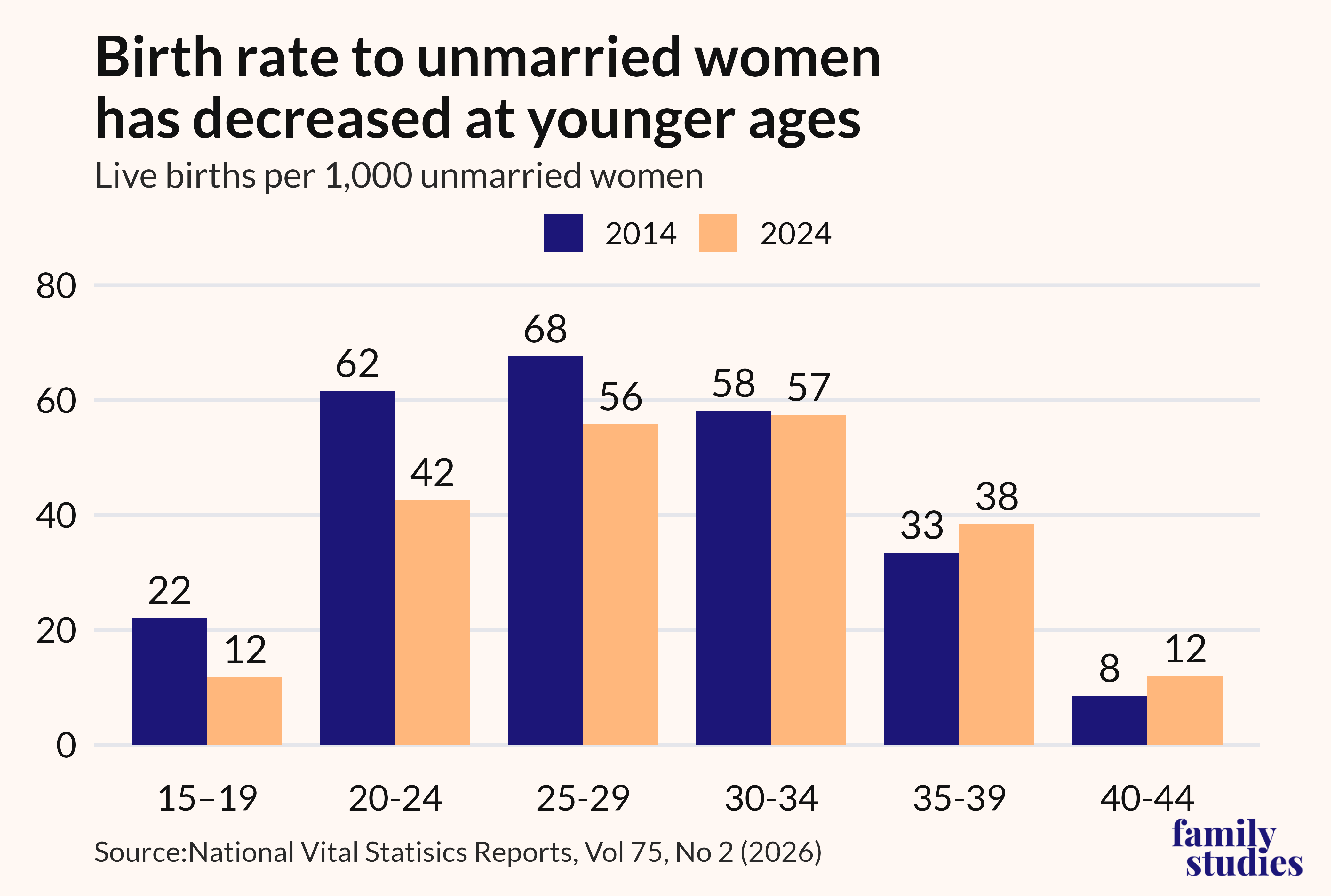
The birth rate for unmarried teenagers declined by 47% between 2014 and 2024. The trend in the unmarried teen birth rate closely matches the overall teen birth rate, because the vast majority (92%) of births to teens occur outside of marriage.1
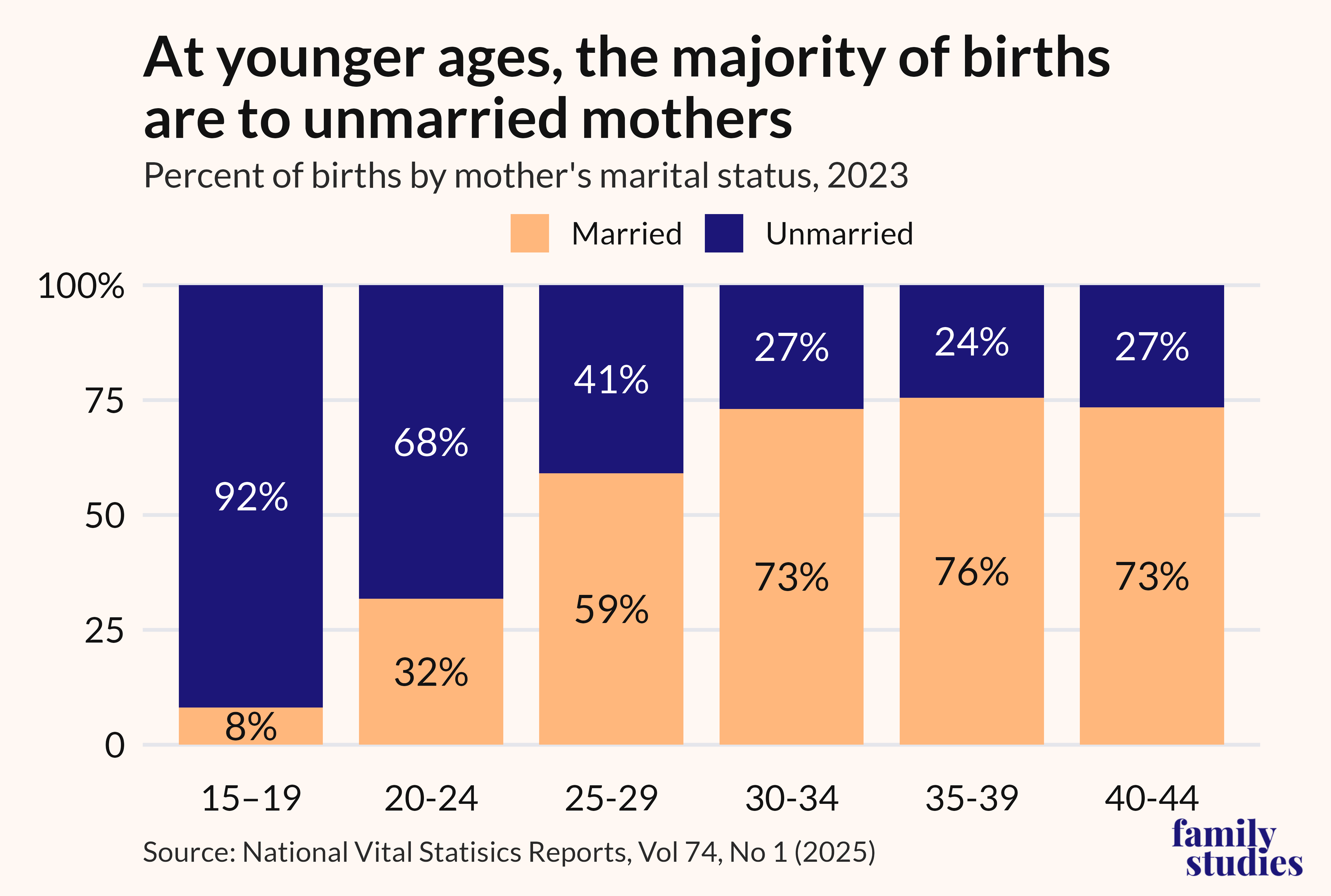
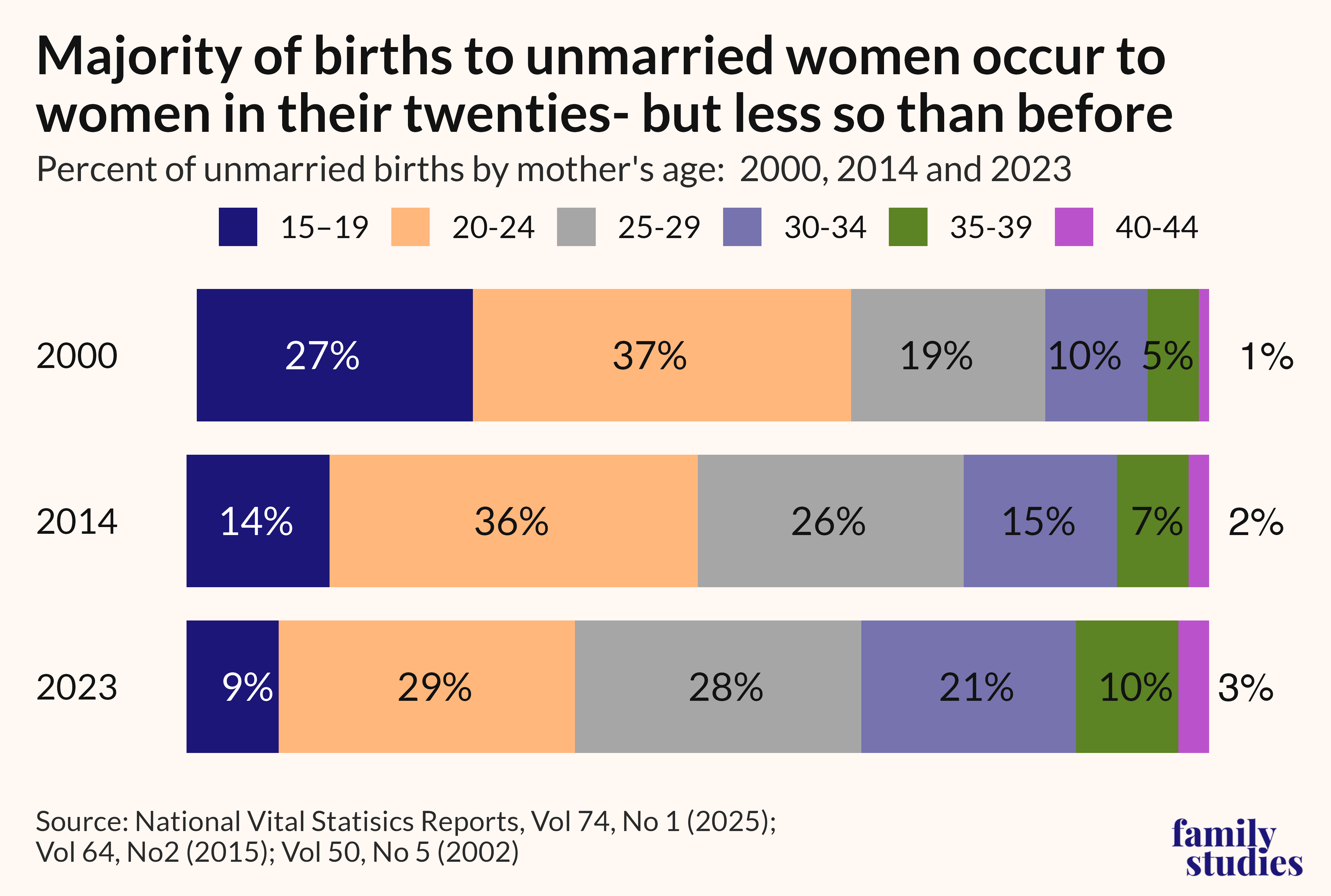
Even though most teen births occur outside of marriage, most unmarried births occur to older women. In fact, only 9% of all births to unmarried women are to teenagers. By contrast, over half (57%) of all unmarried births occur to women in their 20s.
Still, birth rates to unmarried women in their 20s have been declining. Among unmarried women ages 20-24, for example, the birth rate declined by 31% between 2014 and 2024; it declined by 17% among unmarried women ages 25-29.
Birth Rates to Older Unmarried Women Increase
Meanwhile, the unmarried birth rate for women over 35 is increasing—by 15% between 2014 and 2024. At the same time, the unmarried birth for women over 40 increased by 40% (from 8.5 births per 1,000 women in 2014 to 11.9 births per 1,000 women in 2024). Notably, 2024 was the first year where the birth rate to unmarried women ages 40-44 was higher than the birth rate to unmarried teens.
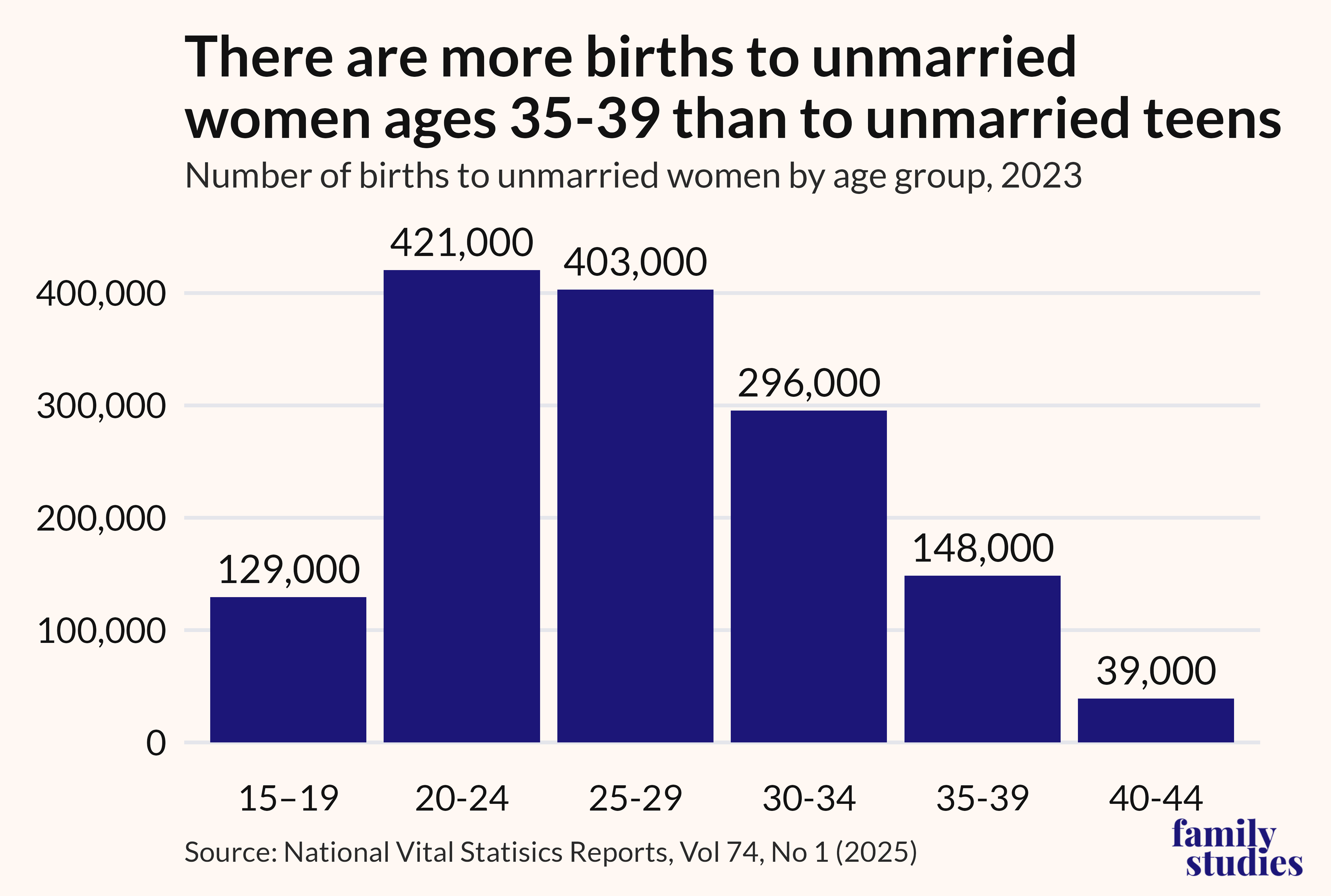
As a result of these increasing birth rates, there were more births to unmarried women ages 35-39 than to unmarried teens in 2023. This is particularly noteworthy because there are more unmarried teenage girls than unmarried women in their late thirties; it therefore requires a much higher birth rate for older single women to surpass births to unmarried teenagers.
The Changing Profile of Unmarried Motherhood
Birth rates to younger unmarried women are declining, even as birth rates to unmarried women over 35 are increasing. These offsetting trends have reshaped the age profile of unmarried motherhood in the United States. Although births to unmarried women still occur disproportionately at younger ages, a growing share now occur to women in their 30s and 40s. In 2000, 84% of births to unmarried mothers were to women under 30. By 2024, this had decreased to 66 percent. In fact, over a third of all births to unmarried mothers today are to women over 30.
The share of births occurring outside marriage has changed little over the past decade, but the demographic composition of those births has changed substantially. Ultimately, the importance of these trends extends beyond birth rates alone. As the age profile of unmarried motherhood shifts, so too,may the social meaning, economic context, and consequences of unmarried childbearing, both for the women and children in question and for society.
Anne Morse holds a PhD in Demography and Sociology.
1. This article uses the latest published estimates available. For some estimates, the latest is for the year 2024 and published in 2026; for other estimates, the latest is for the year 2023 and published in 2025.


