Highlights
In February, we released Resilient Children, Struggling Parents: Mapping American Parenting, a report based on a new survey of almost 24,000 U.S. parents of over 40,000 children, including 2,600 teenagers. This large national sample of parents and teenagers enabled us to analyze parenting cultures around the country on the state level. We found that states where a concentration of parents are actively seeking to raise their children to be independent, free-spirited, resilient adults also tend to be the states where parents say their parenting approach is less supported by surrounding cultural norms.
Comparing parenting cultures by state is an invaluable tool for parents, educators, civic leaders, and policymakers who want to come along side families to help them raise resilient children. But in a new brief released today, we assess parenting practices on a national level. We analyze the distance American kids are allowed to venture from home, how much time they spend online, what devices they use, the level of restrictions on their smartphones, and how much time they spend with friends.
We find that American kids spend enormous amounts of time online with very few significant restrictions. Yet, they have very strict limits on their activities in the real world, often not allowed to go far from home. These kinds of norms and rules are strongly shaped by social class, such that higher socioeconomic-status parents tend to restrict screen use more.
Here are 4 key takeaways from our findings:
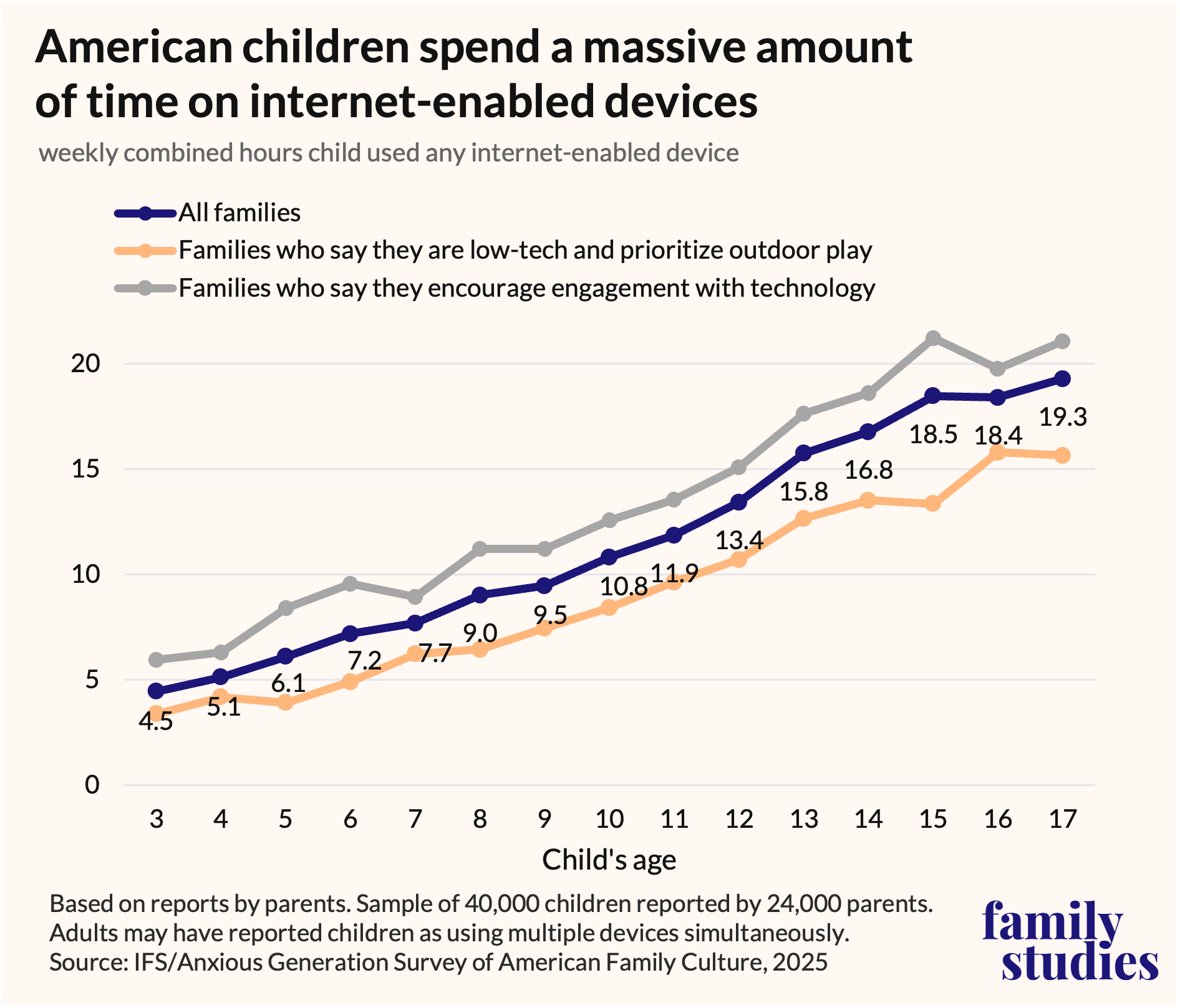
1. American kids spend a lot of time online.
Even parents who describe their parenting style as low tech and encourage free-range play allow their three-year-old children, on average, 3.5 hours per week of time on internet-enabled devices. Three-year-old children of parents who encourage tech average 6 hours per week using such devices.
2. American kids get their devices young with few serious restrictions.
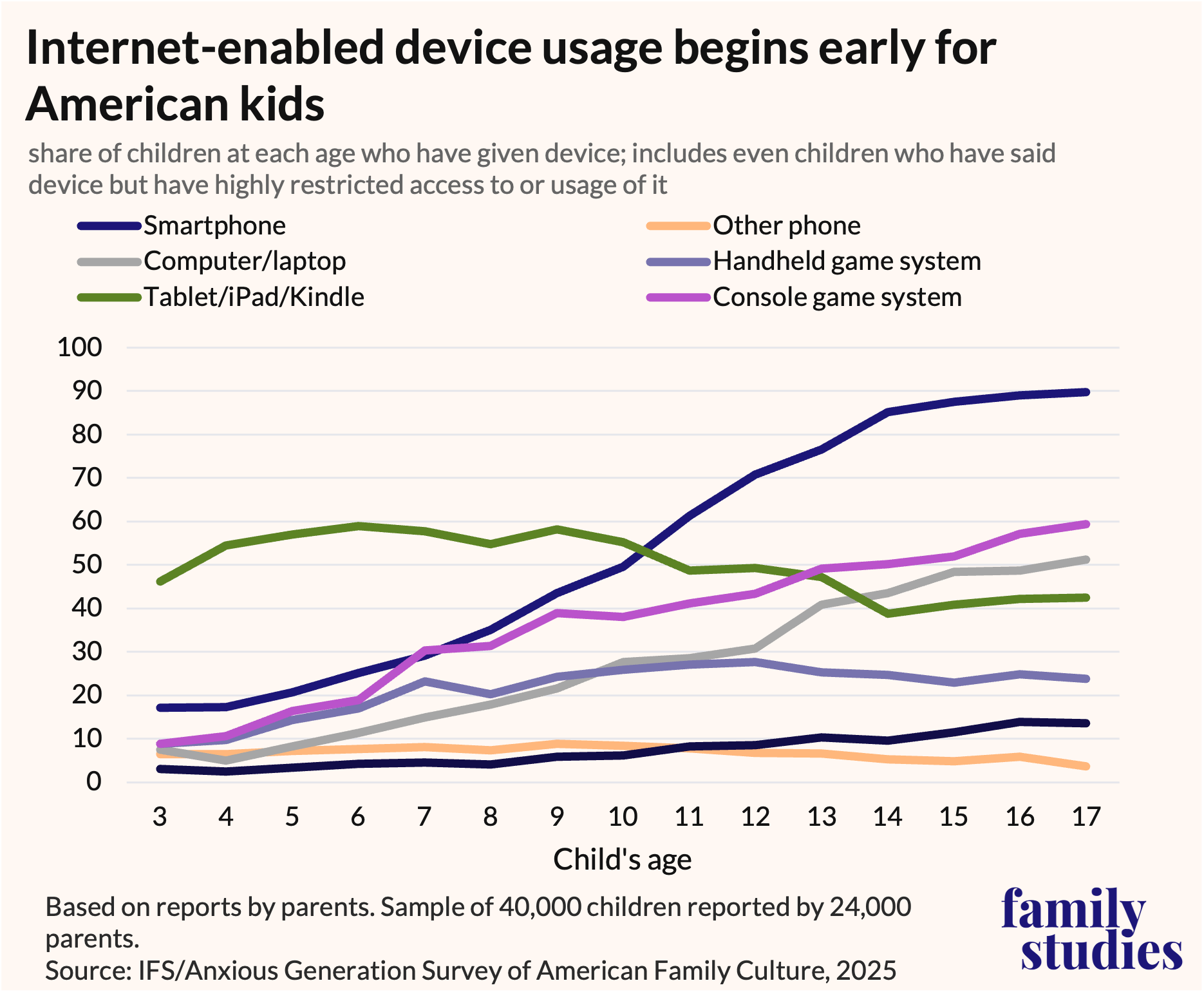
By the age of 11, smartphones become the primary medium for internet access among American kids, with over 60% having a smartphone. These phones generally have few parental restrictions placed on them. Meanwhile, nearly 50% of three-year-olds use a Tablet, iPad, or Kindle; and many of these children have few or no restrictions.
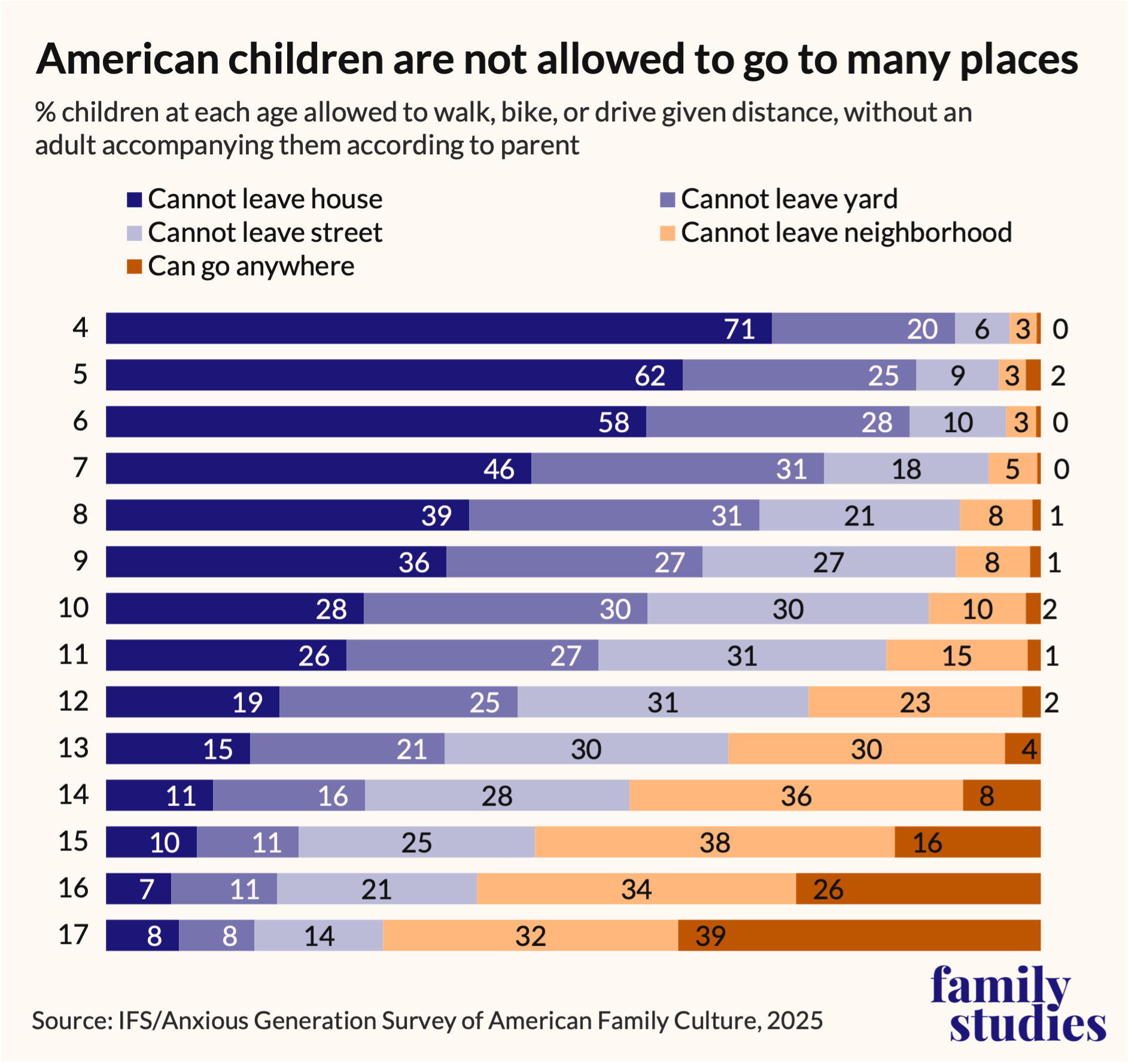
3. American kids are generally not free to move around unsupervised.
In fact, by 17-years-old, about 60% of American kids are still not allowed to leave their neighborhood unsupervised.
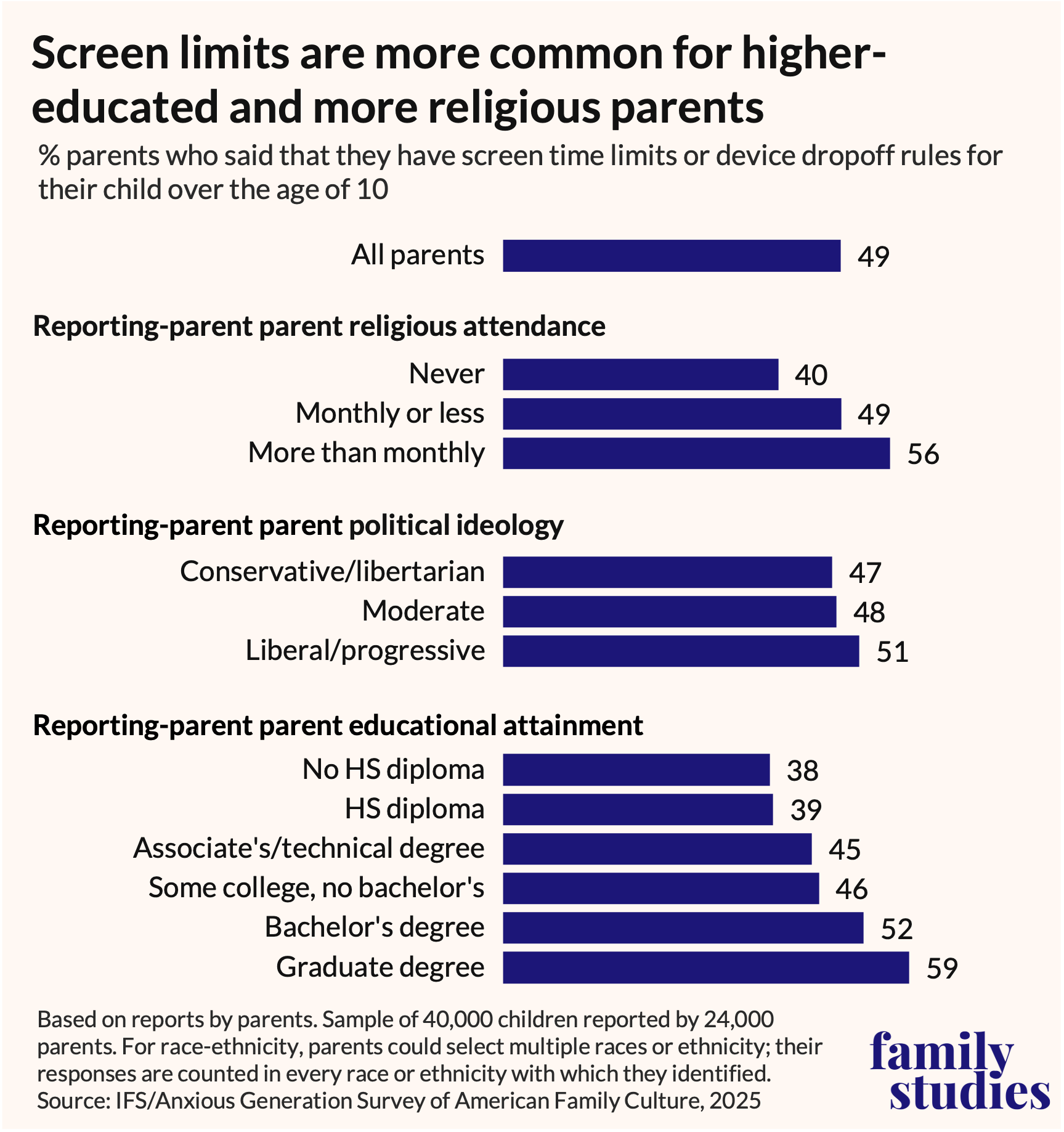
4. Social class shapes parenting in big ways.
Parents with a graduate degree are more likely to establish screen time limits or phone drop-off rules for children over age 10 than less-educated parents; and parents with a graduate degree are also less likely to support the idea that 8 to 12-year-old kids should have more supervision.
Read the full research brief, High Tech, Low Play: The Life of American Children.
*Photo credit: Shutterstock