Introduction
On February 19, 2026, we released a new report, Resilient Children, Struggling Parents: Mapping American Parenting, based on a new survey of almost 24,000 U.S. parents of over 40,000 children, including 2,600 teenagers. This large national sample of parents and teenagers enabled us to analyze parenting cultures around the country on the state level. We found that states where a concentration of parents are actively seeking to raise their children to be independent, free-spirited, resilient adults also tend to be the states where parents say their parenting approach is less supported by surrounding cultural norms.
Comparing parenting cultures by state is an invaluable tool for parents, educators, civic leaders, and policymakers who want to come along side families to help them raise resilient children. With this brief, however, we assess parenting practices on a national level. Below, we analyze the distance American kids are allowed to venture from home, how much time they spend online, what devices they use, the level of restrictions on their smartphones, and how much time they spend with friends.
We find that American kids spend enormous amounts of time online with very few significant restrictions. Yet, they have very strict limits on their activities in the real world, often not allowed to go far from home. These kinds of norms and rules are strongly shaped by social class, such that higher socioeconomic-status parents tend to restrict screen use more.
Key Findings
- American kids spend a lot of time online. Even parents who would describe their parenting style as low tech and who encourage free-range play allow their three-year-old children, on average, 3.5 hours per week of time on internet-enabled devices. Three-year-old children of parents who encourage tech average 6 hours per week using such devices.
- American kids get their devices young with few serious restrictions. By the age of 11, smartphones become the primary medium for internet access among American kids, with over 60% having a smartphone. These phones generally have few parental restrictions placed on them. Meanwhile, nearly 50% of three-year-olds use a Tablet, iPad, or Kindle; and many of these children have few or no restrictions.
- American kids are generally not free to move around unsupervised. In fact, by 17-years-old, about 60% of American kids are still not allowed to leave their neighborhood unsupervised.
- Social class shapes parenting in big ways. Parents with a graduate degree are more likely to establish screen time limits or phone drop-off rules for children over age 10 than less-educated parents; and parents with a graduate degree are also less likely to support the idea that 8 to 12-year-old kids should have more supervision.
Tech and Family Life
In general, similar to previous research by the Institute for Family Studies, we find that American children overall are online at very early ages, screens are prevalent, and few devices are subject to serious parental controls, especially as they become teenagers.
On average, American parents allow their three-year-old children 4.5 weekly hours of internet-connected device use. From there, the average weekly hours steadily increase with age. By 17-years-old, American parents allow their children almost 20 weekly hours of internet-connected device use. It should be noted that parents could have double-counted some device usage time: if a child was scrolling on their phone while streaming a show on a computer, we would count both the computer and the phone usage. However, we do not regard this as an error, since using multiple devices simultaneously would indeed be a more intense exposure to screens and online content.
Though the numbers remain high overall, we do find some substantial differences in weekly device use between parents who prioritize outdoor play and claim to be low-tech, and those who say they encourage the technology use of their kids. As the figure below shows, by the age of three, kids who grow up in a high-play/low-tech household are on internet-connected devices an average of 2.5 weekly hours less than their peers who are in high-tech households. That might not seem like much, but over the course of a year, that amounts to nearly 130 fewer hours online for three-year-olds. And while both groups steadily rise, the gap in hours used begins to further widen around age 13, and the widest gap is at 15, when kids in low-tech/high-play households are, on average, online 8 fewer hours a week, which over the course of a year amounts to a difference of approximately 400 hours. In other words, in any given week, the differences are modest. But over time, they compound, becoming extremely significant.
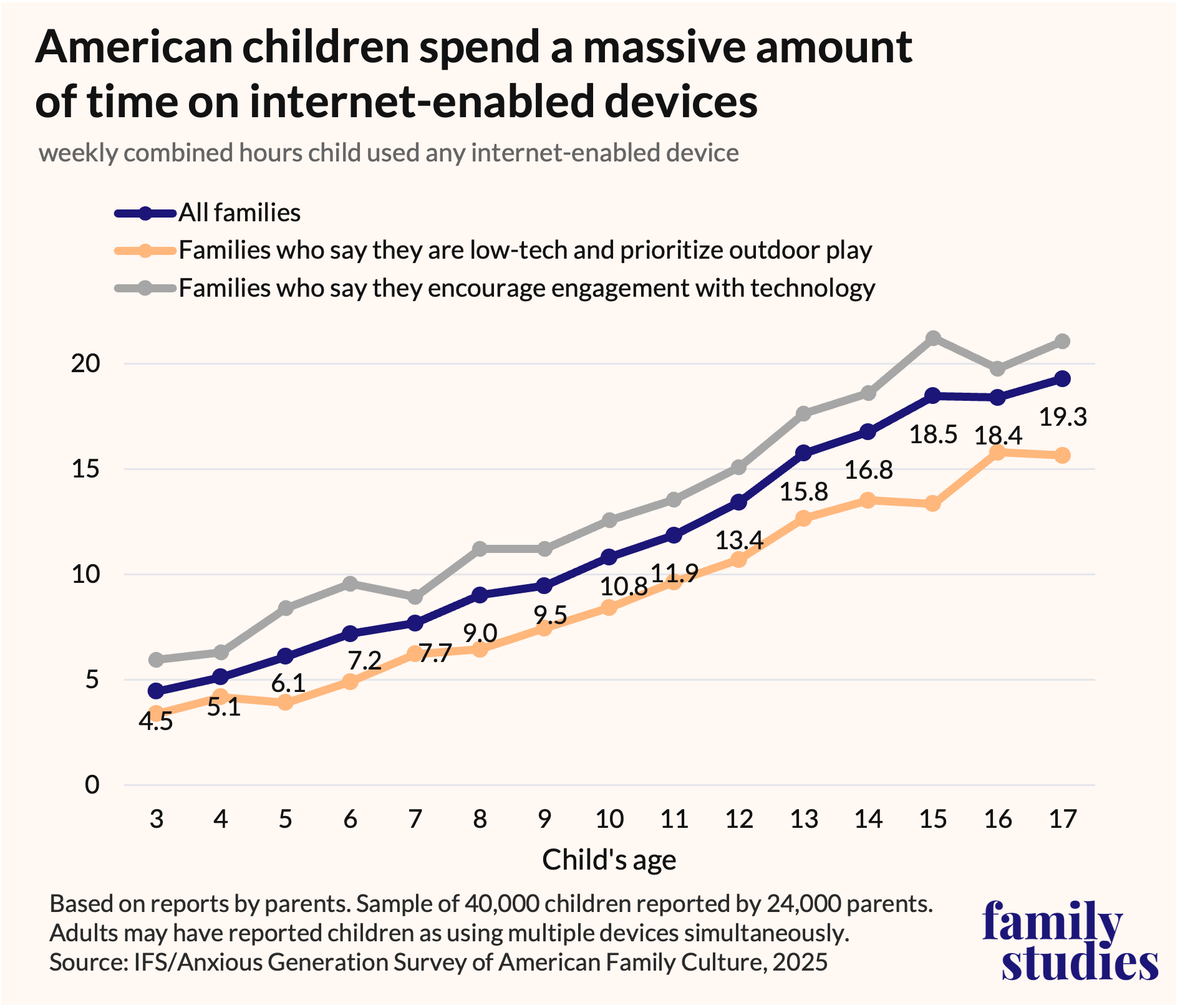
Figure 1. Weekly combined hours children used any internet-enabled device by child age and parenting style, 2025
Still, the numbers for both groups are remarkably high. In fact, 17-year-old kids in the low-tech/high-play group are online a weekly average of 15.7 hours, which amounts to more than 800 hours a year. Based on these numbers, they are online approximately 5 weeks a year; and kids in high-tech households, at the age of 17, are online an average of 6.5 weeks a year.
Similarly, a large share of American kids at three-years-old are given internet connected devices by their parents. Just shy of half of American three-year-olds in our sample (46%) have access to a tablet, iPad, or Kindle. A significant, though much smaller share, have access to a smartphone at that age—more than 15%. Tablet access reaches a peak at age 6, when 60% of kids nationwide are using them, with gaming console and smartphone access rising steadily. At the age of 11, the hierarchy changes, with smartphones surpassing tablets in use and, a few years later, at the age of 13, gaming consoles become the second most dominant device used, followed by computers and laptops, which become the third most dominant device. By age 17, 90% of the children in our sample have a smartphone, 60% percent have a gaming console, and 50% have a laptop or computer.
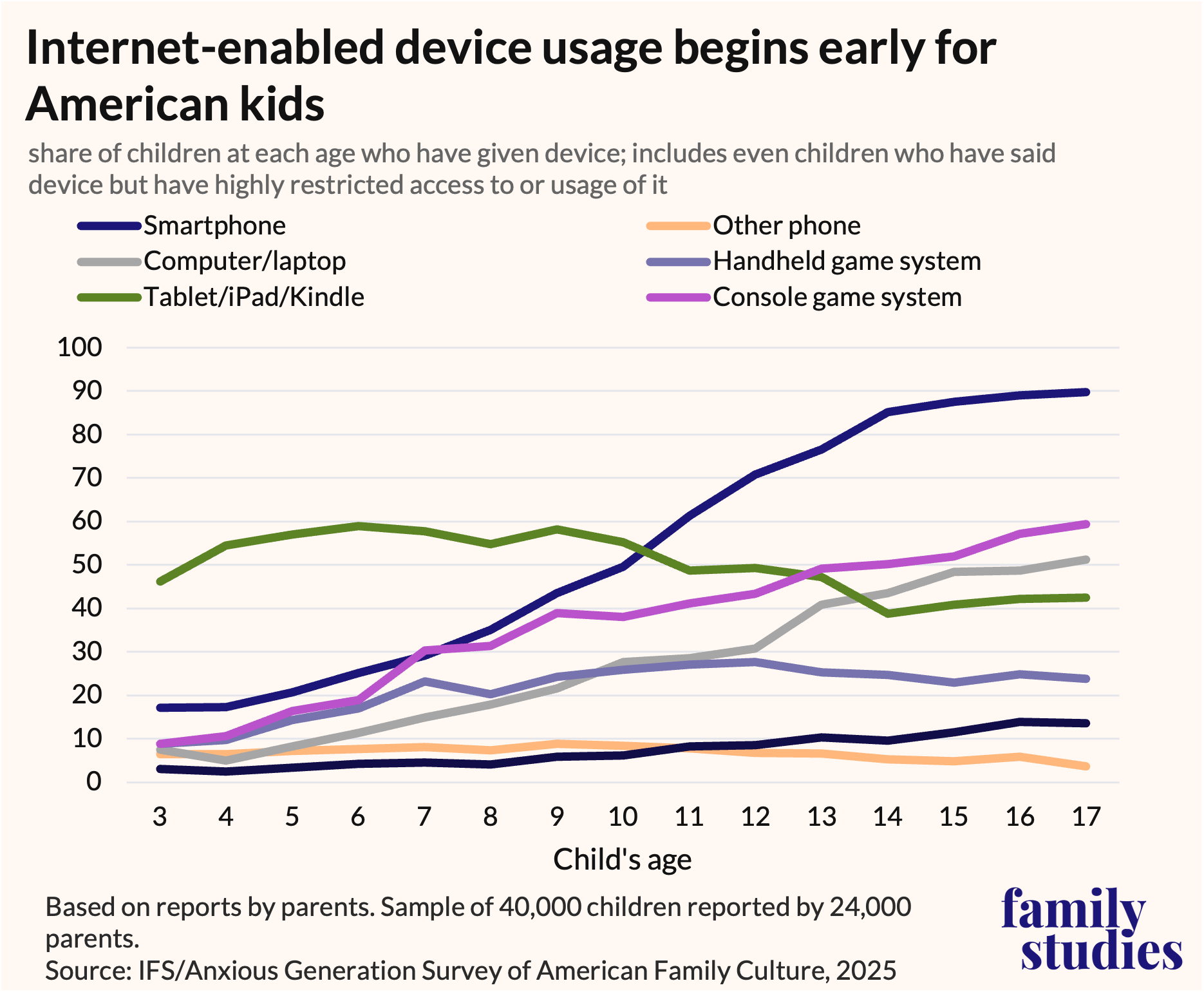
Figure 2. Share of children at each age who have each type of internet-enabled device, including children whose device has highly restricted access; 2025
Parental Controls
But what about parental controls? American children might have access to devices at young ages, but are parents closely monitoring and guarding their activity, such as by disabling internet access on a child’s device, or utilizing content filters? Not as much as one might hope.
Overall, we find that the peak of internet-disabled smartphone usage is at 4 years old, and it steadily declines from there, with less than 10% of five-year-old kids using internet-disabled smartphones. Throughout the course of childhood and adolescence, a greater share of parents require passwords to make purchases on their child’s smartphone than implement content filters to increase the safety.
This may be unfortunate, but it is also not surprising. Child safety experts, like Chris McKenna of Protect Young Eyes, have analyzed how Big Tech companies like Apple and Google have made it needlessly challenging to implement parental controls. No doubt this problem is exacerbated by other factors, some as straightforward as parents who simply don’t believe their children need guardrails or don’t have the time to make the changes. Whatever the case, only a minority of parents in our sample across all child ages require content filters on their children’s smartphones. By 17 years old, perhaps unsurprisingly, the most dominant parental “control” is location tracking, while content filters decline to less than 20% of smartphones used by American adolescents.
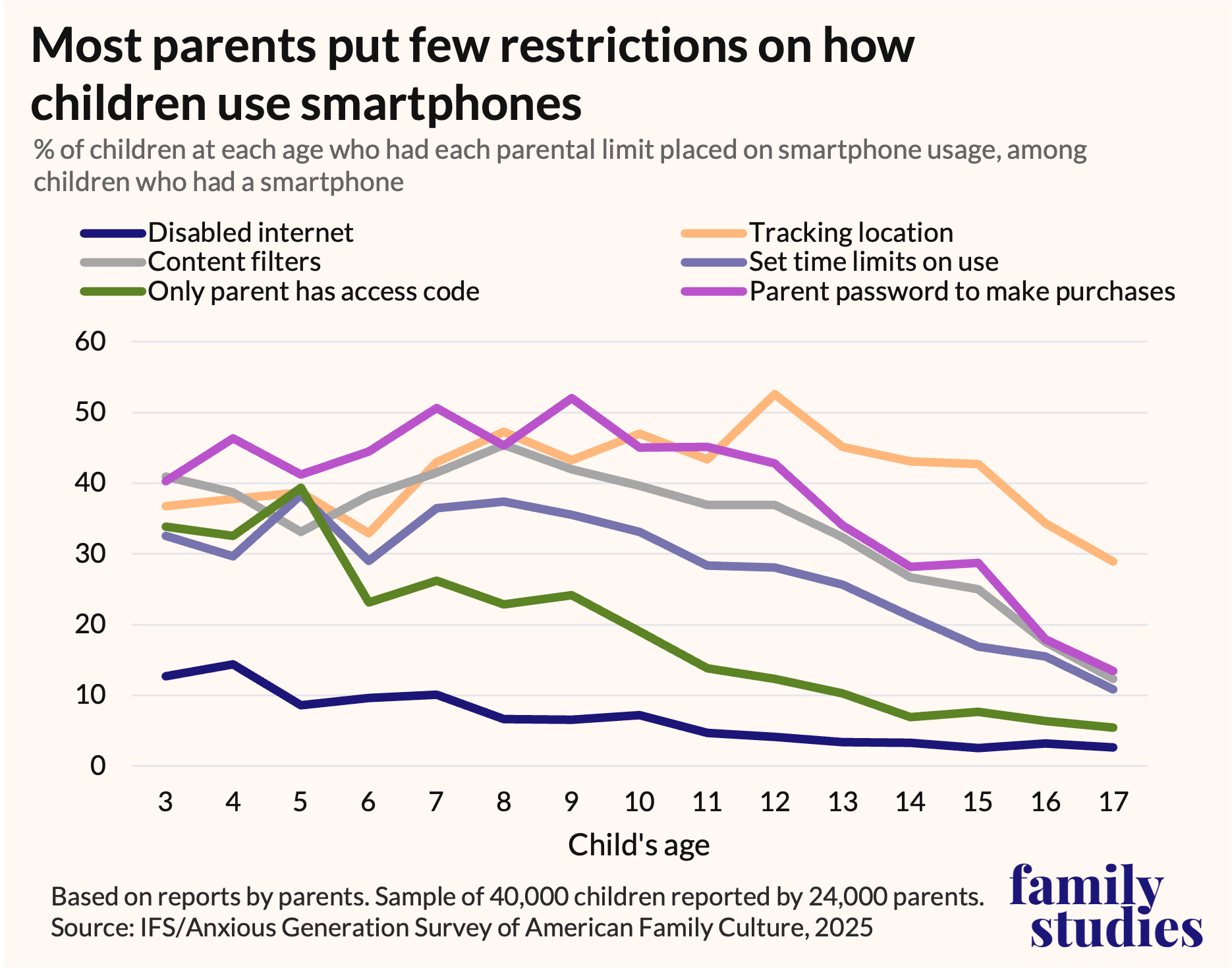
Figure 3. Share of children with a smartphone at each age whose parent reported the given limit or restriction on smartphone usage, 2025
Because tablets have such a high prevalence among very young children, we also assessed what safety controls parents apply to those devices. We find that, even for very young children, controls and restrictions are surprisingly lax. About 2-in-5 preschool-age children with tablets can make purchases on their tablet without a parental code, a majority of preschoolers with tablets do not need a parental code to access their tablet, and only about half of preschool-age children have content filters on their tablets. Most preschoolers with tablets do not even have specific time limits on their devices. While tablets do have generally stricter controls than smartphones, overall, many preschoolers appear to have broad internet access on tablets, which are only lightly supervised.
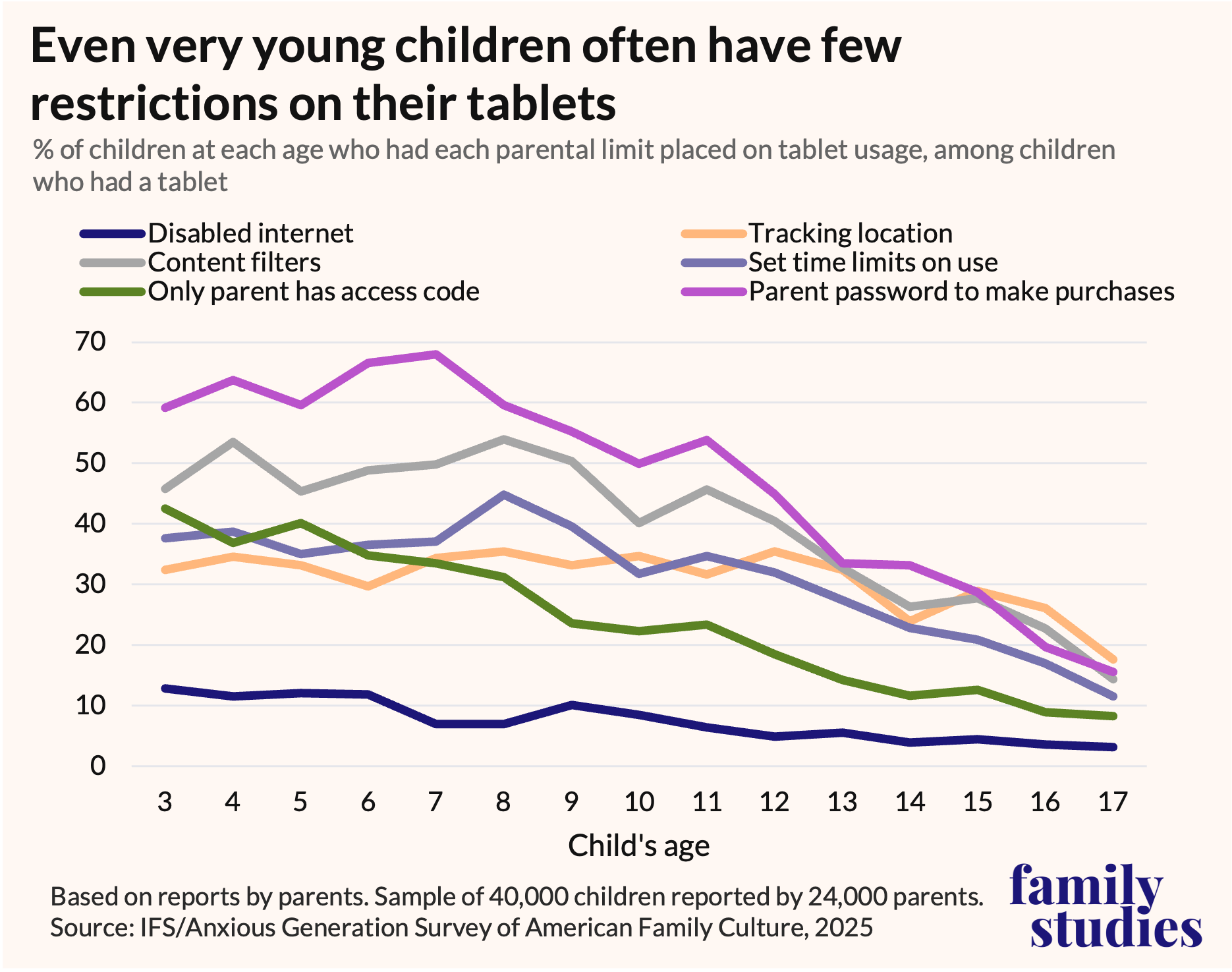
Figure 4. Share of children with a tablet at each age whose parent reported the given limit or restriction on tablet usage, 2025
We also find some interesting demographic differences in the percentage of parents who responded to a question about household technology rules saying they implement screen time limits or device drop off rules at home for their children over the age of 10. About half of the parents in our sample say that they impose such limits. Conservative and liberal parents have relatively similar practices around screen time. The main differences we find involve the religious practices and educational attainment of parents. Kids who grow up in highly religious households are much more likely to have their tech use limited by screen time than those who never attend a religious service (56% to 40%, respectively). Education is also a significant factor, with screen time limits for kids being more common in households where parents have a graduate degree (59%), whereas fewer than 40% of parents with just a high school diploma established such limits.
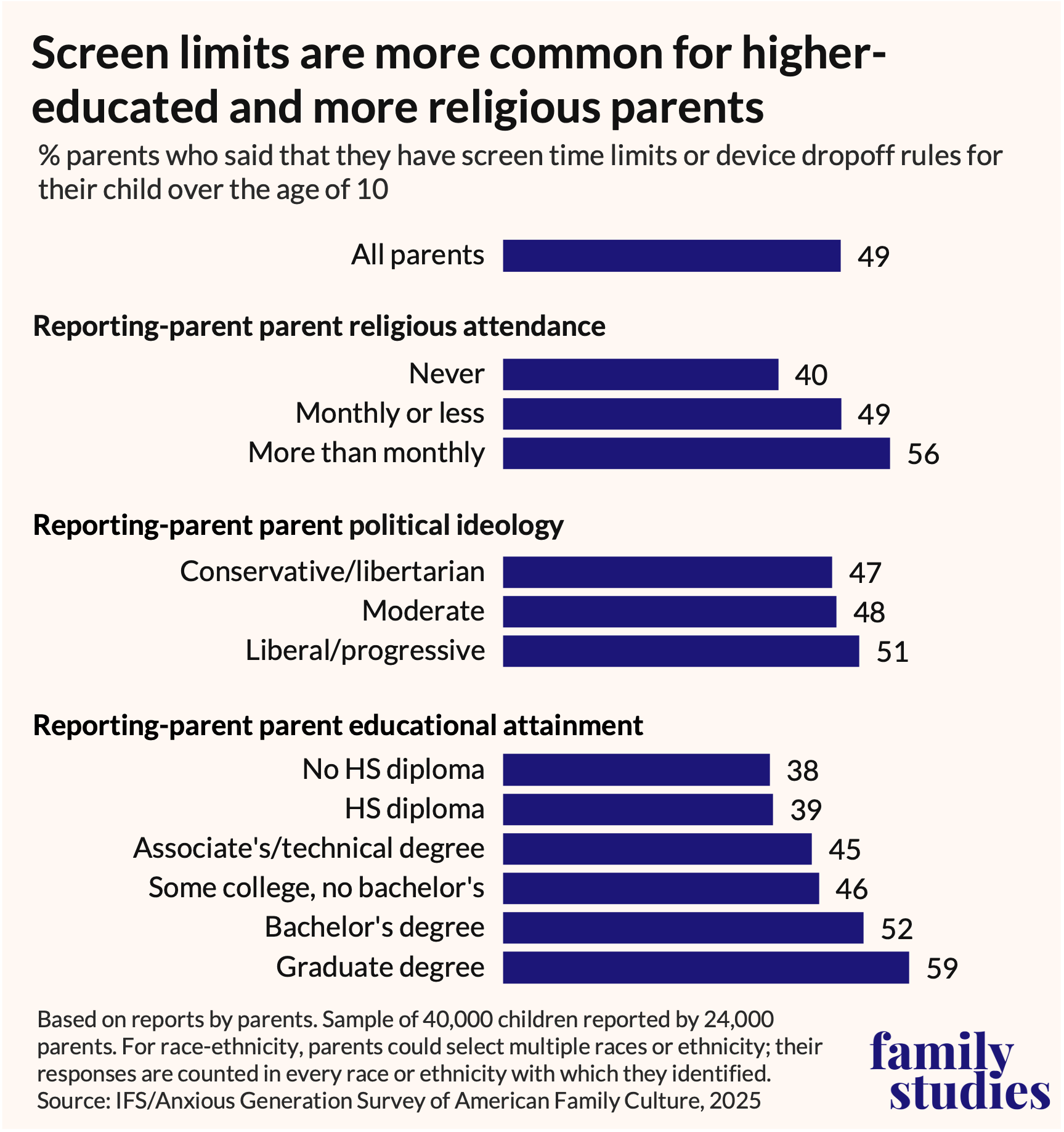
Figure 5. Share of parents who reported screen time limits or device drop-off rules for their children, in households with children over age 10, 2025
Similarly, in our analysis of the percentage of children, ages 9 to 14, who had a smartphone by parental demographics, we found similar advantages to growing up in a household with a parent with a graduate degree. Among this age range, kids whose parents have a graduate degree are the least likely to have a smartphone (55%), and parents with either a high school degree (69%) or associate’s or technical degree (69%) are the most likely to allow their children to have a smartphone.
These numbers fundamentally challenge the longstanding view that there is a digital divide in which kids that come from less privileged households are being left behind with little access to screens and social networks. According to our findings, the situation is exactly reversed. It is those that come from the more privileged backgrounds that are most likely to be raised in technologically cautious homes.
Mobility and Play
There may be situations in which a parent’s caution to allow children to play outside unsupervised is warranted, such as in communities that are unsafe. Our survey did not ask about neighborhood crime, or busy urban environments where strangers will be significant in number. The safety of communities certainly influences household norms around childhood mobility and unsupervised play. On the other hand, due to the size of our sample, covering 24,000 parents and 40,000 profiles of children, the overall patterns we see cannot be explained by such factors alone. Indeed, as we show, at least one kind of neighborhood factor that we checked—walkability—has no impact on what children are allowed to do and where they are allowed to go. We find that there is a broad culture of low autonomy and low unsupervised play that pervades the United States.
As we can see in the figure below, American kids are not allowed to go very many places without being accompanied by an adult. By at age 14, a majority of American kids are not allowed to travel beyond their own street. Even at age 17, more than 60% cannot go beyond their own neighborhoods. While we hasten to note that the exact prevalences shown here could reflect various kinds of sampling errors or idiosyncratic respondent behaviors (as well as some share of parents who may have children with disabilities), the overall conclusion is hard to escape: a very large share of American teenagers are not allowed much autonomy at all.
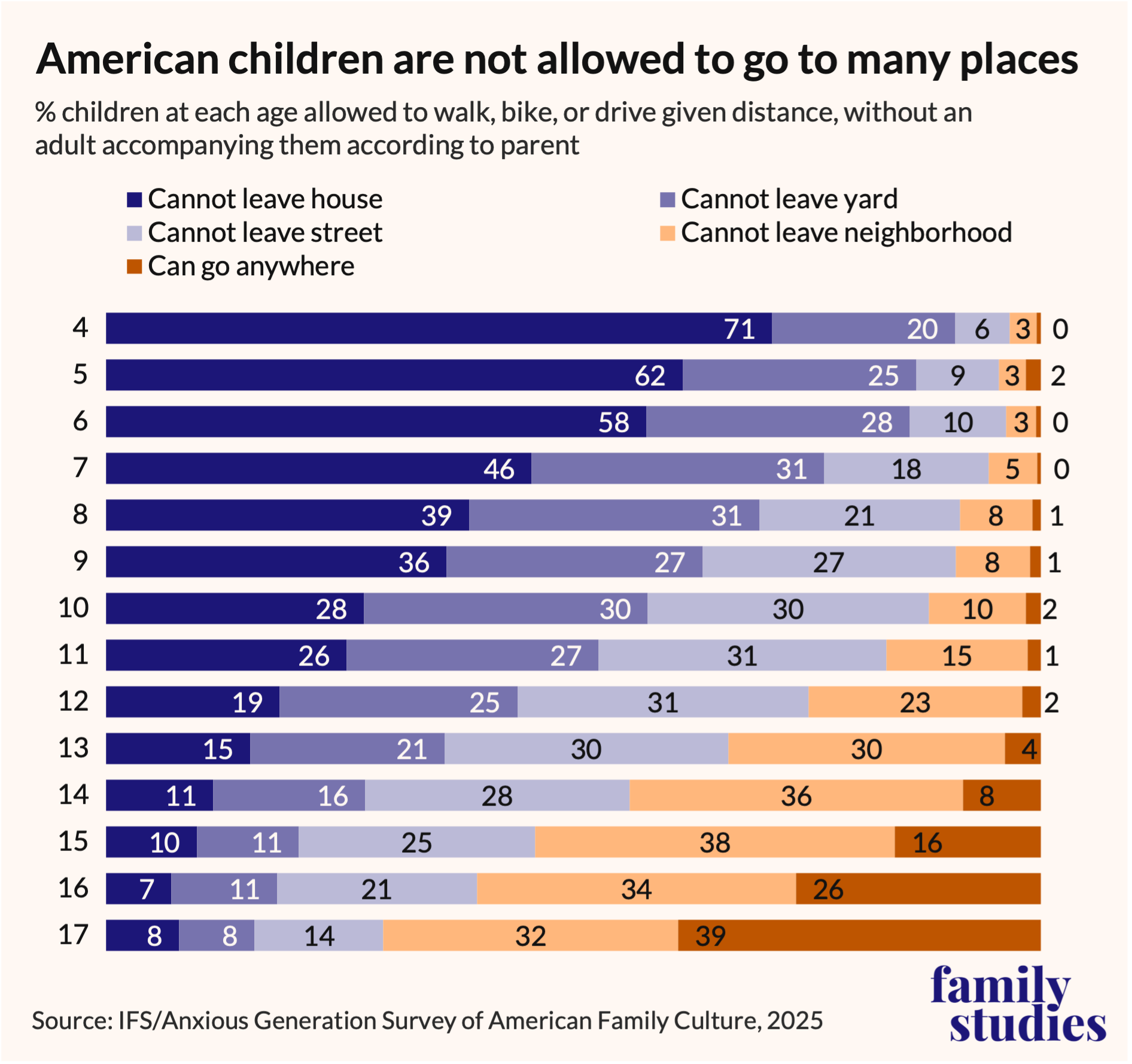
Figure 6. Share of children at each age whose parent reported each ascending level of restriction on where the child was permitted to walk without adult supervision; for teenagers surveyed directly, if they reported a longer distance than parent, teenager report was used; 2025
The flipside of the tendency for American kids to be permitted to spend many hours online from early childhood is that they also are kept from spending many weekly hours of unsupervised play outdoors. At the age of 5, American kids average about a half an hour outside without parental supervision per week, and that number plateaus at 2.4 hours by the age of 17. This is, to put it lightly, a very small number of hours. American kids will spend substantially more time on internet-enabled devices than playing outside without their parents.
But, as the below figure shows, there are advantages throughout childhood for kids who grow up with parents who believe children should be supervised less. At the age of 12, kids who are raised in such homes are unsupervised outside an average of one additional hour per week more than their peers. The advantage narrows modestly by the age of 17, but even then—when kids are on the cusp of adulthood—the advantage remains.
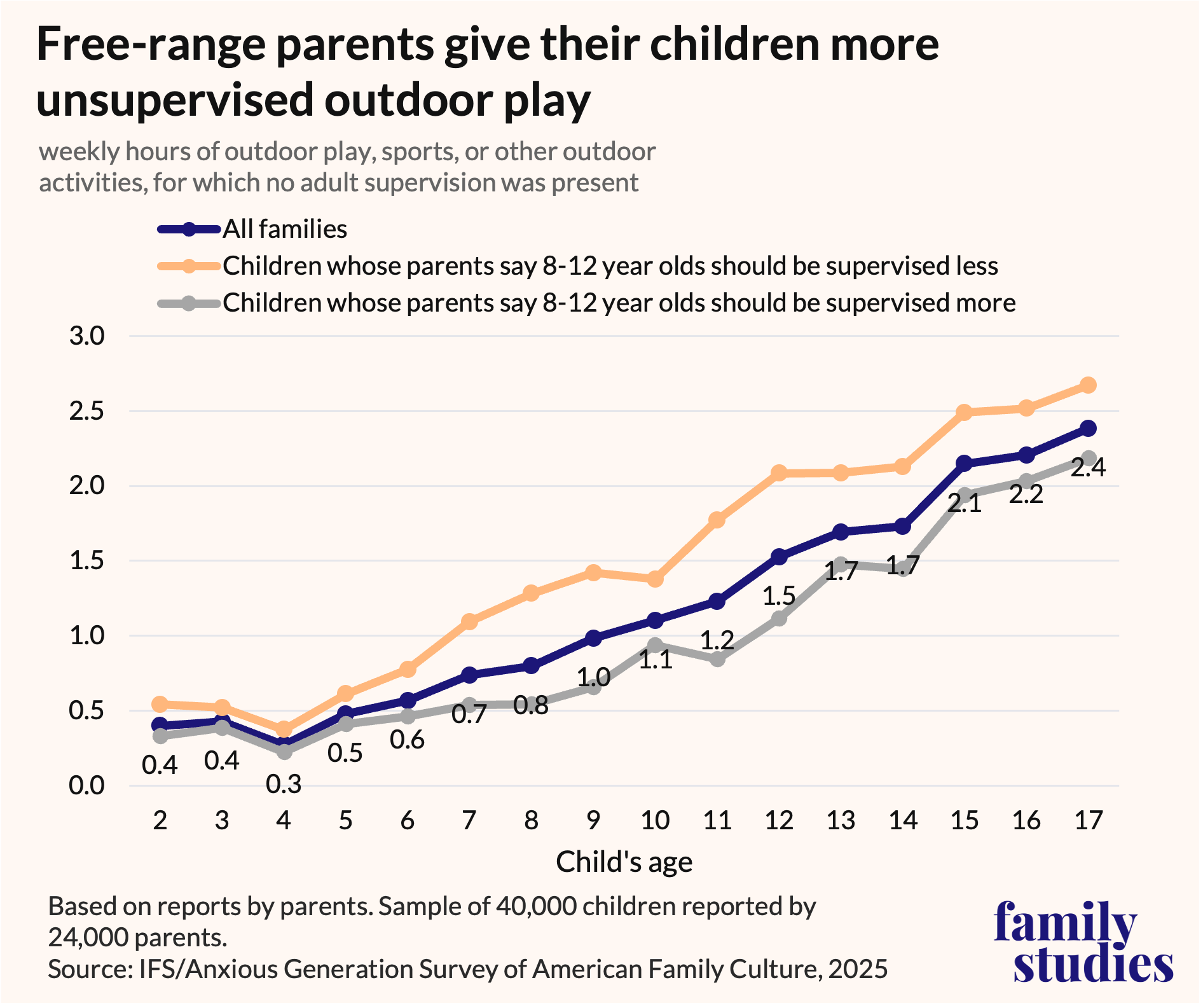
Figure 7. Weekly hours of outdoor play and activities for which no adult supervision was present, by child age and parental supervision opinions, 2025
It is worth noting, however, that despite the documented developmental benefits of play, independence, and mobility for children, we find that most American parents believe that children today are under-supervised. In fact, 62% of all parents in our sample said that 8 to 12-year-old children should receive more supervision than they currently do. We find no meaningful differences on this issue between religious and secular—nor between conservative and liberal—parents. All of these groups want more childhood supervision.
This is also true for parents of different levels of educational attainment. We find a majority of groups, from those without a high school diploma to those with a graduate degree, who also believe that kids are under-supervised.
But here, there are some interesting differences. American parents with a graduate degree are about 10 percentage points less likely to think that children are under-supervised. This provides strong evidence that highly-educated Americans are the most supportive of the idea that kids should have more freedom.
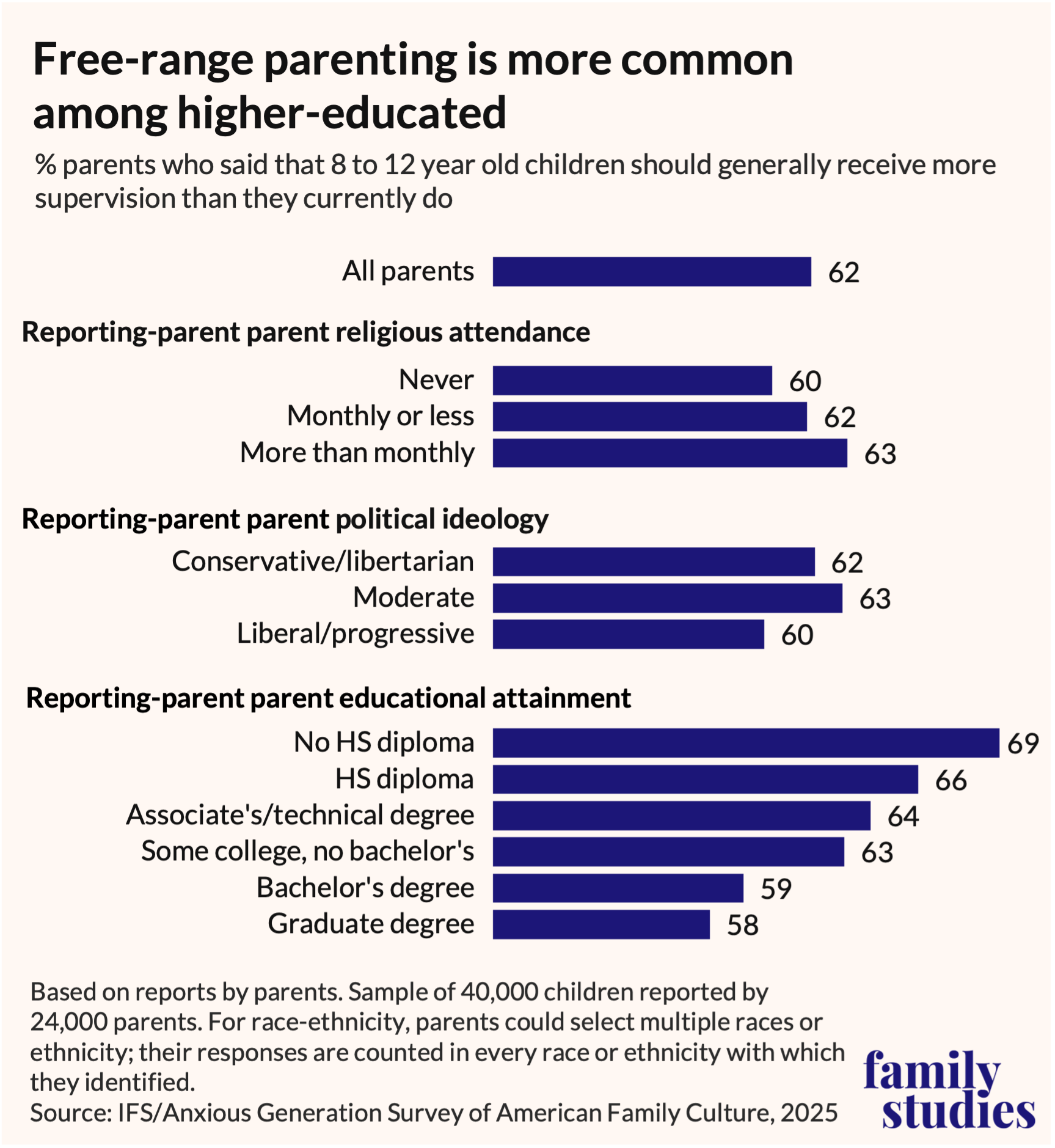
Figure 8. Share of parents who said that 8- to 12-year-old children should generally receive more supervision than they currently do, by demographic categories, 2025
For about half of our respondents, we were able to match them to a valid latitude and longitude coordinate in the United States. Using that data, we then matched individuals to walkability traits for their neighborhood using EPA-calculated walk scores. We also matched them to neighborhood traits such as land coverage by parks, land coverage by woods, and other undeveloped territory, building structure density, and population density. The conclusions from all these approaches were identical: the physical form of a neighborhood has no correlation at all with how much autonomy kids have to go places or how much time they play outside. The figure below shows walkability scores versus the distance kids are allowed to walk.
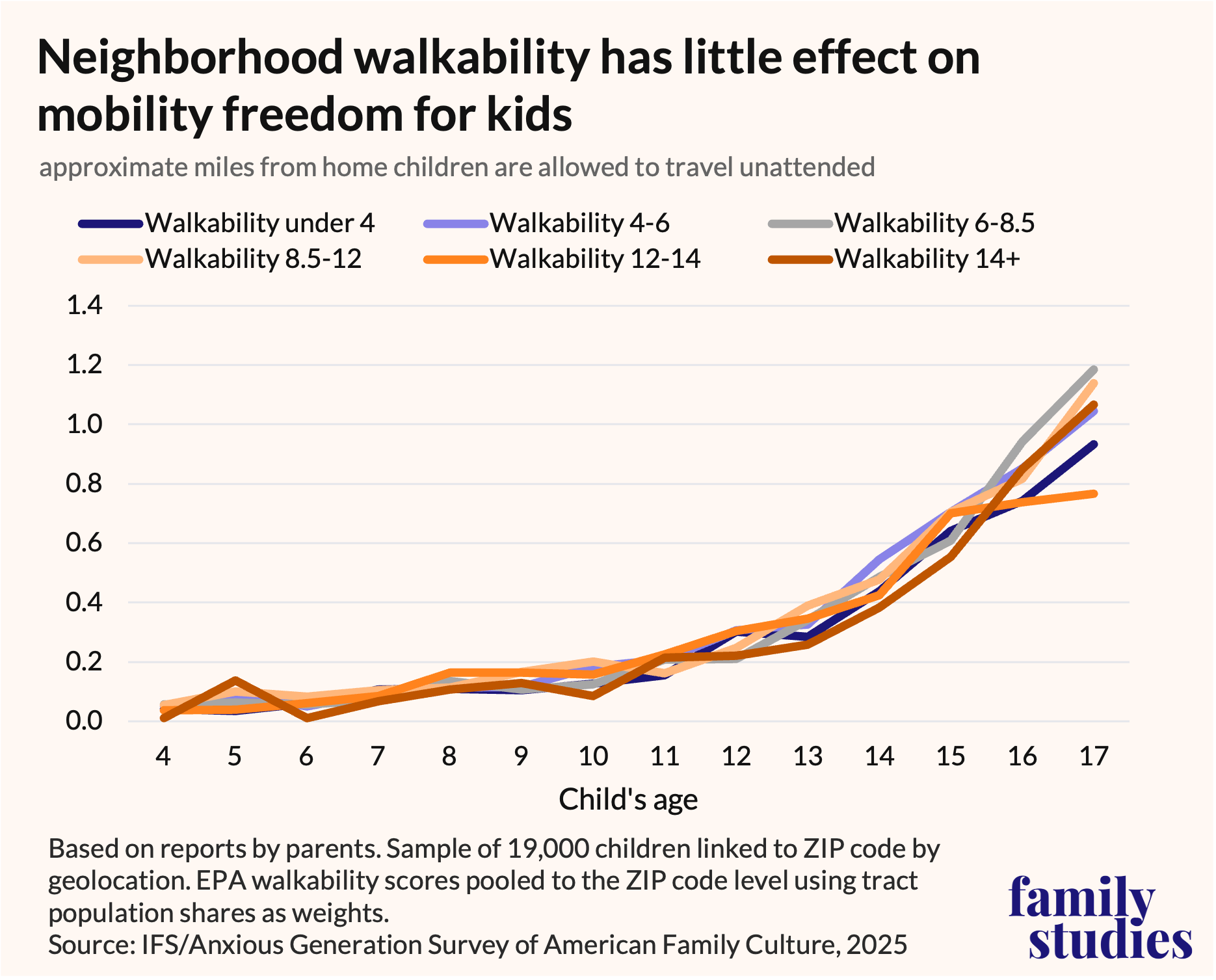
Figure 9. Approximate miles from home children are allowed to walk unattended, by child age and EPA walkability score of geolocated ZIP code, 2025
Autonomous mobility matters for kids. For example, while kids tend to spend more time hanging out with friends unsupervised by adults as they grow up, we find that the entire effect of age is mediated by autonomy in mobility. In other words, parents who do not allow their kids to have expanded mobility as they grow up inadvertently trap their children in foreshortened social lives more typical of much younger children.
As can be seen in the next figure, 14- to 17-year-olds who are not allowed to leave their family’s home or yard have barely more unsupervised social time with friends than 5- to 9-year-olds who cannot do so. The difference is only about 2 to 3 hours. Meanwhile, kids who can go anywhere in their neighborhood or beyond have about 4 to 5 hours of unsupervised social time with friends, with little variance by age. The key factor that determines whether or not children have rich social lives with their friends is simply how much freedom parents allow them to have
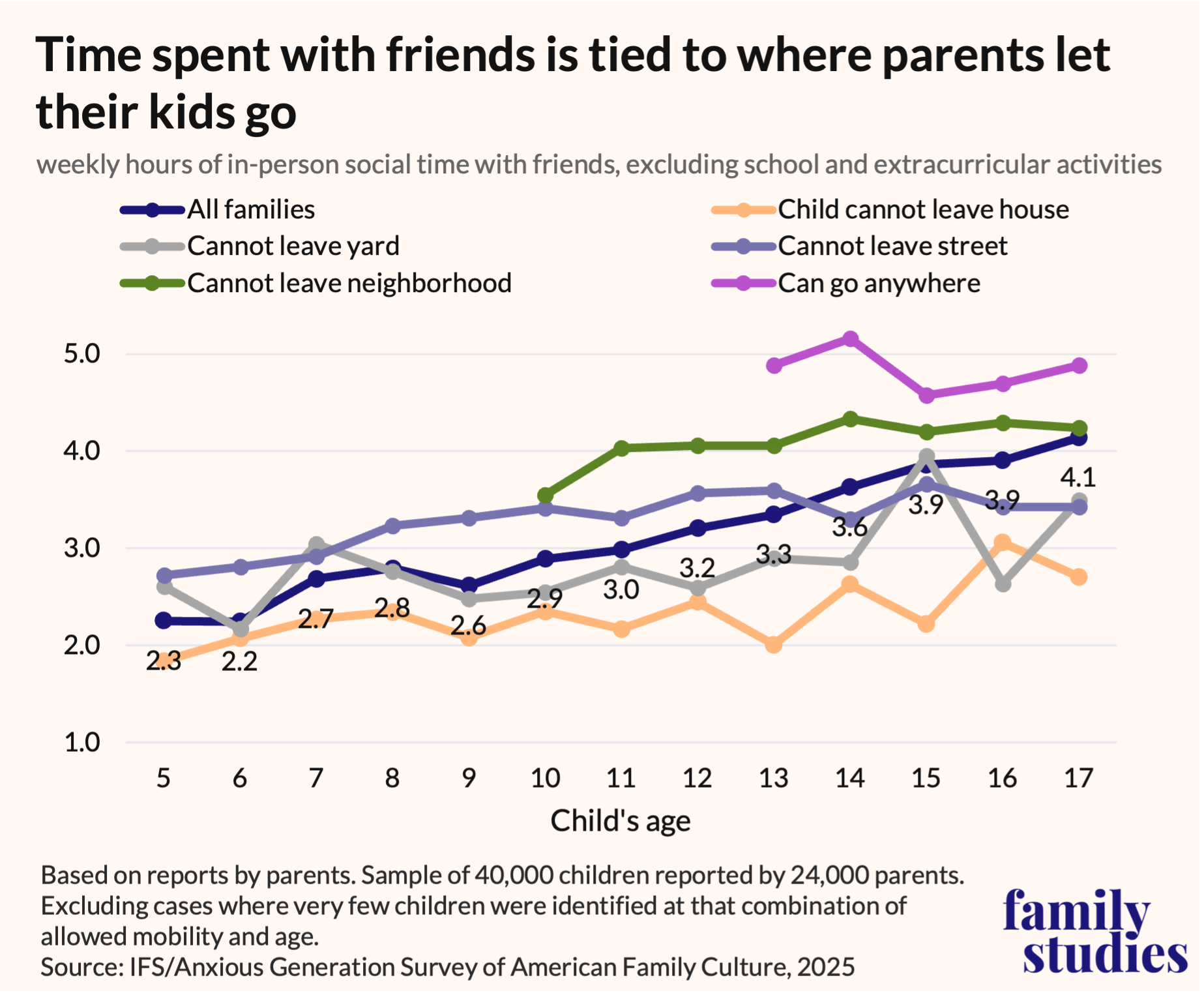
Figure 10. Weekly hours of in-person social time children have with their friends, excluding school and extracurricular activities, by child age and mobility restriction level, 2025
Conclusion
Over recent years, social psychologists like Jonathan Haidt have increasingly underscored the developmental value of children spending less time on their devices and spending more time playing outside unsupervised with their friends. But these findings and insights, according to our research, have yet to deeply penetrate mainstream parental practices. Much more needs to be done to establish societal norms that can guide parents toward healthier parenting practices for their children.
Furthermore, it is quite clear that the old paradigm of the digital divide—i.e., that disadvantaged kids are being left behind by insufficient technology access—is no longer relevant or meaningful. In fact, a clear sign of privilege today is the ability of parents to both establish boundaries around their children that limit their access to screens, and encourage them to freely play.
Acknowledgement: The Survey of American Parenting Culture was made possible through a collaboration between The Anxious Generation Movement and the Institute for Family Studies.