
Highlights
“The most significant challenge I’ve faced is trying to get a job after college and marrying. Settling down for a new phase of life took me through anxiety, depression, and low morale.”—Married, age 25, employed part time
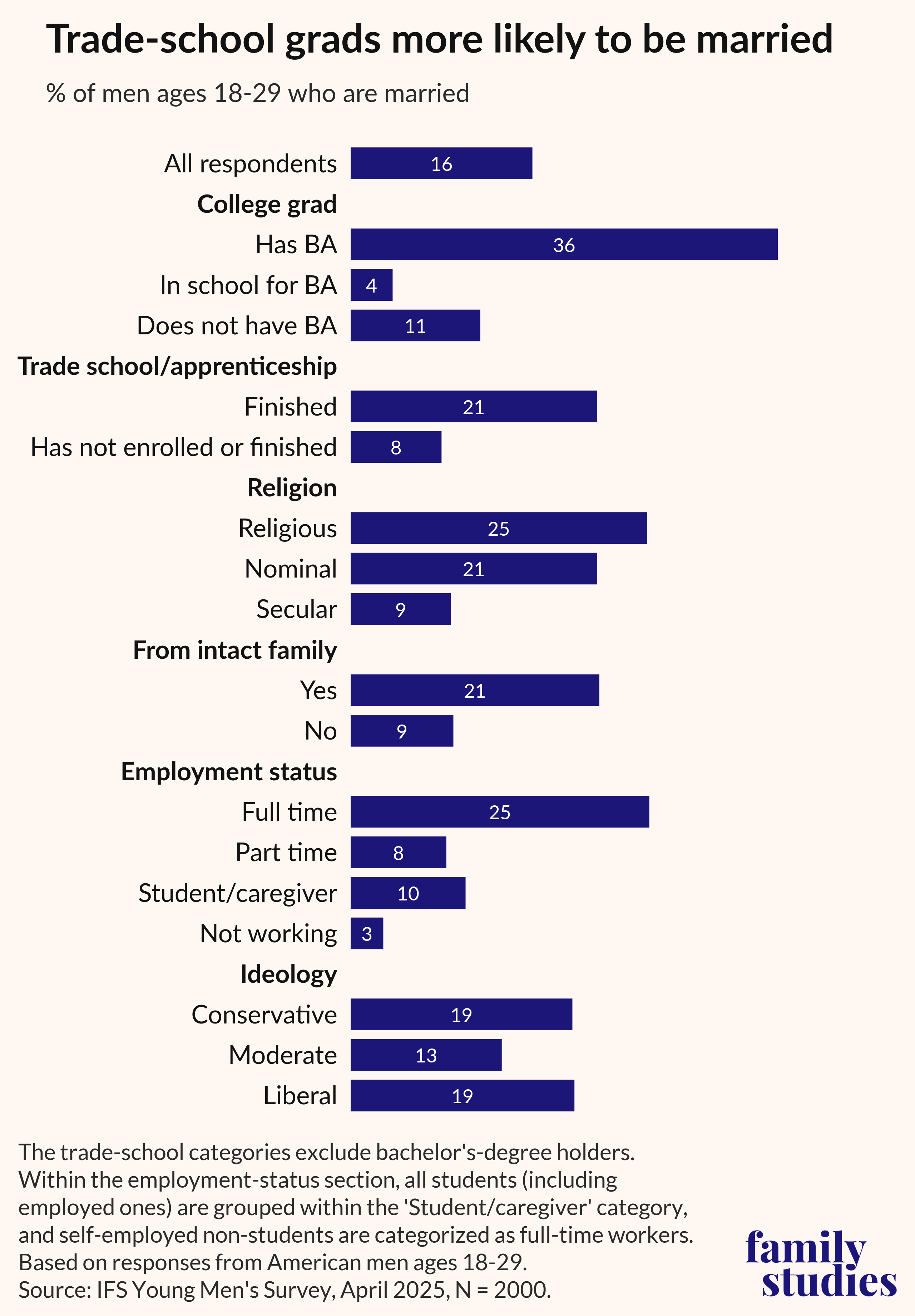
In our new report, American’s Demoralized Men, we show that most young men want to get married, and they want to have children. Among the young men ages 18-29 that we surveyed, 16% are married. (At this young age, only about 1% total have ever been separated, divorced, or widowed.) Naturally, the older respondents are more likely to be married than the younger: 6% of those ages 18-23 and 25% of those between 24 and 29 have tied the knot. Today, the median age of first marriage among American men is 30.2, the highest age, outside the pandemic, since the first census in 1890.
Among the large group of unmarried men, less than one-third (30%) are currently in a romantic relationship. This group includes 11% who are living with a partner; a significant percentage of these cohabiting men (46%) are also parents. That leaves a full 70% of the single men, or 59% of the whole sample, who are not in a romantic relationship.
Young men, in sum, are having a hard time in matters of love.
Most Single Young Men Want to Date
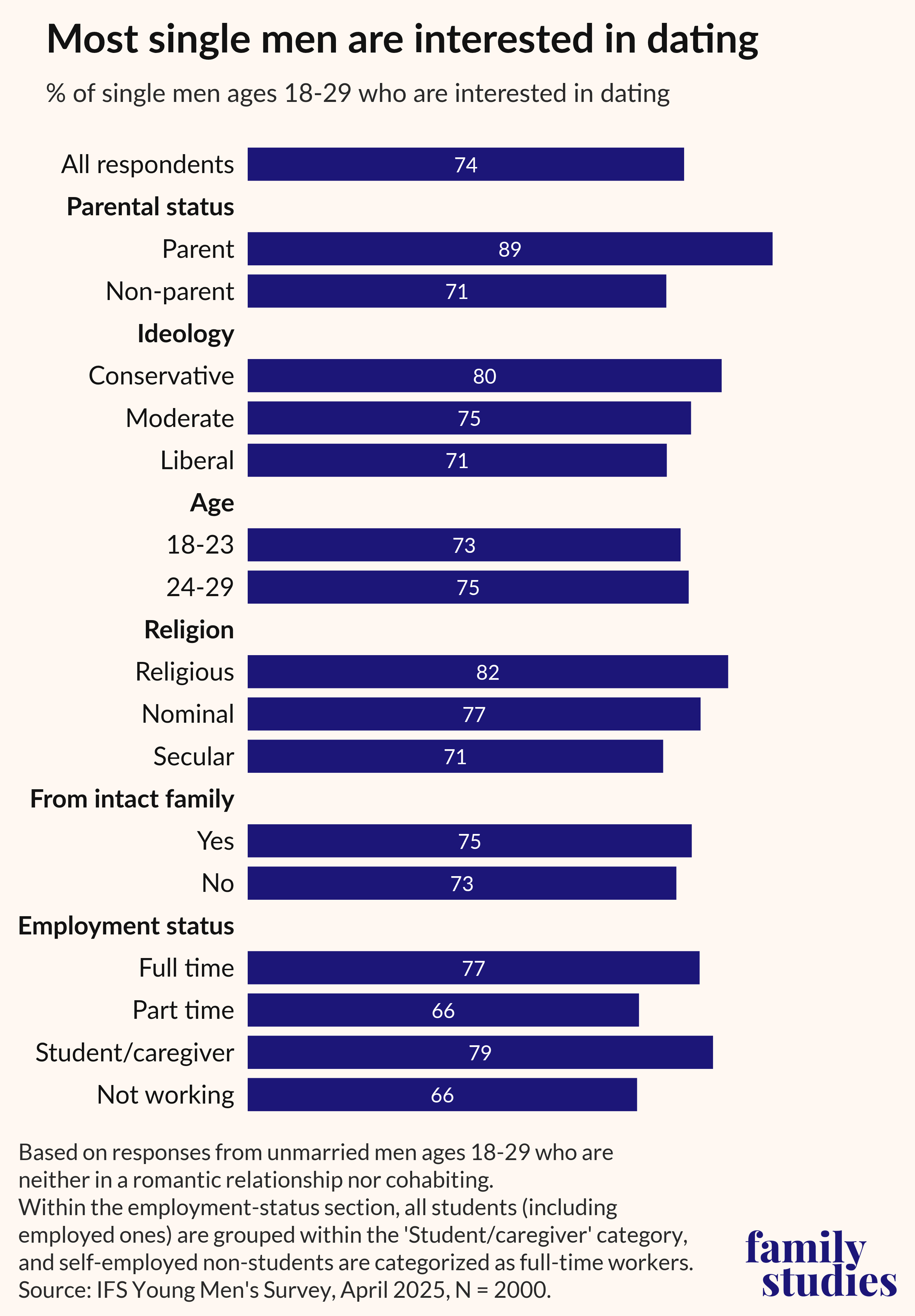
We asked the young men who are not in a romantic relationship if they were interested in dating. This was a simple yes-or-no question. As can be seen in the figure below, the great majority, around three-quarters of our sample, answer “yes.” We also find that religious men are more likely to express interest in dating than their secular counterparts; similarly, among non-students and non-caregivers, full-time or self-employed respondents are more likely to be interested in dating than those who are not working. Conservative respondents and parents are also more interested in dating than liberal respondents and non-parents, respectively. Overall, however, we find that young men who are not presently in a romantic relationship have not given up on the possibility of one.
But that non-defeatism does not mean these men are optimistic. Quite the opposite.
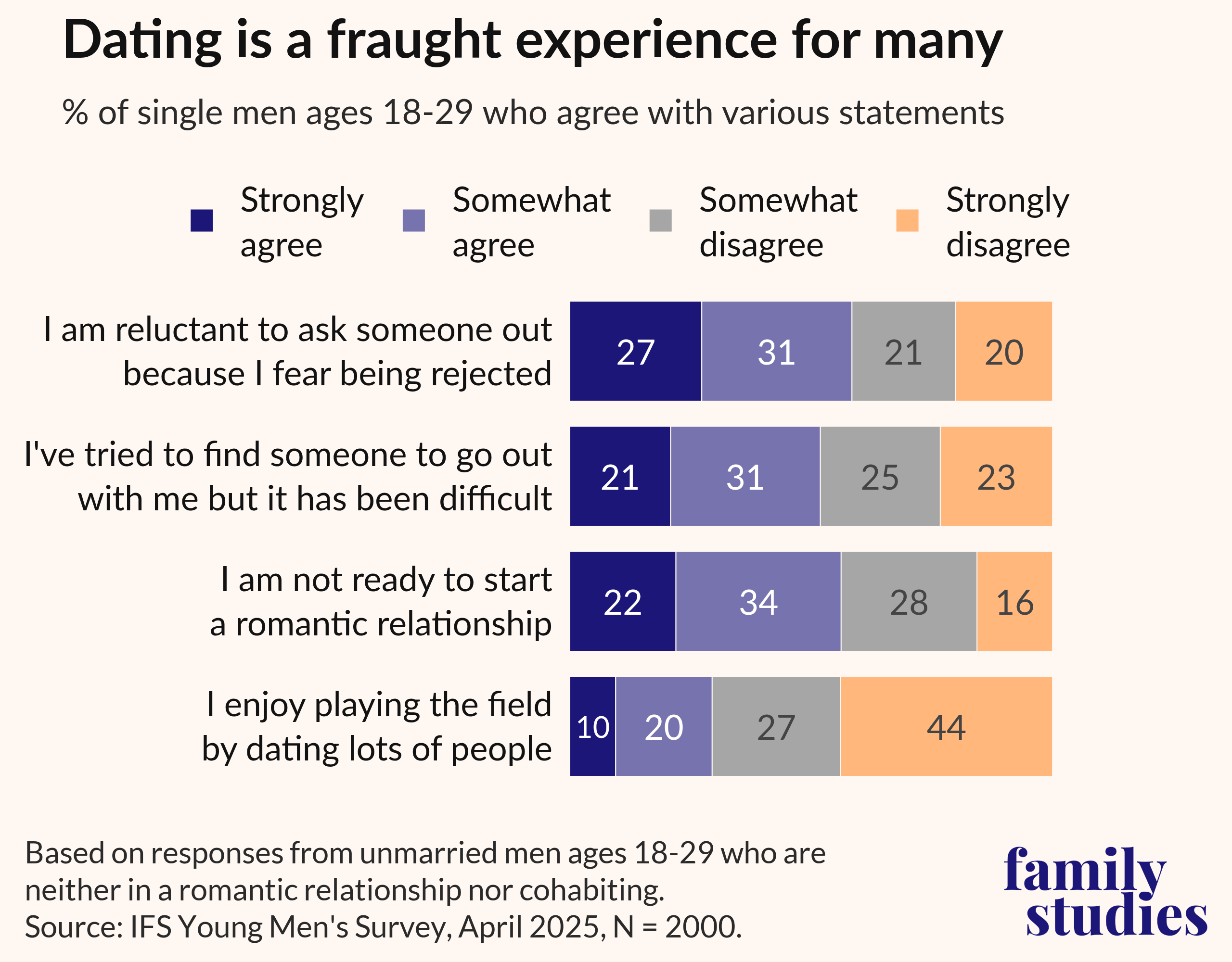
To get a better understanding of the situation of those without a romantic relationship, whether interested in dating or not, we presented them with a series of statements and asked for their level of agreement or disagreement. The following figure shows the percentages of those who agree. About half indicate that it has been difficult to find someone who will go out with them, and nearly 6 in 10 report that that the fear of being turned down makes them reluctant to ask.
These two reasons are very likely related. They reflect the judgment of young men that they do not possess the personal qualities needed for a successful romantic relationship. They may feel that there is something inadequate about themselves or their situation, or that they cannot meet the demands of potential dates.
We see the same patterns with respect to readiness for marriage. What is clear is that, for many young men, dating and romance are fraught.
But the data also make clear that the lack of a stable romantic relationship, or not seeking one to begin with, is not because these men want to stay detached. Over half of our respondents say that the time is not right to start a romantic relationship. This underscores that there is a clear priority in the minds of men with achieving a certain station in life before being ready to date and marry. Lastly, whatever luster “playing the field” might have once had, fewer than 1 in 3 young men agree that they prefer to date lots of people. For most, just getting a date is the challenge.
Most Young Men Desire Marriage
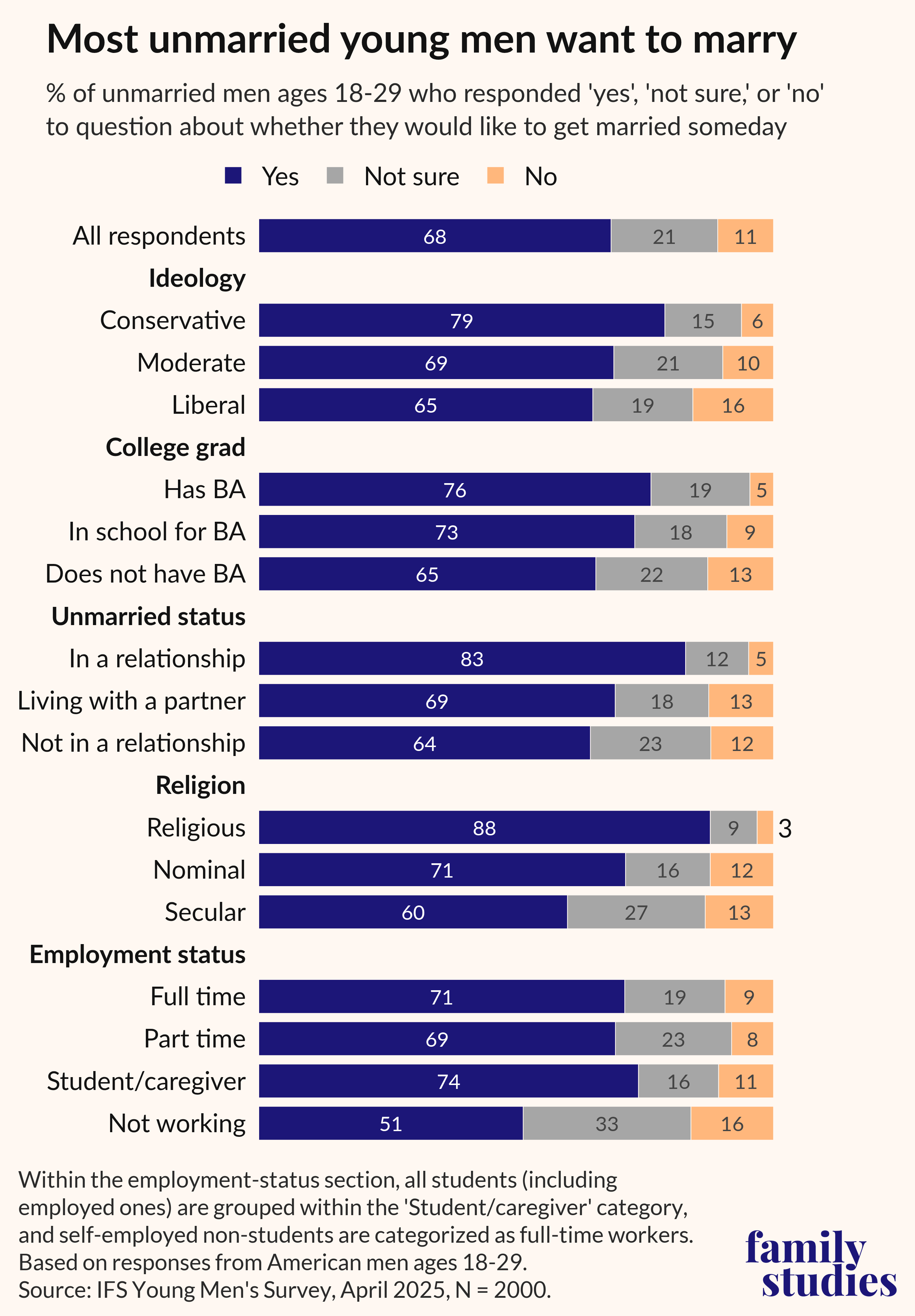
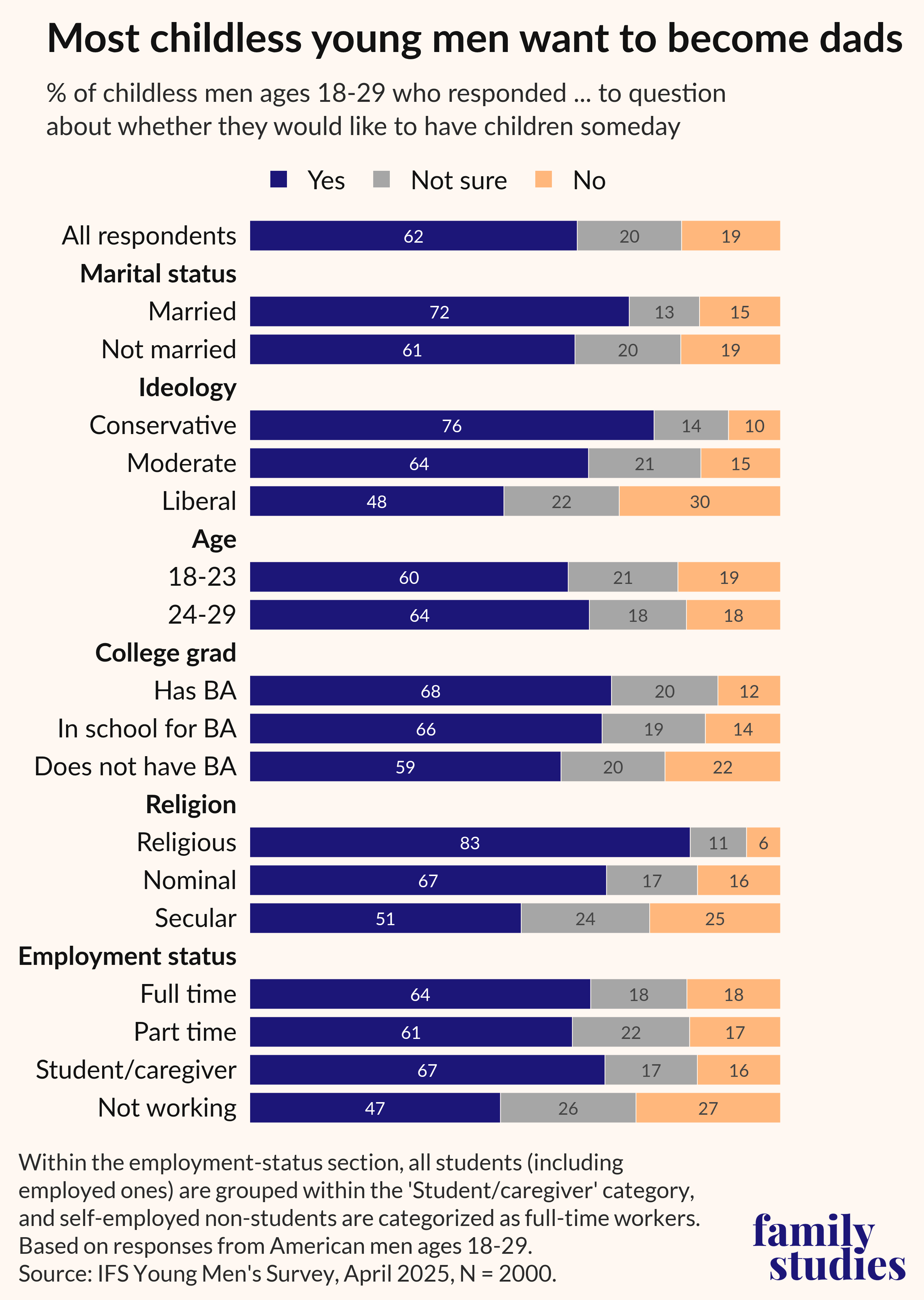
We then asked this group, as well as the unmarried who were in a romantic relationship, if they would like to get married someday. A substantial majority say “yes” (68%) and about 1 in 5 are “unsure” (21%). Only 1 in 10 say “no.” We also find that the percentage of cohabiting young men who wish to get married (69%) is significantly lower than the corresponding percentage for unmarried men in a romantic but non-cohabiting relationship (83%). Although cohabitation is sometimes seen as a precursor to marriage, we find that the percentage of cohabiting men who plan to get married does not differ significantly from the percentage of unmarried men who are not presently in a romantic relationship (64%).
Similar to our results on dating, young men are more likely to desire marriage if they are parents, politically conservative, religious, and (among non-students and non-caregivers) working full time or self-employed (rather than not working). Furthermore, respondents from an intact family (meaning their parents were married to each other when the respondents were 16 years old) and graduates from a four-year college are more likely to be interested in marriage.
Reasons Men Give for Putting Off Marriage
To explore the reasons why some young men are hesitant or do not want to get married, we provided the list in the following figure and asked them to select any that apply. Of the seven possible responses, four might be classified as reasons to be unsure. Two, as noted earlier, concern their financial situation. Some are unsure because they are not yet financially independent: one-third check this box. And some, 1 in 4, check a related box: the lack of a stable job. Among non-students and non-caregivers, those who are not working are more likely to select these latter two responses than those who are full-time employees or self-employed.
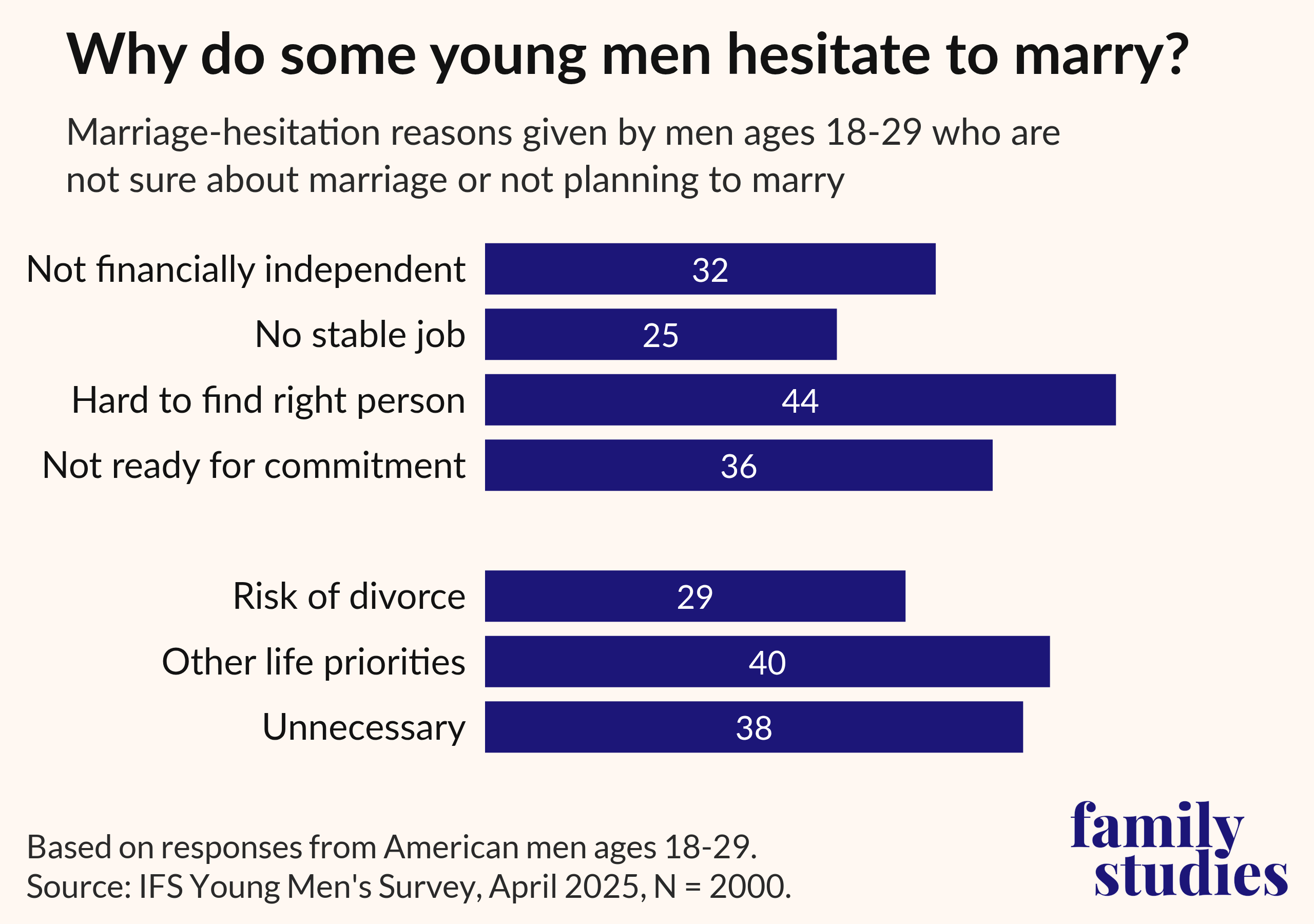
Two other reasons for hesitation about marriage concerned being personally unprepared to commit and the problem of finding the right person. A little more than one-third (36%) select “not ready for the commitment,” and even more (44%) choose it’s “hard to find the right person to marry.” Interestingly, those who are the most religious (defined as attending services more than once a month) are more likely (49%) to report not being ready for commitment than nominal (30%) respondents. Consistent with other recent surveys, we also find that men who identify as politically conservative (57%) are more likely to say it’s “hard to find the right person” than either self-identified moderates (41%) or liberals (44%).
Surprisingly, we also find that nearly half (48%) of those with a college degree do not feel ready for the commitment, and just over half (51%) say it’s challenging to find the right person. What makes this finding unanticipated is that, as shown earlier, the college graduates in our sample are much more likely to be married (36%) than those without a BA or who are not in college (11%). We do not find a reason in our data, but their pessimism may reflect a growing sense of financial precariousness among the professional class. As others have documented, having attained a degree, recent graduates may be saddled with considerable debt and facing a very difficult job market.
The other three—although not necessarily fixed attitudes—tilt toward reasons for not wanting to marry. (As a reminder, the following percentages only include those unmarried men in our survey who don’t want to marry or are unsure about marriage.) Just under one-third of this sample (29%) select the statement, “I worry about the risk of divorce.” Many know this risk firsthand, as 63% of this group grew up in homes with unmarried parents when they were 16 years old. (For reference, 46% of all men in our sample came from non-intact backgrounds.)
Even larger numbers of those who do not desire marriage state “I have other priorities in life that are more important than marriage” (40%), and “I don’t believe that marriage is necessary for a long-lasting relationship” (38%). Interestingly, while similar percentages of conservative and liberal (43% and 44%, respectively) respondents in this group explain that they see marriage as unnecessary, only 30% of conservatives—compared to 47% of liberals—say that they have life priorities other than marriage.
A Desire for Children
We also asked young men who want to get married if they would like to have children someday: 82% say “yes”; 10% are not sure; and just 7% say “no,” they do not want to have kids. Turning the question around, we asked the young men who want to have children if they want to get married: 90% say “yes,” 9% are unsure, and just 1% say “no.” The bottom line is that very few respondents want kids but not marriage, and only a small proportion want marriage but not kids. For young men—at least in terms of what they desire—marriage and children remain interconnected.
That said, we find that 30% of young men in our sample overall are fathers. (This percentage was much higher than the percentage (13%) of men ages 18-29 in the 2024 Survey of Income and Program Participation (SIPP) who reported being a father. Therefore, these findings should be interpreted with caution). Not surprisingly, men ages 24-29 are more likely (40%) than those ages 18-23 (19%) to be dads. Most have only one child, with just 31% of dads (and 9% of all respondents) reporting two or more children. Of course, these numbers will change as the men in our sample get older.
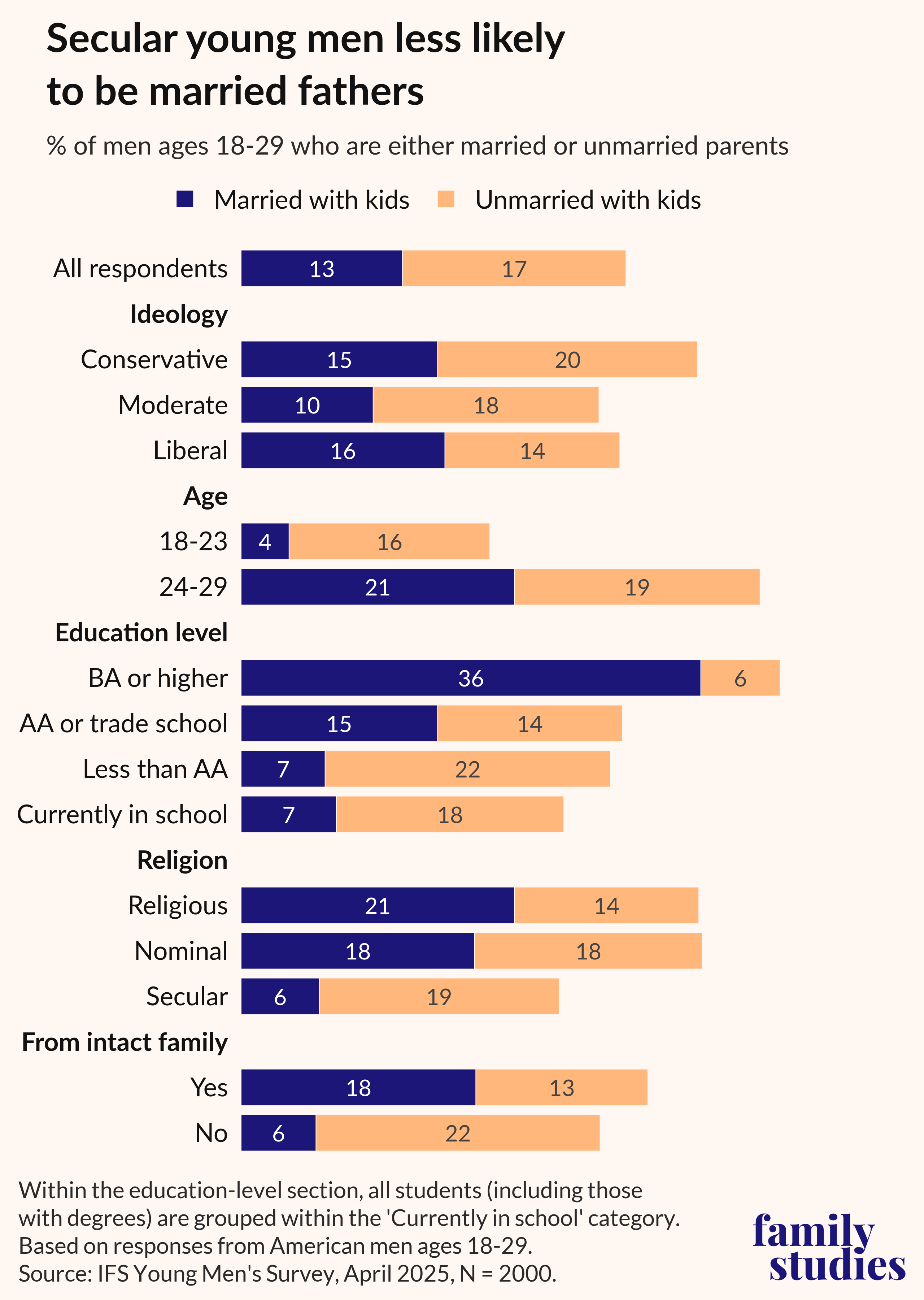
It is notable that married fathers are in the minority: as the following figure shows, 58% of the dads in our sample are unmarried. Substantial percentages of dads within many demographic groups, including 57% of conservatives, 40% of religious respondents, and 42% of those from intact families, are unmarried. College graduates, however, have far lower rates of out-of-wedlock parenting: among dads who have a bachelor’s degree or higher, 80% are married.
Meanwhile, only 27% of dads without a bachelor’s degree (and who are not in school) are married. We also find that, among the parents in our sample, the percentage of respondents from intact households who are married (58%) is nearly three times higher than the percentage of respondents from non-intact households. Religious practice appears to be similarly formative for married fatherhood; while 60% of religious dads are married, only 25% of secular dads are married.
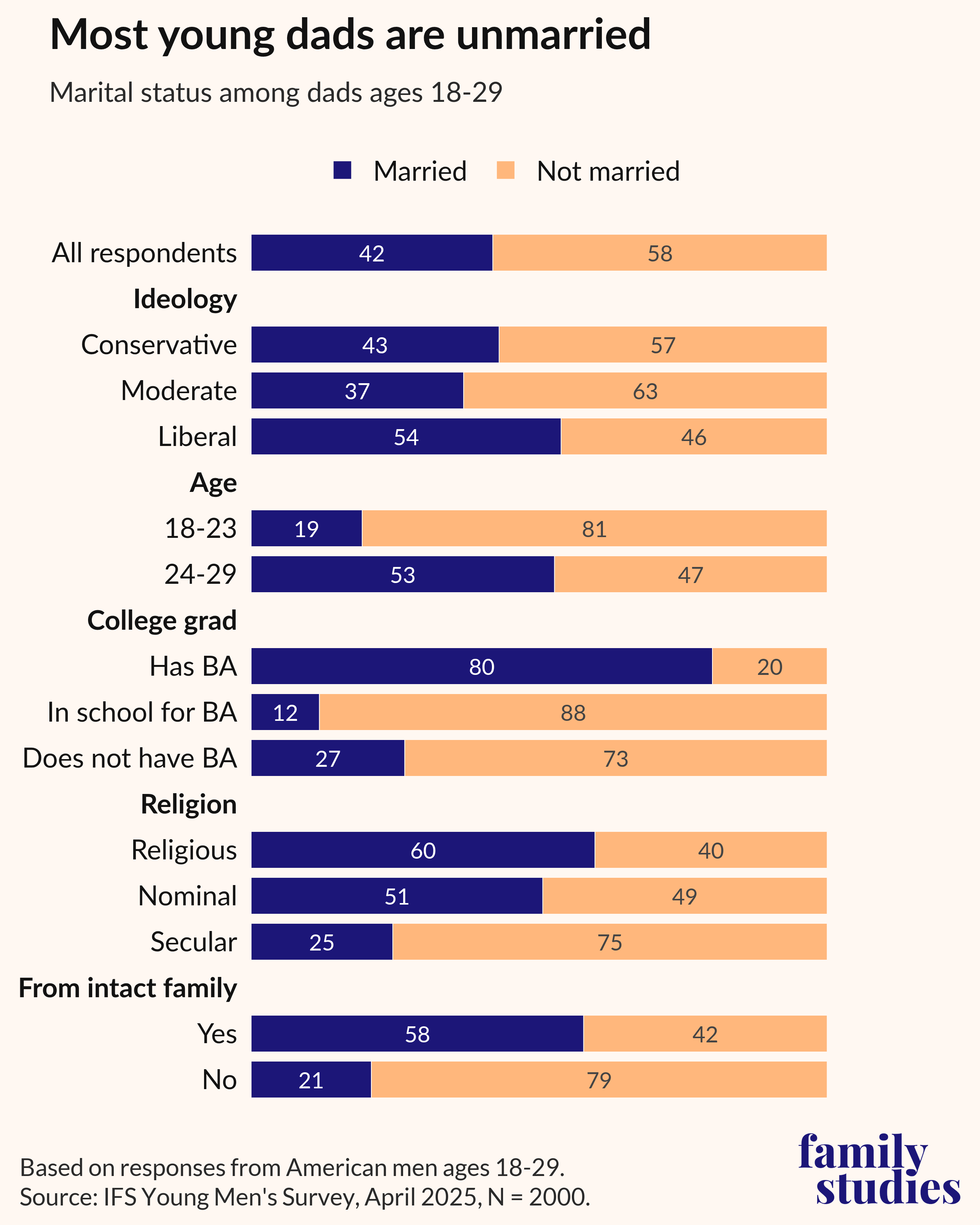
When we examine marital and parental status together, we find significant differences between respondents from intact and non-intact families. For example, 18% of respondents who grew up with married parents (until at least age 16) report being a married parent themselves; meanwhile, only 6% of non-intact respondents do. It’s notable, if not surprising, that respondents from non-intact households are more likely to be unmarried dads (22%) than are those from intact backgrounds (13%).
Since this is not a decision men want to make alone, the realization of parenthood will depend on a successful navigation of the troubled waters of dating and finding a marriage partner. It is likely that many will fail. In 2024, according to the Census Bureau, 47.1% of households were headed by married couples, which is the second lowest share all-time. That is a much lower percentage than if the desires of young men for marriage and children were fulfilled. There are clearly obstacles.
Marriage Predictors: Education and Income
Our best evidence on the nature of the obstacles can be gleaned from looking at data on married men and at what men themselves prefer in a marriage partner. In an analysis of men ages 25-29, we can identify some potential predictors of getting married. For instance, those with a bachelor’s degree or higher are far more likely to be married (45%) than those who neither have a college degree, nor are in school to get a degree (19%). In addition, religious respondents are roughly three times as likely to be married (44%) as secular respondents (15%).
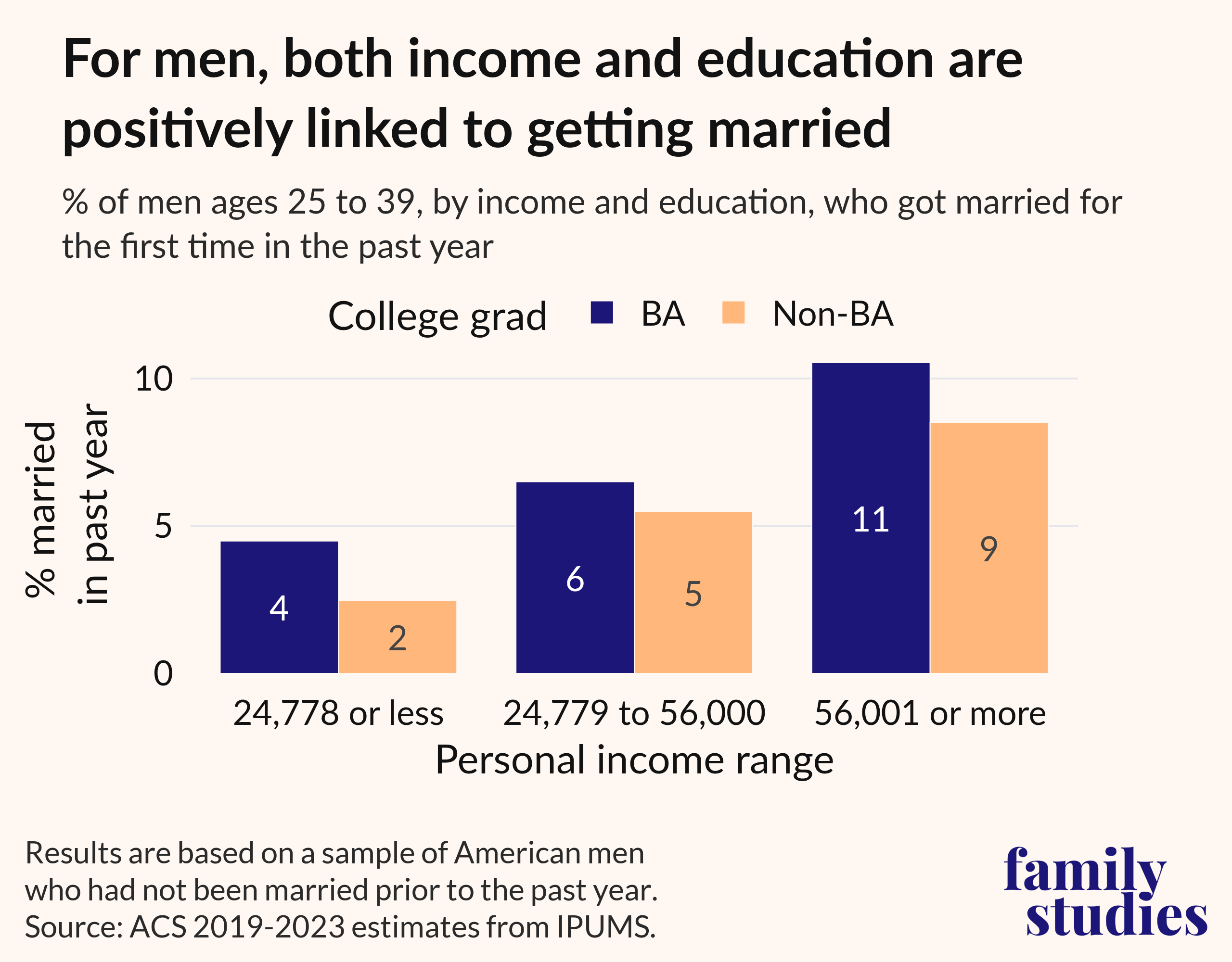
For those who desire to marry, however, income and education also play a role. While we can see this association in our survey data through age 29, most men get married in their 30s. We therefore draw on the Census Bureau’s American Community Survey to look at marriage trends for a higher age range: 25 to 39. As the following figure illustrates, for men ages 25-39, those with degrees are more likely to get married in a given year than those without degrees in each income group. But income alone is also a factor. The highest-earning young men without degrees are around twice as likely (9%) to get married as the lowest-earning young men with degrees (4%).
This pattern has been observed before. Research on “assortative mating” (how partners chose each other) has typically examined income and education separately. Treating these variables together, a 2017 study of heterosexual newlyweds in two time periods observed an interesting configuration. On the one hand, as women came to have more education than men after 1980, they shifted from a tendency to marry men with more education to a tendency to also marry men with less. On the other hand, the tendency of women to marry men with higher incomes than themselves remained the same. And, the study showed,
the tendency for women to marry up in income was generally greater among couples in which the wife’s education level equaled or surpassed that of the husband than among couples in which the wife was less educated than the husband.
In other words, while a marriage may occur when the man has less formal education, it is less likely to do so when her income also exceeds his.
Talk of “marrying up” can give the impression that marriage choices are being made in purely economic terms. But that is clearly wrong. We can get a better picture from looking at what young men who are uninterested in, or unsure about, marriage feel they need to have in place before getting married.
First, around two-thirds of young men rank having a stable job as very important for marriage preparation. With the “somewhat important” response included, the endorsement exceeds 90 percent. On a second question, about financial security, the very/somewhat important percentages are nearly identical. We also asked all men, including those who are already married, about the importance of various qualities in a life partner: 40% say that having “a stable job” is a very important attribute; an additional 39% consider it somewhat important. A related statement concerns “good earning potential.” While 30% say that a “good earning potential” is not too, or not at all, important, the majority see this potential as very (33%) or somewhat (37%) important.
These responses suggest that most young men do not envision being the sole provider for their family. This interpretation is confirmed when we asked a breadwinning question directly. We presented the following two statements and asked all respondents to indicate which statement came closest to their personal view, even if neither was exactly right.
- Statement A: “It is better for everyone in the family when men primarily focus on breadwinning, while women focus more on caring for the children and home.”
- Statement B: “In a family, the couple should divide work and home responsibilities in whatever way best suits them.”
About one-third (32%) endorse statement A. Men with bachelor’s degrees and those who are neither college grads nor in school for a BA have similar rates of choosing statement A (29% and 33%, respectively); however, conservative men are more likely (49%) to choose this statement than moderate (32%) or liberal (19%) men. Similarly, a larger share of religious (43%) men endorse this statement than do secular (26%) men.
If young men have a relatively low level of education or income—compared to potential partners—there is a much greater chance that their desire for marriage and children will be frustrated.
Additionally, we queried young men on their view of the following statement: “A man’s role as a father is more important than his paid occupation.” The vast majority of our respondents (87%) either strongly or somewhat agree with this statement. Full-time employees and self-employed respondents who are neither caregivers nor in school are roughly as likely (88%) as all respondents to endorse this statement, as are non-parents (85%).
While there is always a gap between ideals and reality, most men want financial responsibilities to be shared, with partners making choices together in ways they find jointly beneficial. A type of equality seems to be implied, which is perhaps even more the ideal for women. As economists have noted, as women’s earnings have grown, they have become more self-sufficient, and marriage has become more of an option. Like men, women have professional aspirations of their own, linked to larger ideals of self-realization. In marriage, the goal is not to out earn their husbands—though some do—but to be on a relatively equal footing with a partner, not only financially but in other ways that income might signal, such as ambition, confidence, temperament, or work ethic.
Among young men who have not rejected the idea of marriage (already predicted by growing up in an intact family), we see a strong emphasis on being financially stable themselves and wishing for much the same from a possible life partner.
We can also see from our findings an important obstacle. If young men have a relatively low level of education or income—compared to potential partners, whose fortunes have been generally rising—there is a much greater chance that their desire for marriage and the children that marriage produces will be frustrated. Tangible obstacles, then, are affecting the declining marriage rate more than any shift in men’s desire to be married.
Editor’s Note: This essay is excerpted from Chapter 3: “What Young Men Want—Marriage and Manhood” in our March 2026 report, America’s Demoralized Men, Part 1.


