Highlights
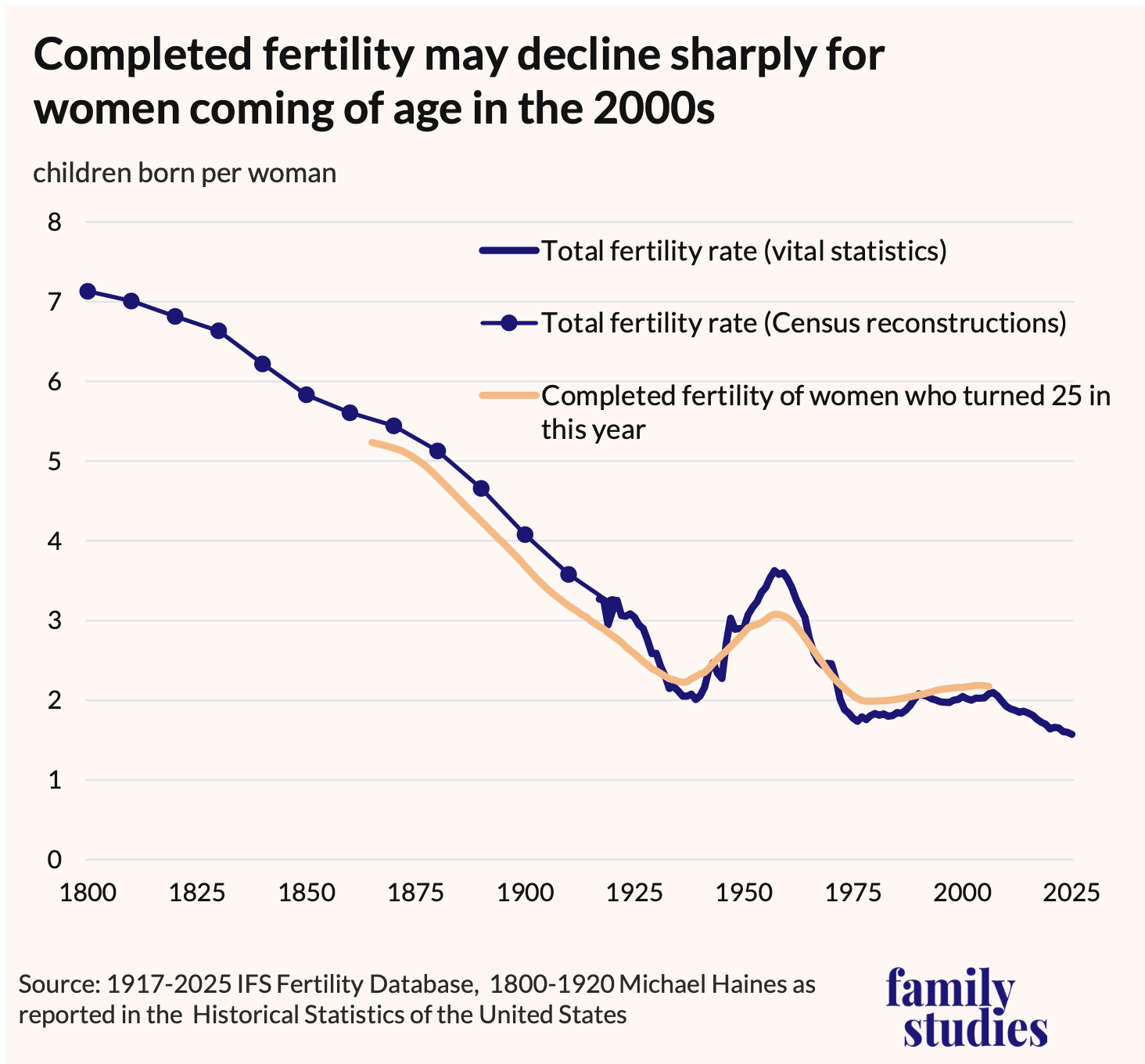
- New historical data show that the U.S. is now in its third historic period of extended below-replacement-rate fertility Post This
- Celebrity culture shapes fertility: fans of celebrities who have more kids themselves want to have more children as well. Post This
- If policymakers wish to reverse the birth rate decline, they will have to consider a wide range of out-of-the-box policy proposals, including a generous baby bonus. Post This
Of the approximately 700 million people who have lived in America since 1600, and the over 690 million since 1776, about 80% were born here. We may be a nation of immigrants—but throughout our history, the true source of our growth has been in family and fertility. As our country celebrates its 250th anniversary, this report takes stock of how we got here and what the future may hold. Unfortunately, given that U.S. birth rates are now below 1.6 children per woman, the answer for how we reached our current scale and strength as a nation—families raising their own children—points to a dour conclusion: without a new birth of family life in America, the greatest days of freedom will indeed be behind us. The future of liberty for all of us depends on the future of family.
In our new report, The Demographic Dead End: 2026 State of Fertility, we present fresh estimates of fertility for every state with available vital statistics back to 1917, and—as a special feature in celebration of our nation’s 250th birthday—we also produce birth rate statistics for one of the nation’s original mother-colonies, Massachusetts, going back 365 years. (Also be sure to check out the interactive IFS Fertility Database Explorer).
Beyond this new release of data demonstrating when and where American family formation has plummeted, we also use results from a new survey of over 4,700 Americans to explore how American cultural norms around friendship and celebrity families may shape fertility. If American fertility is to recover, new cultural norms around friendship and family life may be an important element.
Finally, informed by the available evidence on fertility and family policy, and in light of the new evidence on family culture, we outline a plan to raise American birth rates back to where they belong, and where most Americans say they want them to be: 2.4 children per woman.
Key Findings:
1. New historical data show that the U.S. is now in its third historic period of extended below-replacement-rate fertility.
Importantly, this current period of decline is already longer than previous declines, has fallen to lower lows, and is more widely shared around the country. The new data we present on historic American fertility stretches further back into our history at a higher level of quality and reliability than any previous vital statistics-based reconstruction of U.S. fertility.
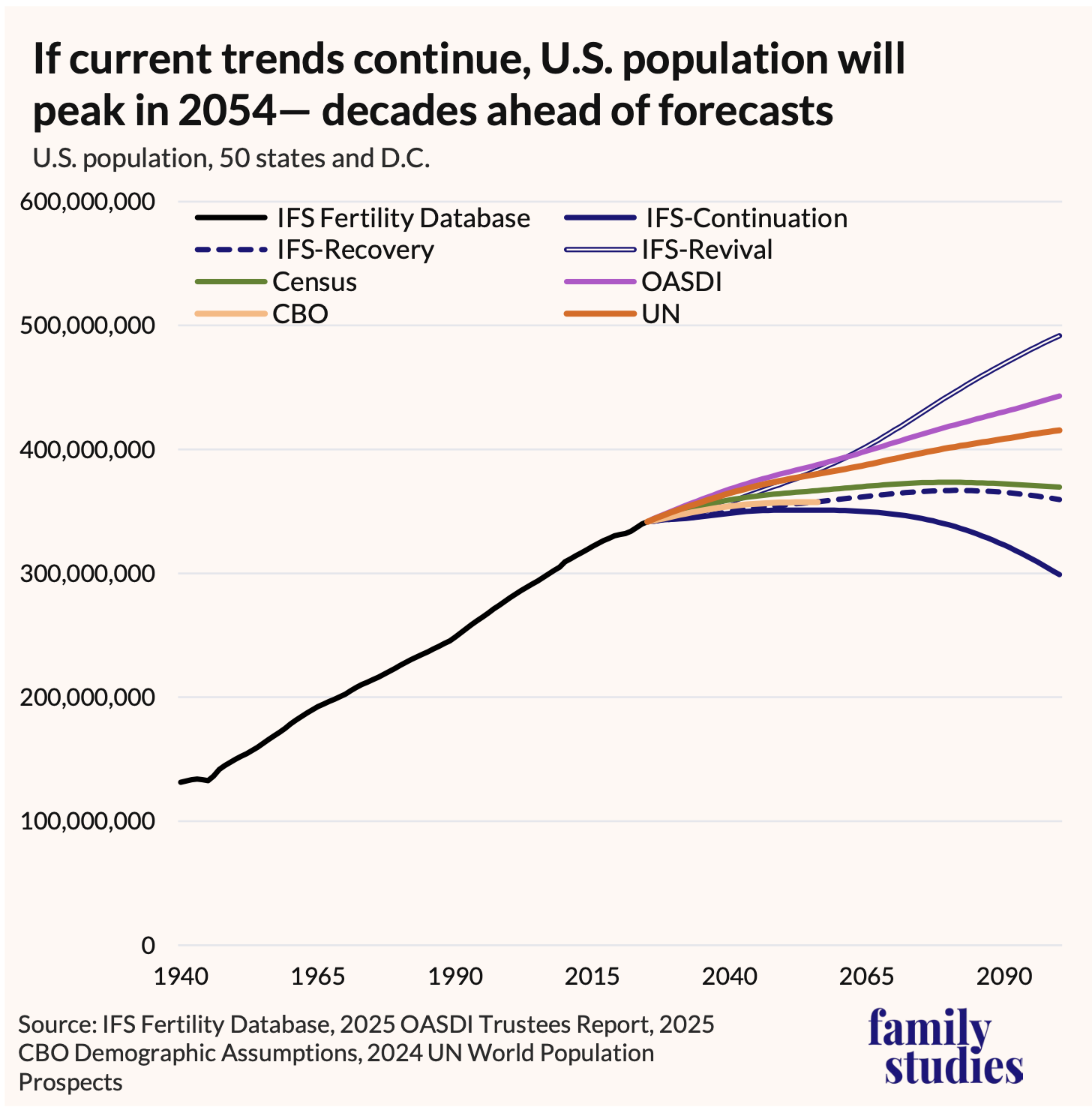
2. U.S. population growth has abruptly slowed down in recent years, driven in large part by fertility rates collapsing to record lows.
If fertility rates continue their recent decline, U.S. population will peak around 351 million and begin declining in the 2050s. If fertility rates stabilize, population will peak around 366 million and begin declining in the 2080s.
3. Desired family size has not declined nearly as much, and as a result, the gap between actual fertility rates and the number of children Americans report desiring is rising to high levels.
Even as the total fertility rate has plummeted below 1.6 children per woman, surveys continue to show Americans incorrectly think they will have about 2 children each and aspire to have 2.4 children each.
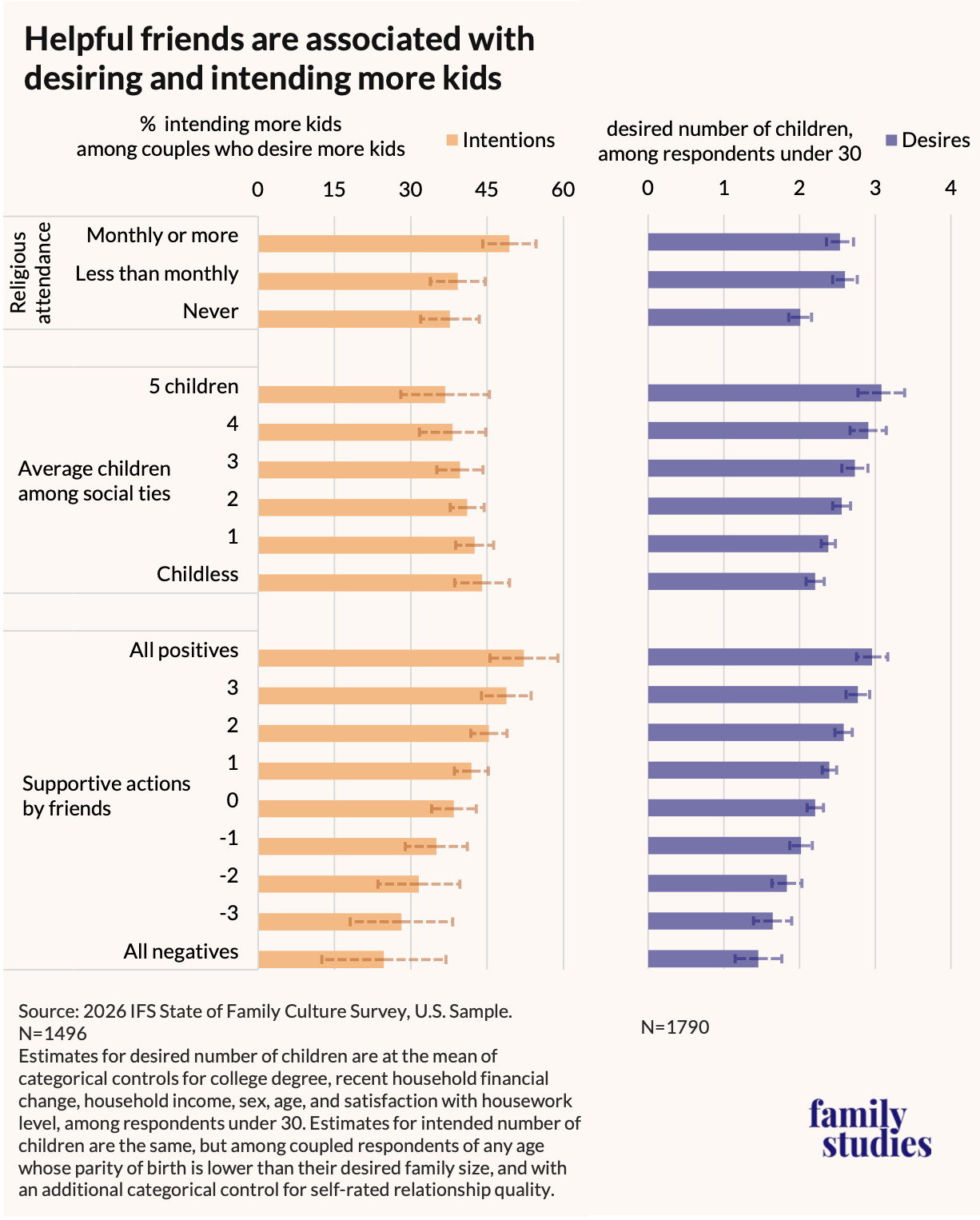
4. Peer culture is a key factor associated with fertility.
Having very helpful versus relatively unsupportive friends can increase desired family size for young Americans by nearly an entire child per family and can increase couple intentions to have another child by about 10 percentage points (an increase of about a third).
5. Celebrity culture shapes fertility: fans of celebrities who have more kids themselves want to have more children as well.
Comparing family size among admired celebrities to individual aspirations, an admired celebrity having one extra child may increase an individual’s desired family size by as much as 0.15 children.
6. If policymakers wish to reverse the birth rate decline, they will have to consider a wide range of out-of-the-box policy proposals, including a generous baby bonus.
However, this need not break the bank: generous baby bonuses worth five or six figures can be paid for with less than 1% of the federal budget; in fact, they’re cheaper than recently proposed child care or parental leave expansions. Massive increases in the generosity of family policy do not have to be fiscally reckless.
7. Beyond financial supports, policymakers and concerned private citizens should consider interventions aimed at fostering a more family-friendly culture.
Based on our findings about friends and celebrities, we outline many ideas for policies that could strengthen and generate family-friendly-friendship.
Continue reading the full report and view the Fertility Database Explorer here.