
Highlights
- If someone wanted to design a system that makes poverty a bit more tolerable and simultaneously more enduring, they would produce the world in which NEET men are living. Post This
- A disturbing proportion of NEET men spend a significant amount of their time obtaining, using, and recovering from the effects of psychoactive substances. Post This
Scholars like Nicholas Eberstadt have documented declining levels of employment among working-age men, which seem to have worsened during the pandemic. As addiction researchers, we were curious to examine what role substance use might play in the lives of men who are not employed, and not in college or in a training program (also known as NEET men)—both in terms of what fills their days and how it may keep them from making progress in their lives. This article highlights some of our key findings; the full paper is available here.
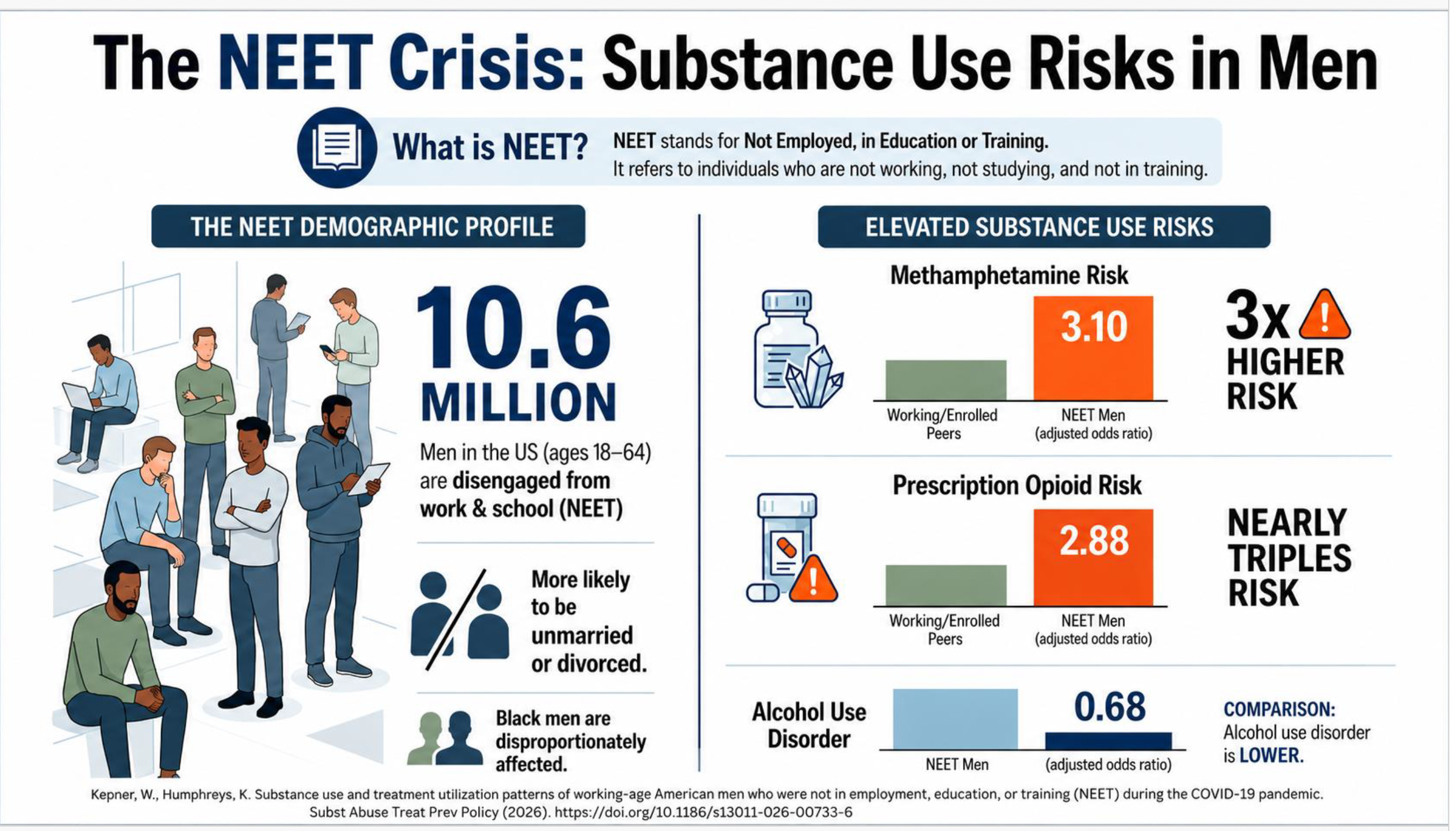
Using the federal National Survey on Drug Use and Health, we analyzed a nationally representative sample of over 27,000 men between the ages of 18 and 64. In 2022, when the job market was red hot (unemployment was 3.6%), more than a tenth of these men were not working, going to school, or participating in a training program.
Who Are NEET Men?
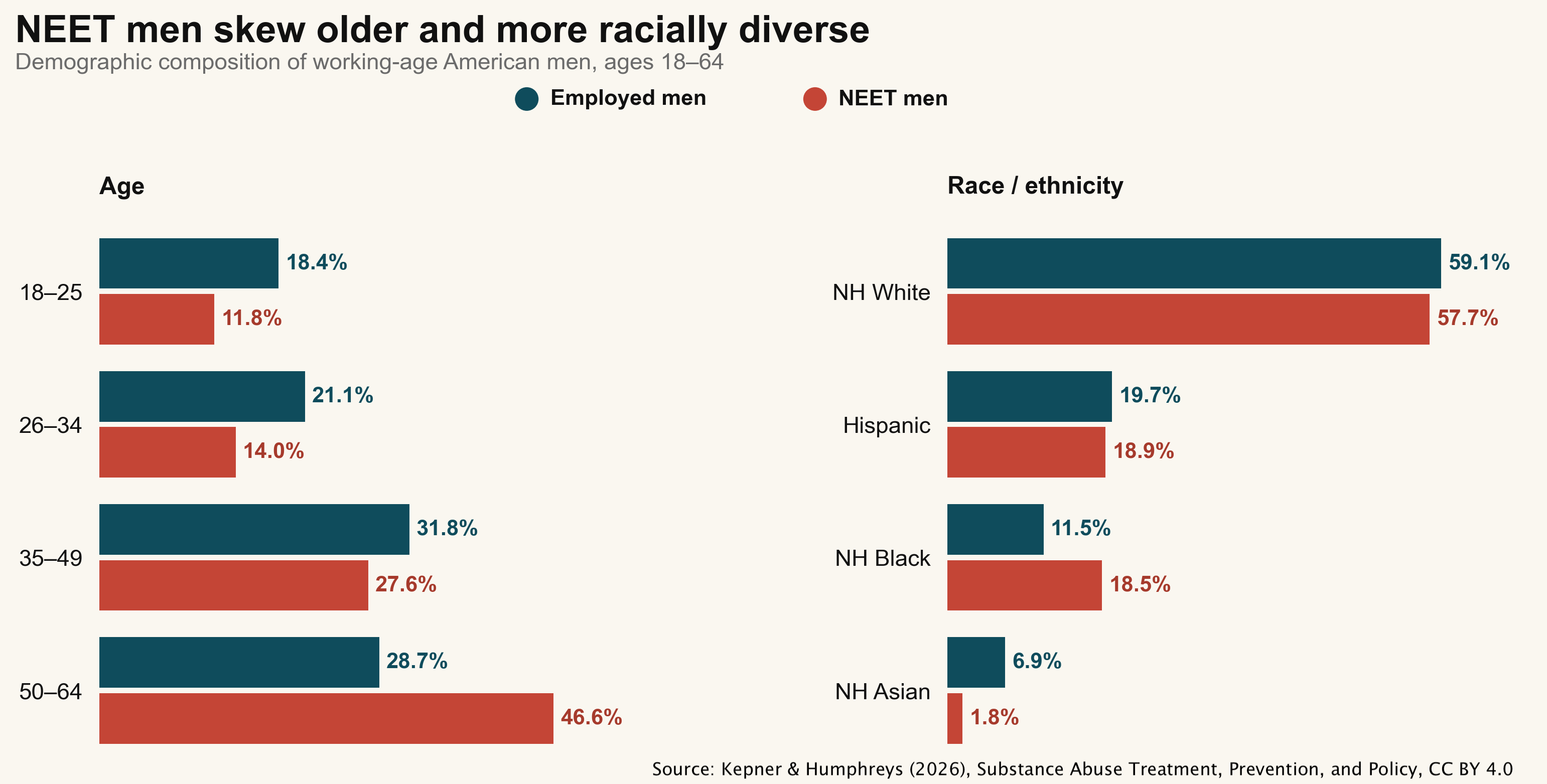
Relative to non-NEET men, NEET men are less likely to be Asian American (1.8% vs. 6.9%) and more likely to be African American (18.5% vs. 11.5%) but most of them are non-Hispanic whites (57.7%). About a quarter are under 35, but the most common age range is 50 to 64 (46.6% vs. 28.7% for non-NEET men).
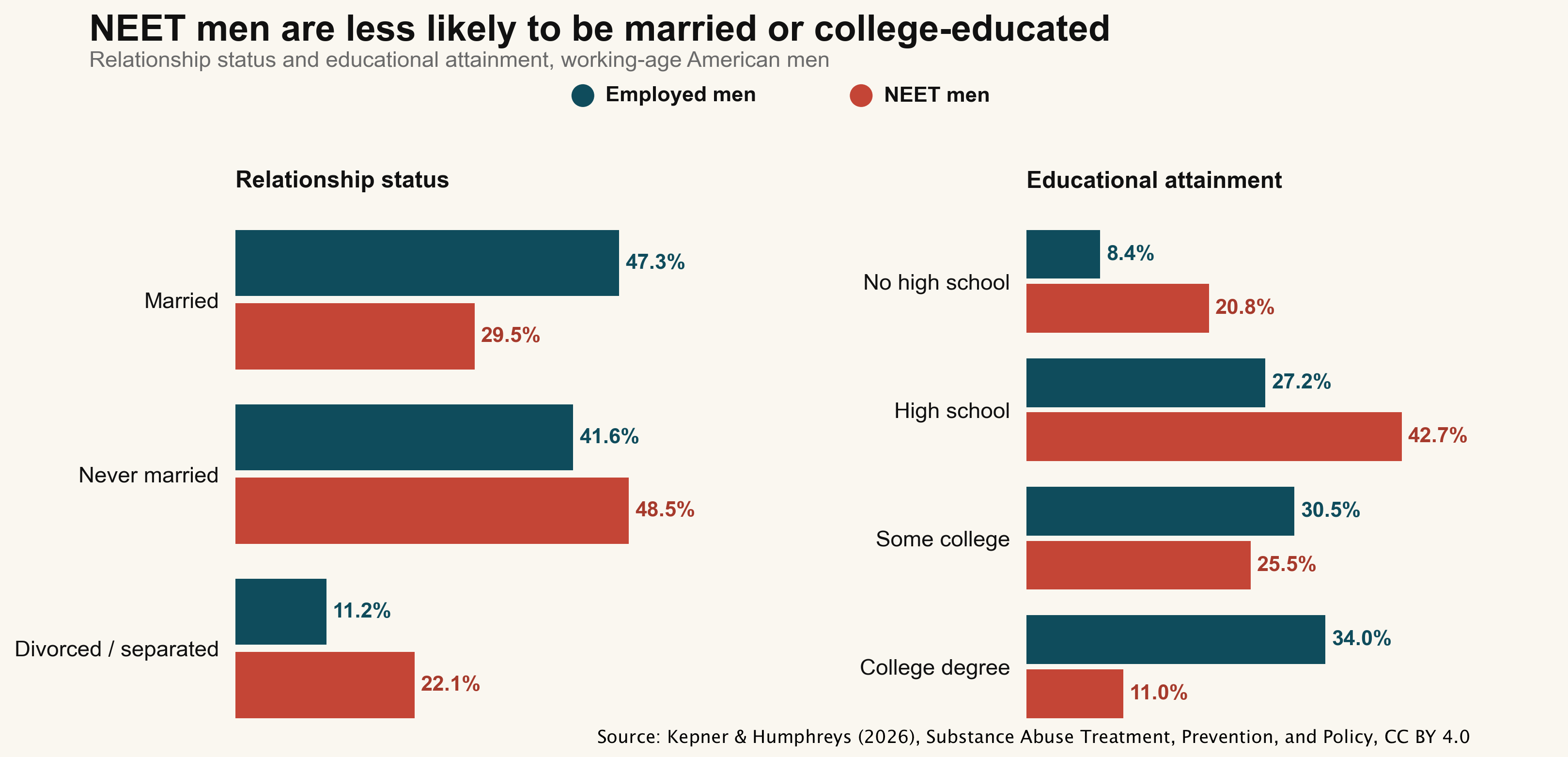
Additionally, 42.7% have a high-school education but just over a third have attended or graduated from college (36.5% with some college or a college degree). Their incomes, unsurprisingly, are low with 46% making $20,000 a year or less, compared with non-NEET men, about half of whom (52.0%) make $75,000 a year or more. They show only modest geographic differences, being somewhat less concentrated in large metropolitan areas (50.6% vs. 56.3%) and somewhat more likely to live in non-metropolitan areas (17.6% vs. 11.4%) compared to non-NEET men.
Substance Use Among NEET Men
In terms of substance use, in a nation where smoking rates have been plunging for a generation, a quarter of NEET men are tobacco-dependent (24.4%), which is more than double the rate among non-NEET men (10.1%). A similar proportion smoke marijuana (26.6%), and of those who use marijuana, 56.5% used it 20-30 days a month.
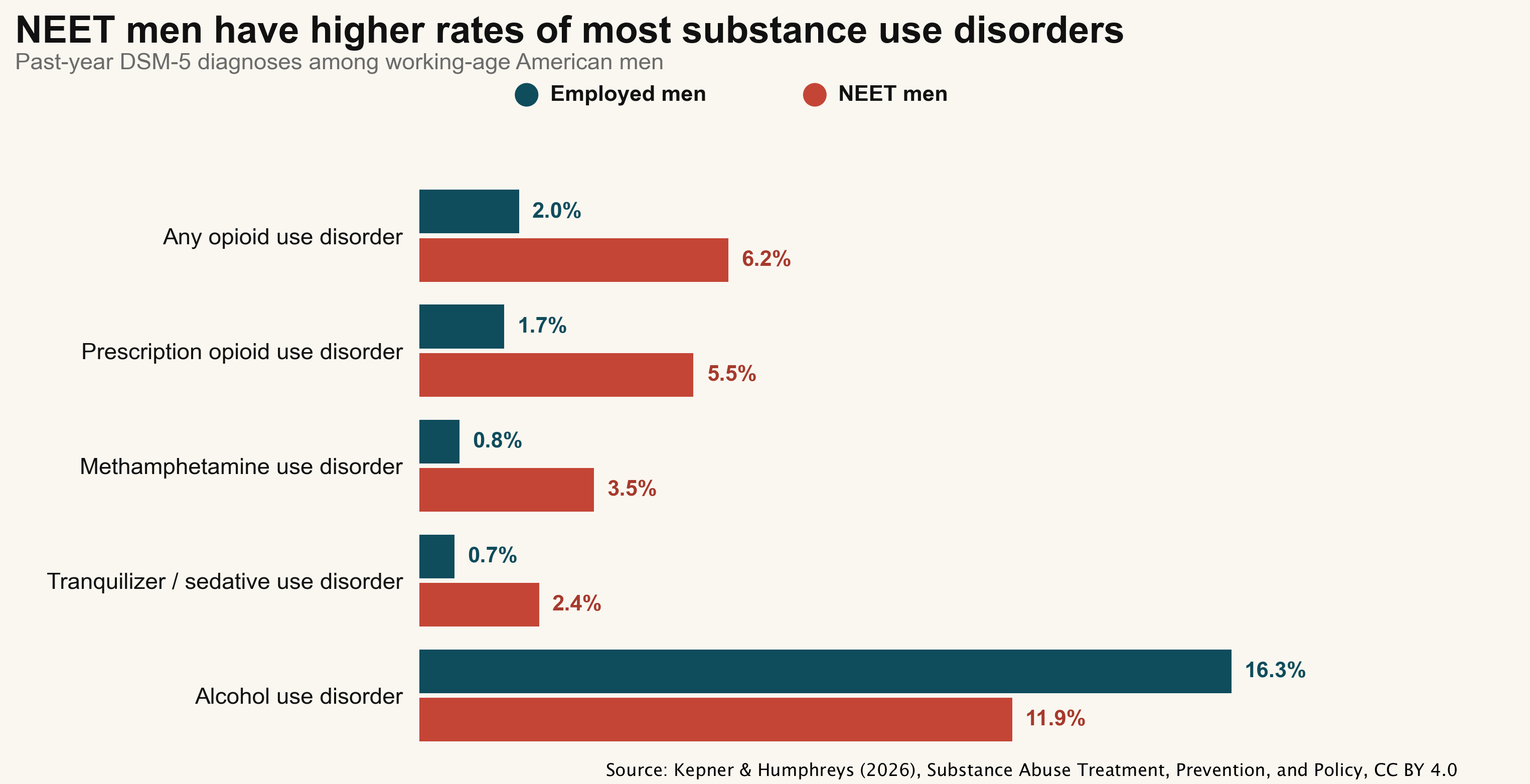
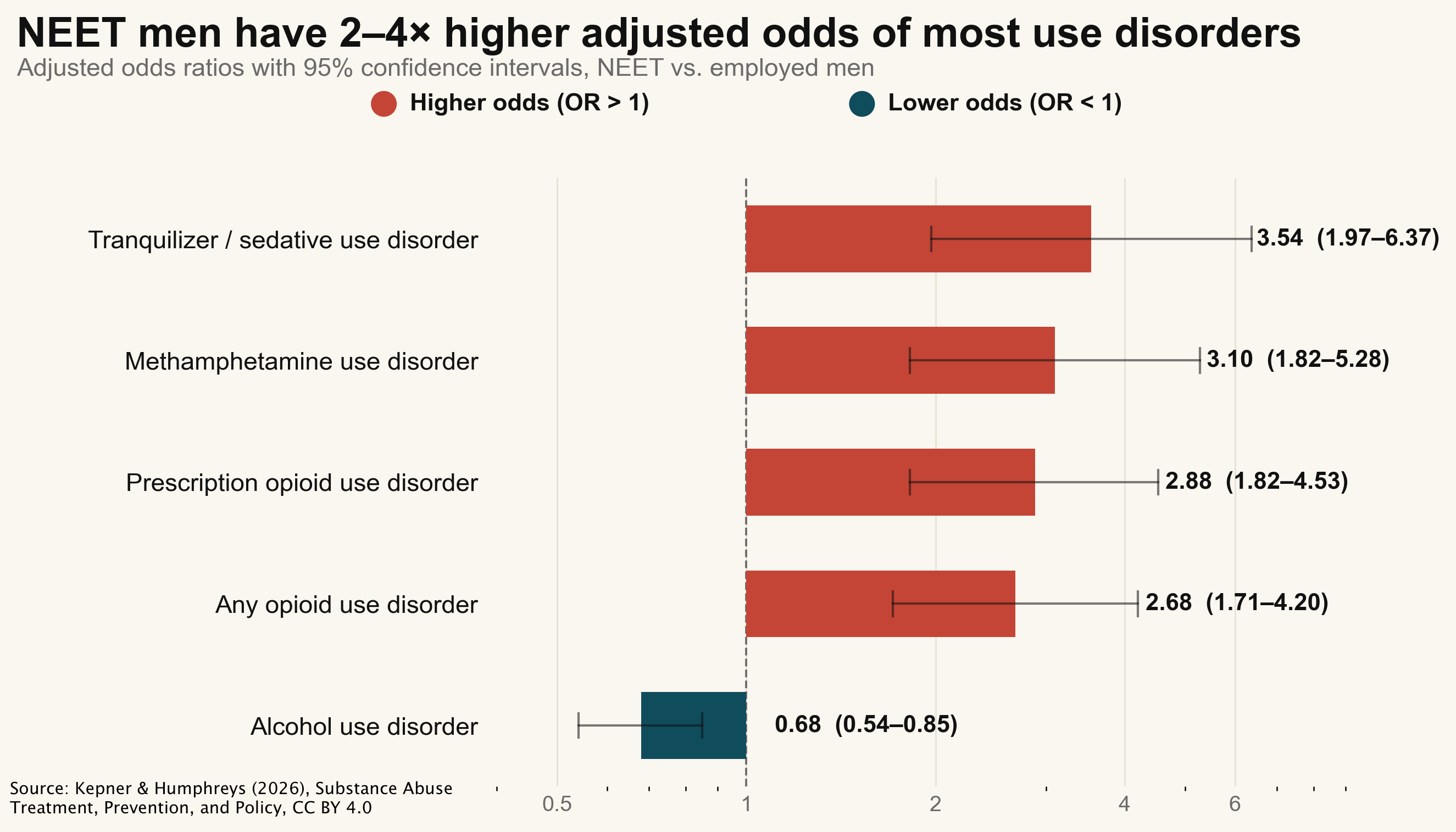
They drink less alcohol than non-NEET men, but otherwise have a more severe substance use profile, including significantly higher rates of meeting medical diagnostic criteria for addiction to methamphetamine, prescription pain pills, prescription tranquilizers, and illicit opioids.
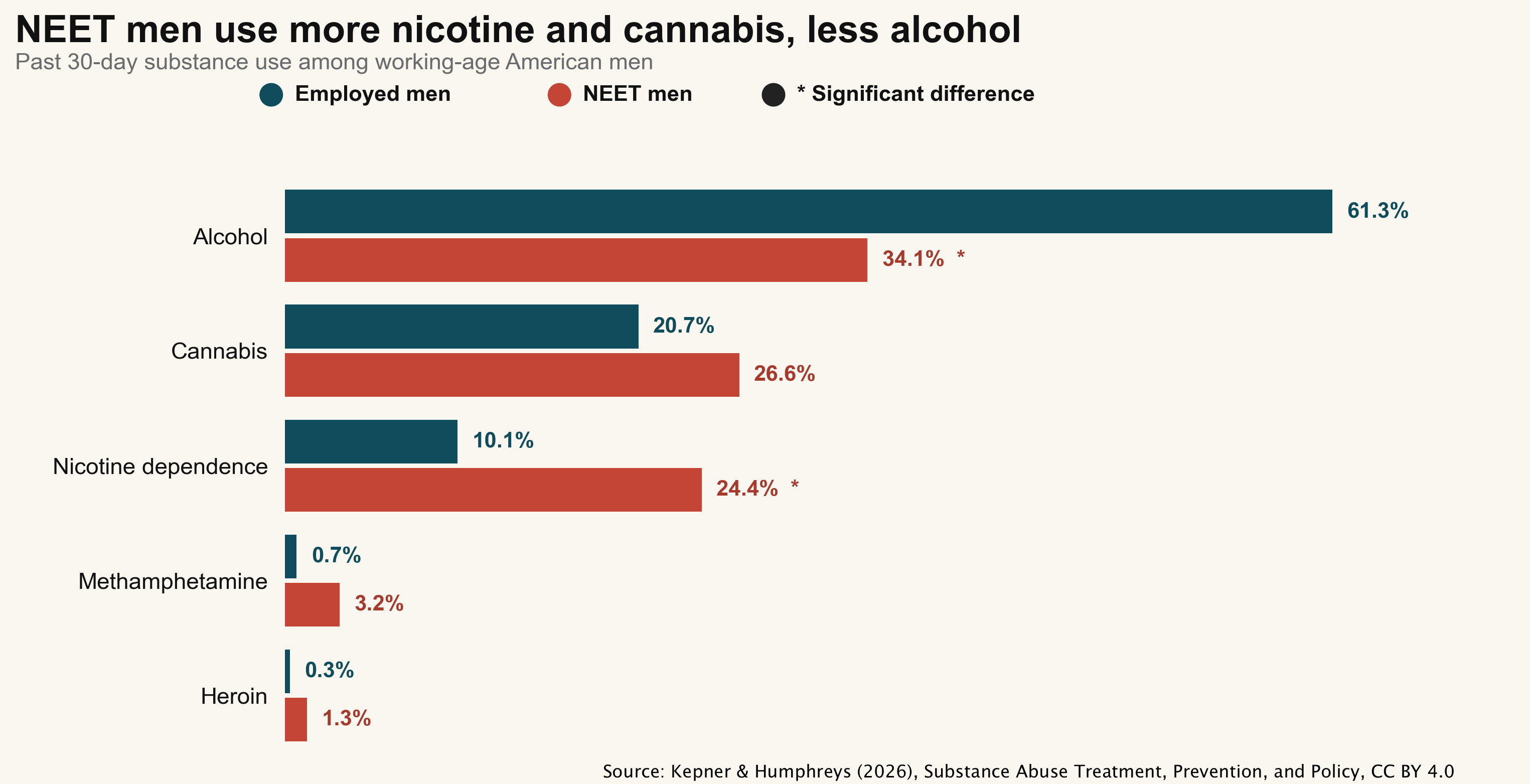
A disturbing proportion of these men thus spend a significant amount of their time obtaining, using, feeling the effects of, and recovering from the effects of psychoactive substances. Such use likely provides transitory relief from their current circumstances while simultaneously making it more likely over time that they remain in place, economically and socially speaking.
The data are cross-sectional so it is not possible to determine cause, but we find it plausible that their economic situation and substance use reinforce each other: If you need to show up and perform on a job or at school, it’s hard to be high all day, and likewise if you are high all day, it is more difficult to land and keep a job or do well in school.
Unfortunately, NSDUH does not have data on other forms of “brain candy” that are available at unprecedented levels and are targeted to men, most particularly online pornography and gambling. But research by other scholars has uncovered correlations between men who consume these products and lack of meaningful work.
The consumption habits of NEET men are not just bad for them individually; at a social level they maximize inequality. Daily tobacco and/or marijuana smoking, for example, transfer several thousand dollars a year from these low-income men to those who own or work in those industries, and other addictive consumption (especially online gambling) has a similar effect. If someone wanted to design a system that makes poverty a bit more tolerable and simultaneously more enduring, they would produce the world in which NEET men are living.
Unmarriageable
The other important point of course is that a man in this situation is not likely to land and keep a partner or spouse, either. Putting it bluntly, an “unemployed man who is not in school or a training program and who spends most of the day intoxicated” is not the sort of personal ad that screams “Future husband and father to my children.” NEET men have remarkably low rates of being married at only 29.5 percent.
To the extent that marriage and parenting provide incentives to not be high all the time, this further increases the risk that these men will stay locked to the couch. As they do so, they will be imposing costs on others, both in terms of the parents and partners who are carrying them economically and the responsible roles (e.g., as fathers) they are less able to fill.
Reaching NEET Men
Given that Medicaid is likely to be the modal insurer of this group, and coverage of working-age men who are not employed is currently being sharply curtailed, we are not optimistic that mass movement of NEET men into substance use disorder treatment is likely, even if they were motivated to pursue it. Mutual help organizations, such as Narcotics Anonymous, would still be accessible, but again, whether most NEET men would consider joining is unknown.
Because of their heavy involvement with illicit drugs, many of these men end up in contact with the criminal justice system. This could prevent therapeutic opportunities, for example, through drug courts, which do not depend on spontaneous treatment seeking but instead leverage the power of the law to induce it.
However, individual level change efforts are not the only way to help NEET men get on a better path. At least some of these men could benefit from public policy interventions, such as restrictions on the availability, advertising, and potency of marijuana products and more careful medication prescribing policy. Higher taxes on cigarettes and marijuana may also induce at least some of these men to quit. Absent such efforts, many of these men will likely continue to be unproductive, unappealing as mates, and unable to make progress in their own lives.
Wayne Kepner is a T-32 postdoctoral fellow in the Department of Psychiatry and Behavioral Sciences at Stanford University School of Medicine. His work examines substance use patterns, treatment access, and addiction recovery among vulnerable populations.
Keith Humphreys is the Esther Ting Memorial Professor at Stanford University School of Medicine. He was a drug policy advisor in the Bush and Obama administrations.
*Photo credit: Shutterstock


