
Highlights
- To a limited extent, we find that liberals are more likely to cite certain anxieties related to fertility decisions relative to conservatives. Post This
- Concerns about parental competence, stress, mental health, and more might partly account for the emerging fertility divergence between the American right and left. Post This
Birthrates have been declining precipitously throughout the United States since the Great Recession and more broadly since the postwar Baby Boom. Within this broad trend, a fertility "gap" has emerged between the American left and right. In a new IFS research brief, based on survey results from a sample of over 7,000 Americans ages 18-54, we analyze ideological differences in anxieties related to parenting and self-perceived competence. To a limited extent, we find that liberals are more likely to cite certain anxieties related to fertility decisions relative to conservatives. For each of our sections, we find that the differing survey responses account for significant differences in fertility outcomes.
Here are our major findings:
- Liberals have fewer children than conservatives. Conservative respondents report 1.40 children compared to 1.09 for liberals. Similarly, 51% of liberals report zero children compared to 40% for conservatives. Both of these differences are statistically significant.
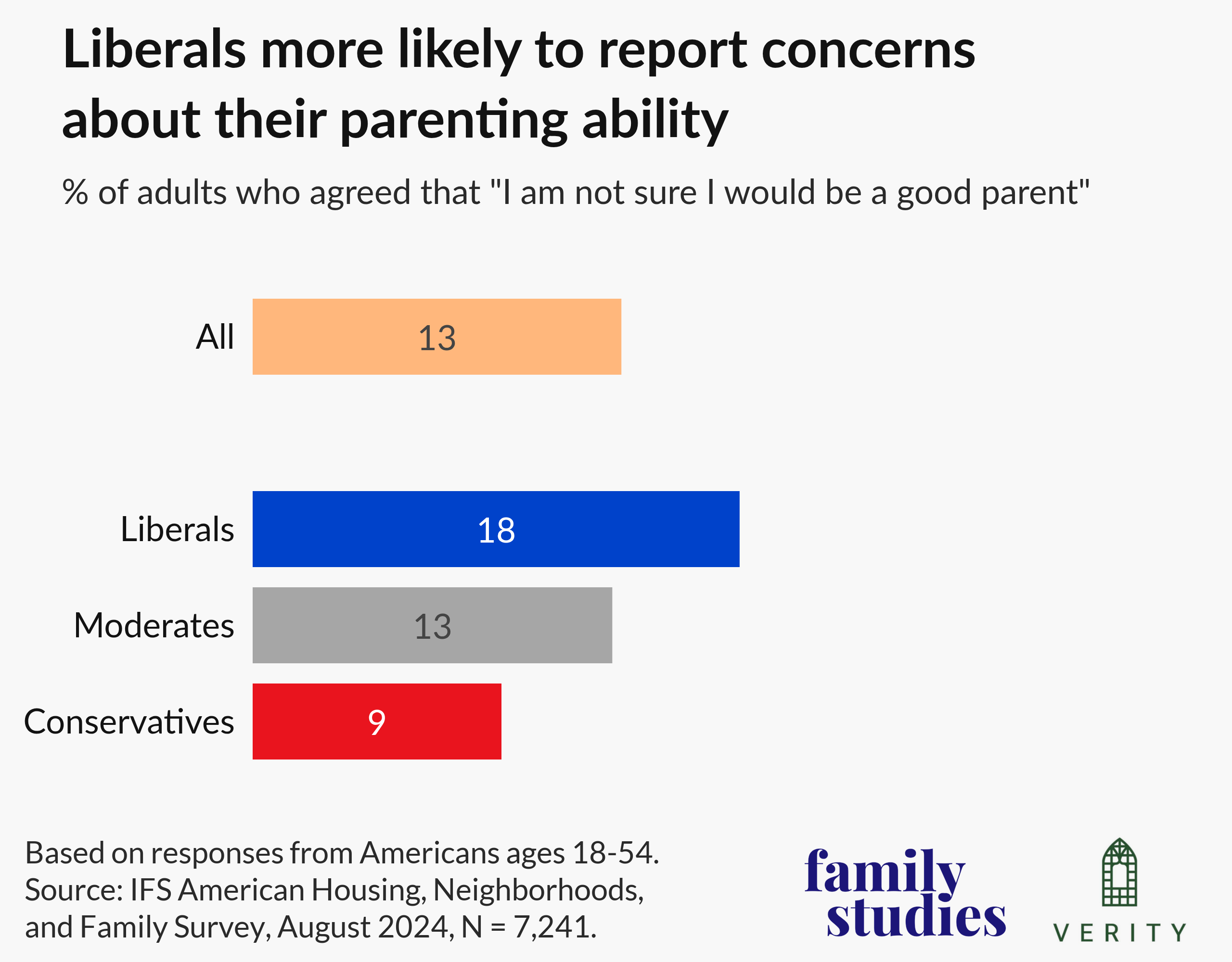
- Parenting concerns are more prevalent among liberals than conservatives. For example, 18% of liberals are unsure whether they would be a good parent, compared to only 9% of conservatives. Similarly, whereas 36% of liberals view parenting as “very complicated, difficult, and stressful,” only 24% of conservatives do. Given that both beliefs are associated with fewer children, their increased prevalence among liberals may help explain the ideological fertility gap.
- Liberals are more likely to report genetic and mental health concerns. For example, 18% of liberals, but only 10% of conservatives, report worries that they will pass on bad genes or inheritable conditions to their children. Similar percentages of liberals (19%) and conservatives (10%) say that their mental health is currently not good enough for them to have children. Both statements are correlated with lower numbers of children—and may thus shed additional light on the conservative-liberal fertility gap.
Together, these findings indicate that concerns about parental competence, stress, mental health, and genetic conditions might partly account for the emerging fertility divergence between the American right and left.
Read the full Research Brief, The Ideological Fertility Divide.


