Executive Summary
Families are under threat from a culture that often undermines family life and from economic trends that leave parents feeling squeezed. This report offers five policy ideas, based on new polling, that will support family life, strengthen marriage, and stand up for parents.
The family is the primary social institution oriented towards the bearing and rearing of children. An agenda to strengthen that institution should protect families from the economic and cultural forces that can undermine them. This report, a collaboration between the Institute for Family Studies and the Ethics and Public Policy Center, offers five policy ideas for an authentically pro-family Congress to champion.
- Strengthen the Child Tax Credit to bolster work and marriage in a fiscally prudent way
- 82% of parents agree that a family with a worker present should be eligible for the full value of the Child Tax Credit
- Give parents more tools to protect their kids online
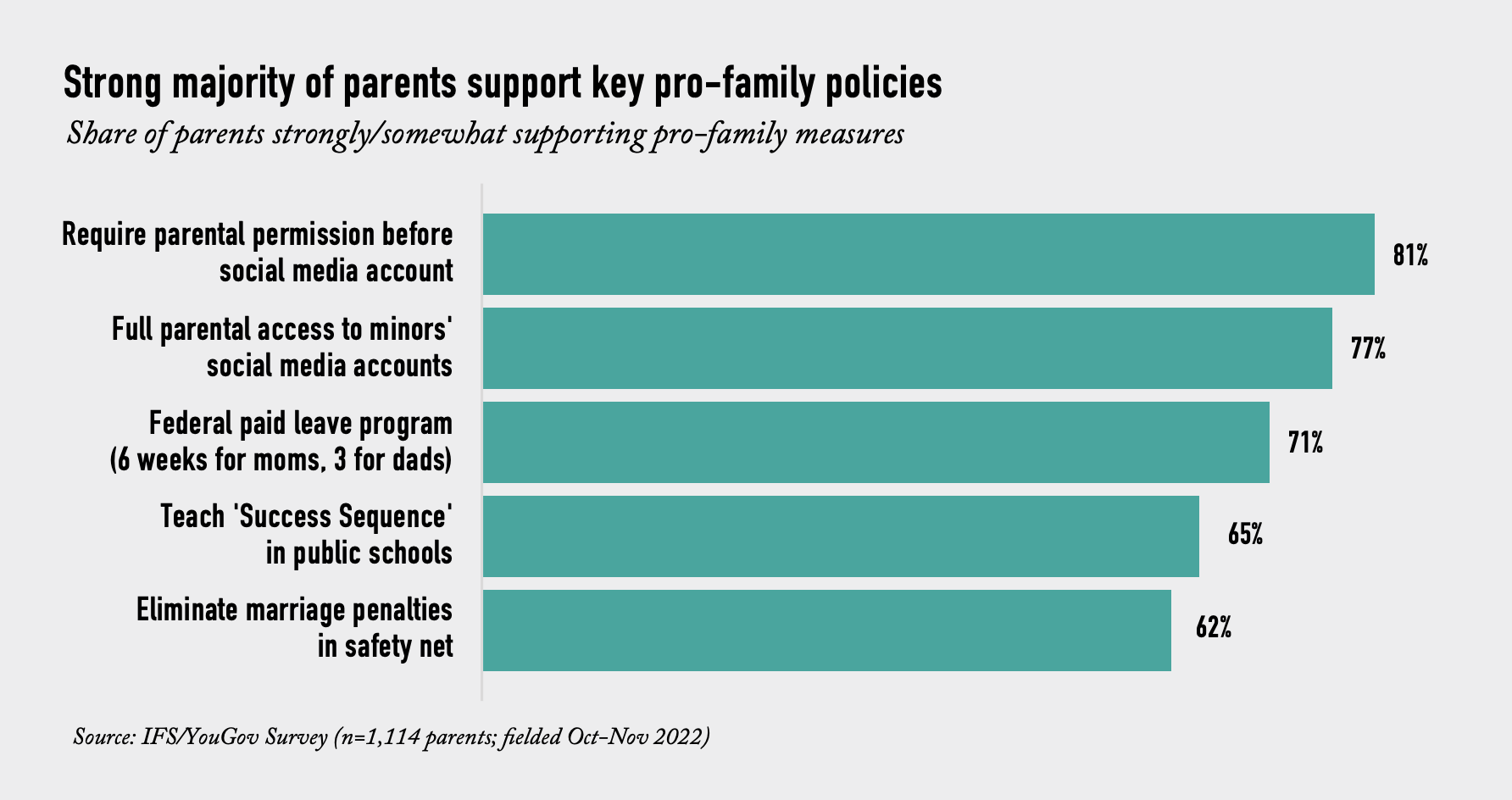
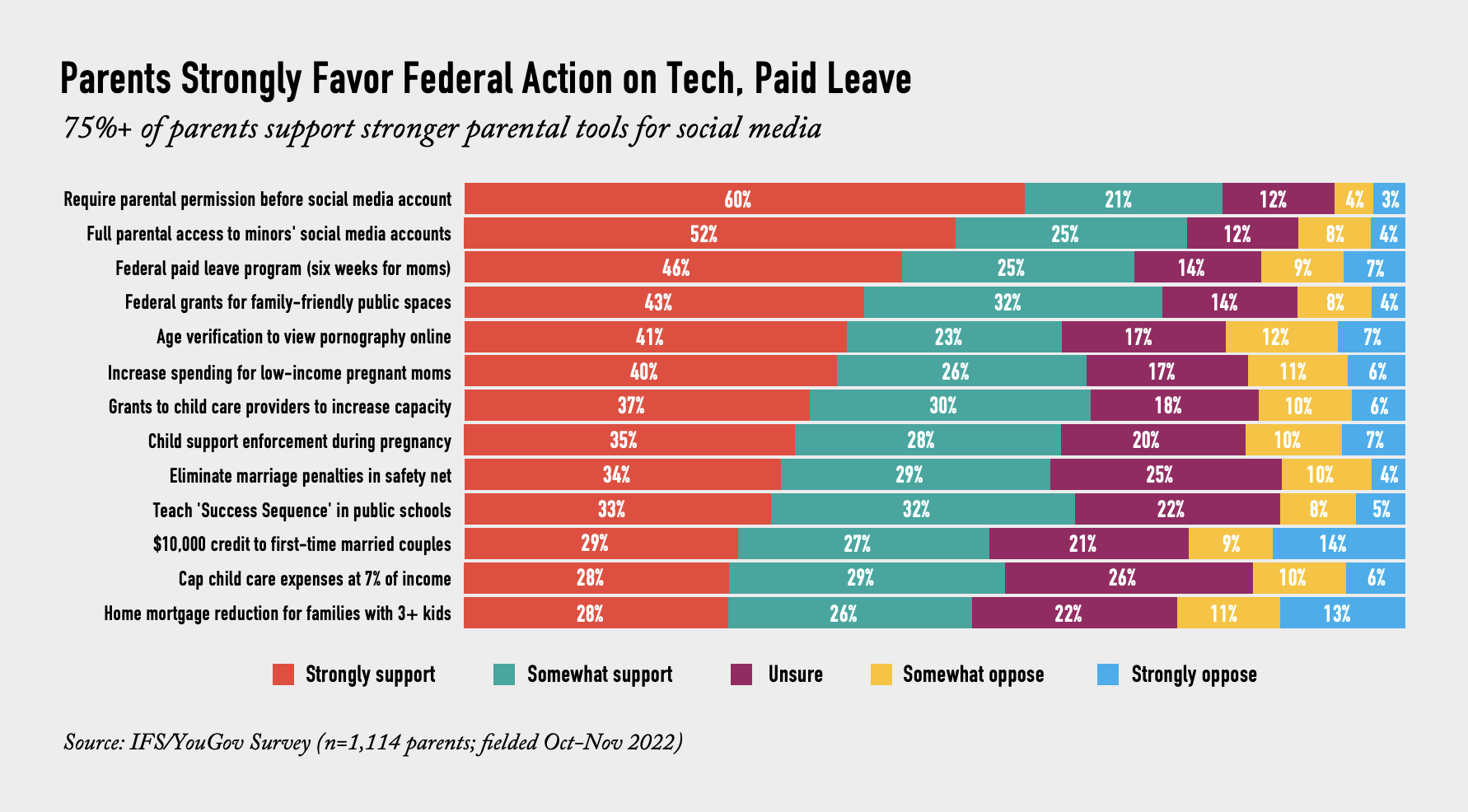
- 80% of parents support requiring parental permission before a minor opens a social media account, and 77% support giving parents administrator-level access to what kids are seeing and doing online
- Create a straightforward paid leave benefit for new parents with broad-based eligibility
- 71% of parents support a federal six-week benefit for new moms
- Advance policies that strengthen the fundamental bonds between fathers, mothers, and their children
- 65% of parents support teaching the Success Sequence in schools, and 63% support enforcing child support during pregnancy
- Reduce or eliminate marriage penalties facing low-income and working-class families
- 62% of parents think Congress should remove marriage penalties in safety-net programs
Strong families are the key to a flourishing society. Stable families lead to better outcomes for parents, children, and communities. Likewise, policies that support marriage, parenthood, and family life will make it possible for more Americans to reap those benefits. This report is intended to highlight popular priorities for a pro-family agenda that could meaningfully advance that vision.
Introduction
Strong and stable families are crucial to the welfare of children, adults, and the nation. Marriage is not only associated with better outcomes for children, but with greater satisfaction, self-reported happiness, and better financial prospects for adults as well.1 As marriage and fertility rates drop, any political agenda cannot be indifferent to the future of the family.
In new polling conducted by YouGov for the Institute for Family Studies, most parents expressed support for families and the value of strong marriages: two-thirds disagreed with the view that marriage is outdated. Unlike parents without a college degree or college-educated Republicans, college-educated Democrats were the least likely to support policy efforts to promote marriage.2
But most of the parents polled were reluctant to support policies that could be viewed as trying to change people’s behavior. For example, policies that would give cash benefits to large families or the newly married received the lowest levels of support among the policies we polled. Fewer than one-quarter of parents supported explicitly pro-natal policies. Other policies, like protecting kids online or providing support to new parents, received overwhelming support.3
Discussions about a pro-parent agenda can sometimes focus solely on hot-button issues, but this report offers a blend of economic and cultural policies that are politically popular, with room for bipartisan support. In many cases, these ideas build off proposals that have been introduced in prior sessions of Congress. In this report, we offer five policy ideas that could be prioritized at the federal level.
Most parents are looking for relief from economic pressures, with 5 in 6 parents agreeing that the cost of living makes it hard to raise kids. Most parents wanted to see the Child Tax Credit (CTC) raised to $3,600 per year. And while many parents supported various forms of child care assistance, one-third of mothers (and 15% of dads) said their preferred arrangement was working part-time. Another quarter preferred not to work for pay at all.
While some cultural issues demonstrated a traditional right-left split, an overwhelming majority of parents across the political spectrum expressed their desire for greater tools to protect their children online. In fact, 86% of parents agreed it is too easy for kids to find explicit content online, and the proposed legislative solutions received some of the strongest across-the-board support compared to the other policy proposals we polled.
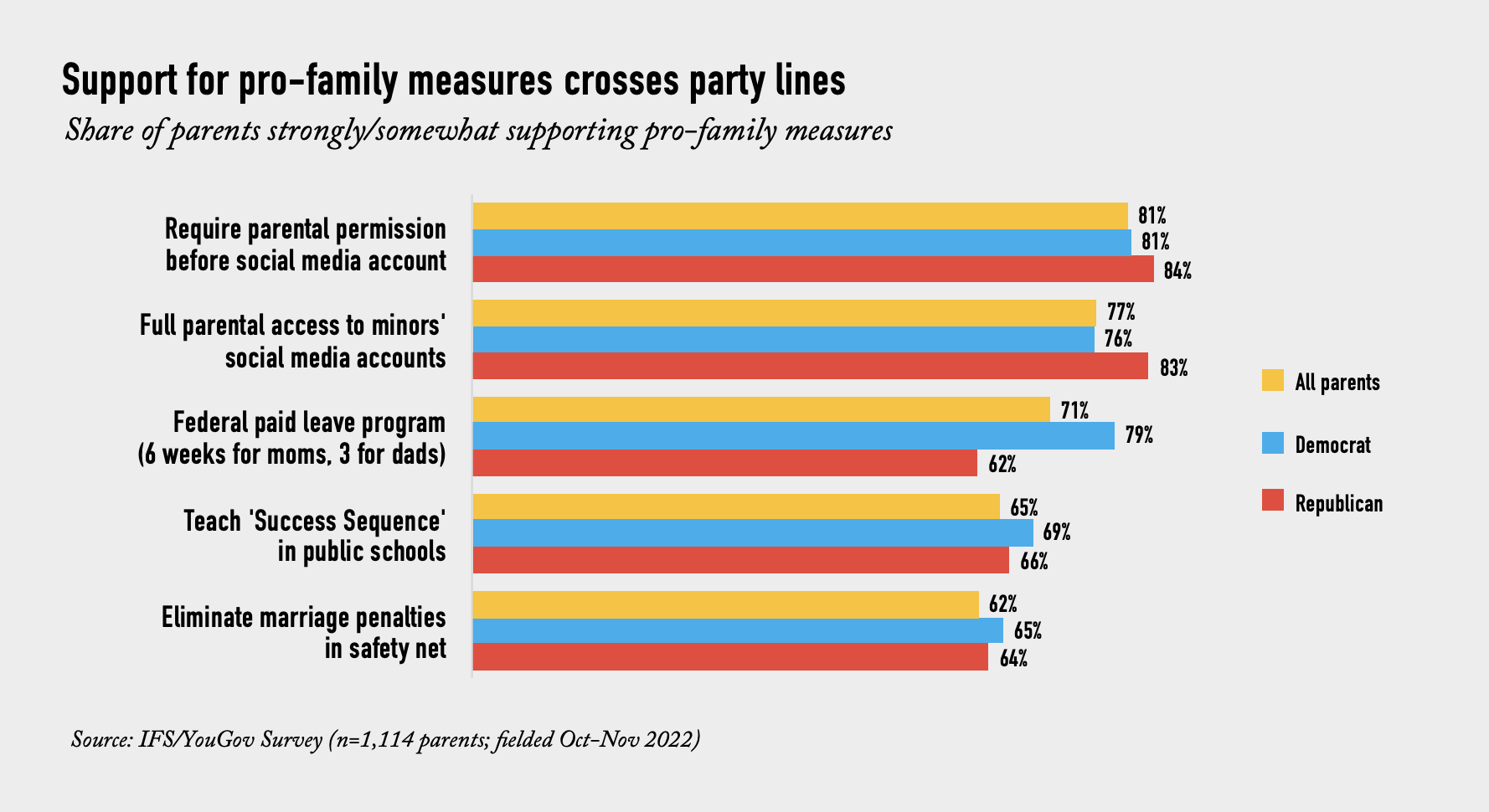
Although proactive spending tended to appeal more to progressive voters, Republican parents supported many of the ideas on offer as well. When it came to material assistance, like paid leave or a child benefit, non-collegeeducated Republican voters responded closer to their peers across the aisle. But when discussing policy proposals that touched on cultural issues, college-educated Democrats tended to be the outliers, with Democrats without a college degree offering responses more similar to their Republican counterparts.
Policy fixes alone cannot solve all the problems facing families, from housing to tech to the cost of living. But better policies can lay the groundwork for a cultural environment that eases some of the pressures on parents and prioritizes strong families.
The Problems Facing Families
Among the parents polled, half of Democrats and 60% of Republicans said they feel that families today have it harder compared to families 50 years ago. Additionally, 22% of parents said the biggest problem facing their family was a problem in the culture, like the impact of technology, racism, or “woke” media messages.
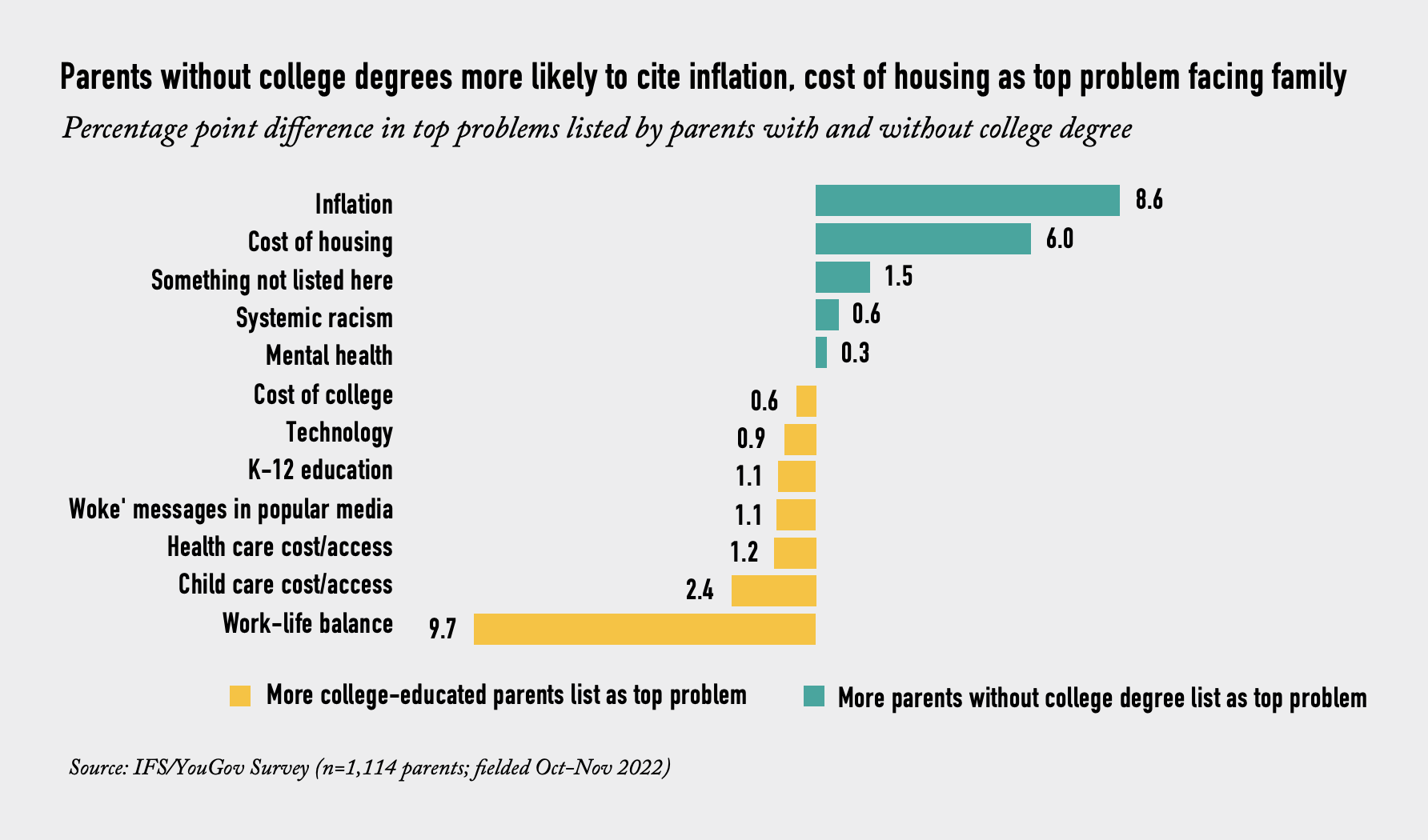
But most parents said the top concern facing their family was economic in nature. This was especially true for parents without a college degree, who frequently cited pocketbook issues like inflation or housing. Additionally, 84% of parents in our poll agreed with the statement that “the cost of living makes it hard to have kids.”
Asked directly about which categories they find most difficult to afford, Republicans were more likely to report having difficulty affording gas, groceries, mortgage, clothing, and child care for their families. Democrats were relatively more likely to report finding it difficult to afford health care and college. These results, of course, should not be taken as the final word on what goods are unaffordable for families. But they do offer a sense of what costof-living concerns come to the top of mind for many parents. At the risk of overgeneralizing, Republicans were more likely to think of the rising cost of living in terms of goods; Democrats were more likely to list services.
Concerns about work-life balance, meanwhile, were largely a concern of college-educated parents, who cited it second behind inflation. For parents without a college degree, work-life balance was much less likely to be cited as a top problem, after concerns about inflation, housing, health care, and tech.
A pro-family agenda, especially one with an eye towards the fortunes of working-class parents, must explicitly address the cost of raising a family. At the same time, our polling picked up on a strong emphasis on the values of self-reliance and America’s inherent folk libertarianism.4 Among all voters, 63% somewhat or strongly agreed with the statement that “people shouldn’t have kids if they can’t afford to raise them without government assistance;” 65% of Republican parents, and 55% of Democratic parents, agreed with that statement as well.
Likewise, while economic issues may weigh heavily on parents’ minds, cultural issues are also a large source of discontent. For example, 83% of all parents, including 89% of Republicans and 80% of Democrats, said they were at least “a little concerned” about how current cultural trends would impact their family.
Among parents without a college degree, the cultural trends that most worried parents were the breakdown of the family (or the rise in single parenthood), followed closely by “cancel culture.” College-educated parents were more likely to cite a rise in non-traditional gender identities and political polarization.
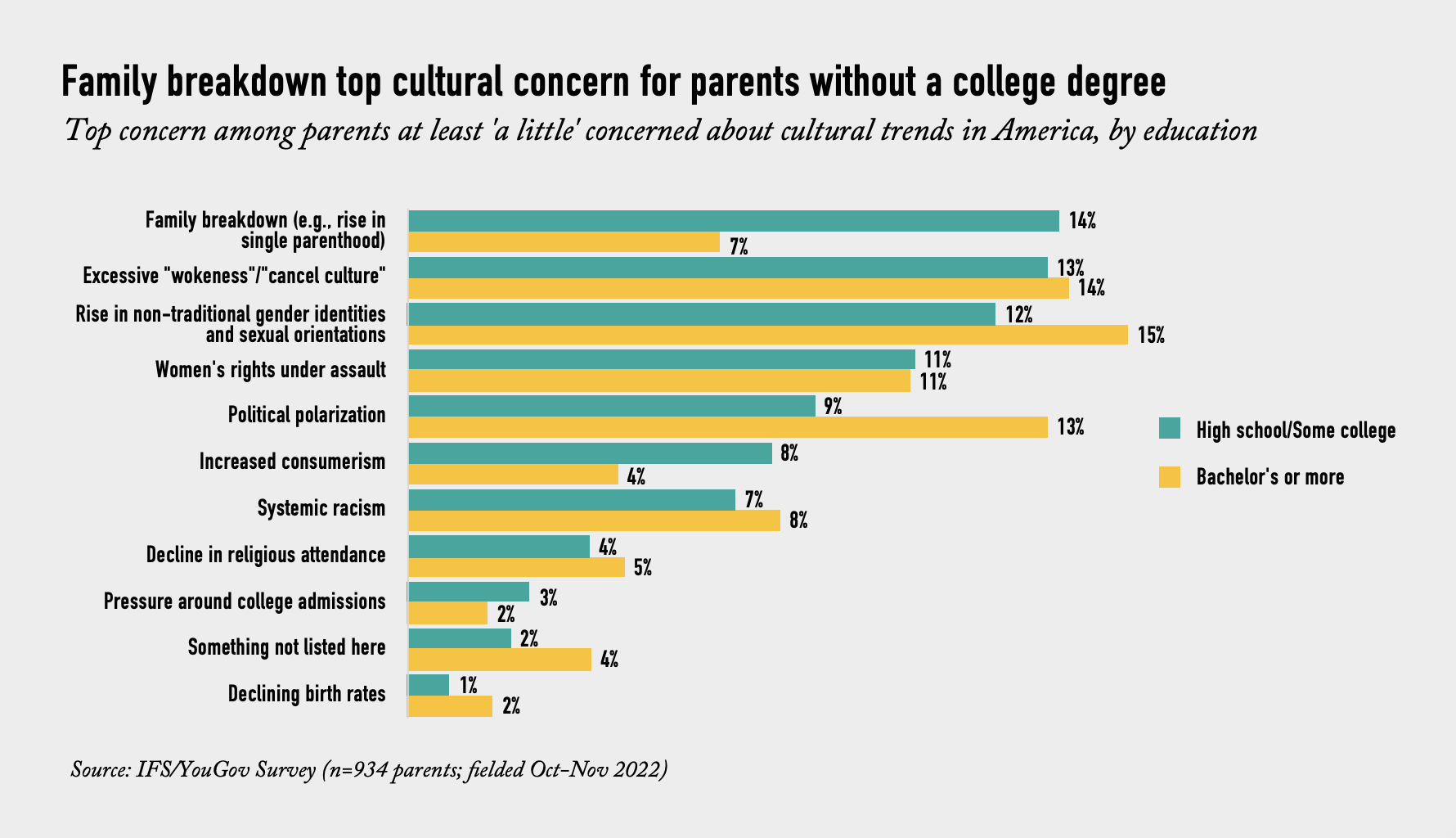
By far, the top two concerns listed by Republicans were excessive wokeness/“cancel culture” (32%) and nontraditional gender identities (25%), with declining religious attendance, political polarization, and systemic racism following at roughly equal numbers. Democrats had a more diffuse set of concerns, including women’s rights being under assault (19%), political polarization (17%), and family breakdown (16%). Among all fathers, the cultural trend that most concerned them was “cancel culture,” while the top response for mothers was the idea of women’s rights being under assault.
No single agenda will be able to address every concern that keeps parents up at night, but a politically attractive, pro-parent agenda should seek to address both the cultural and economic issues at the top of parents’ minds. Economic issues weighed heavily on parents in our poll, but dissatisfaction with the direction of the country, especially among the full one-third of right-leaning parents who declared themselves to be “very worried” about cultural trends, illustrates why culture war battles retain their potency.
Understanding Families’ Values
Our polling indicates that families embrace a diversity of viewpoints and values about family, work, and parenthood. These results suggest that a pluralistic approach to expanding support for families may tap into a wider base of support than one that focuses on a heavily normative approach to work and family life.
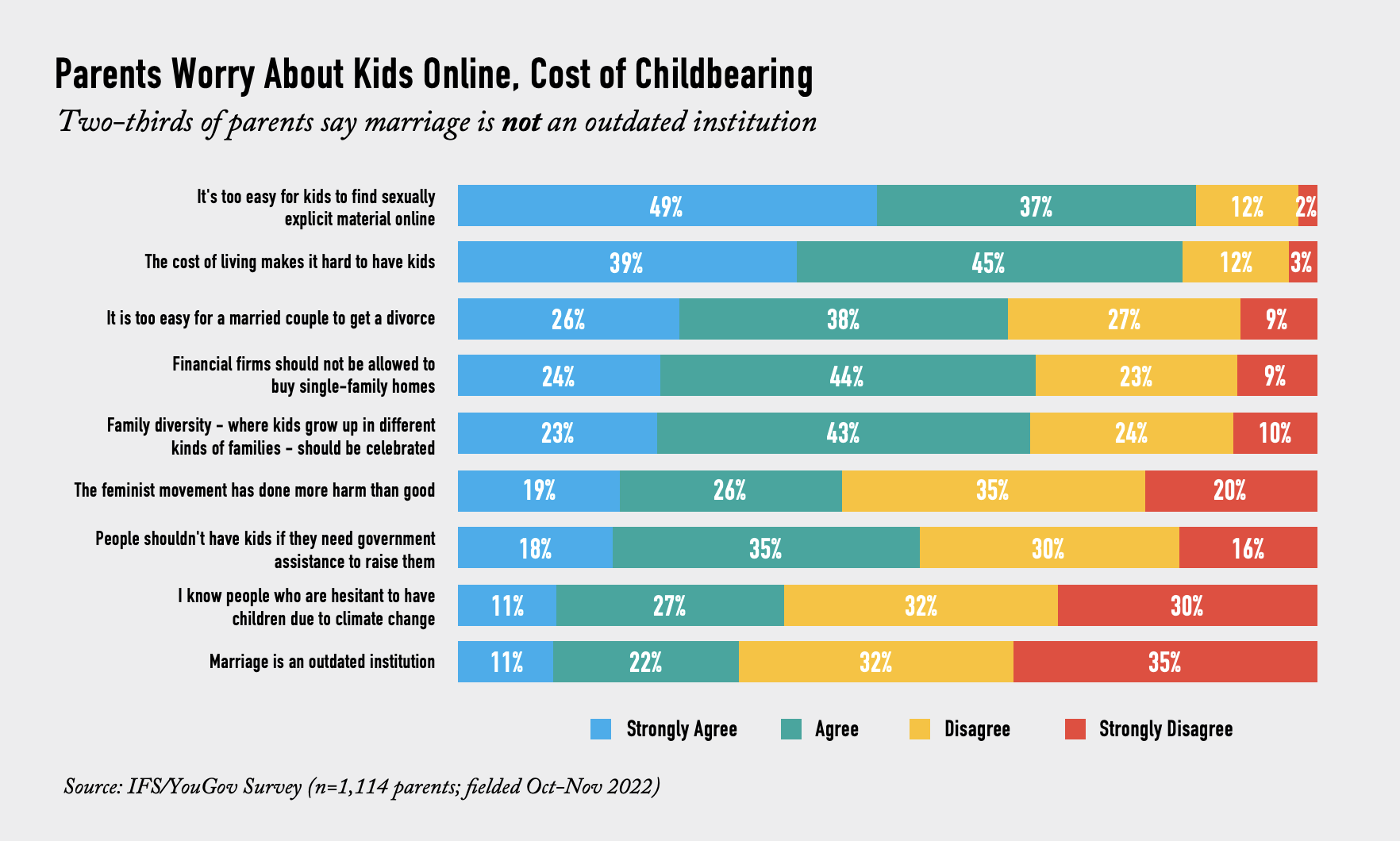
Some of the statements polled did not show a large partisan difference, such as the idea that the cost of living makes it hard to have kids (84% of parents) or that it is too easy for kids to find sexually explicit content online (86%). The idea that banks and financial firms should not be allowed to buy single-family homes, while not as overwhelmingly popular, did attract support from parents in both political camps.
Meanwhile, questions that touched on a cultural understanding of family, such as whether the feminist movement had done more harm than good or whether it is too easy to get a divorce, showed wider gaps across the two political camps. Questions over family structure, such as whether “family diversity” (children growing up in a variety of family forms) should be celebrated, showed the widest gaps between college-educated Democratic and Republican parents, with non-college-educated parents of both parties in the middle.
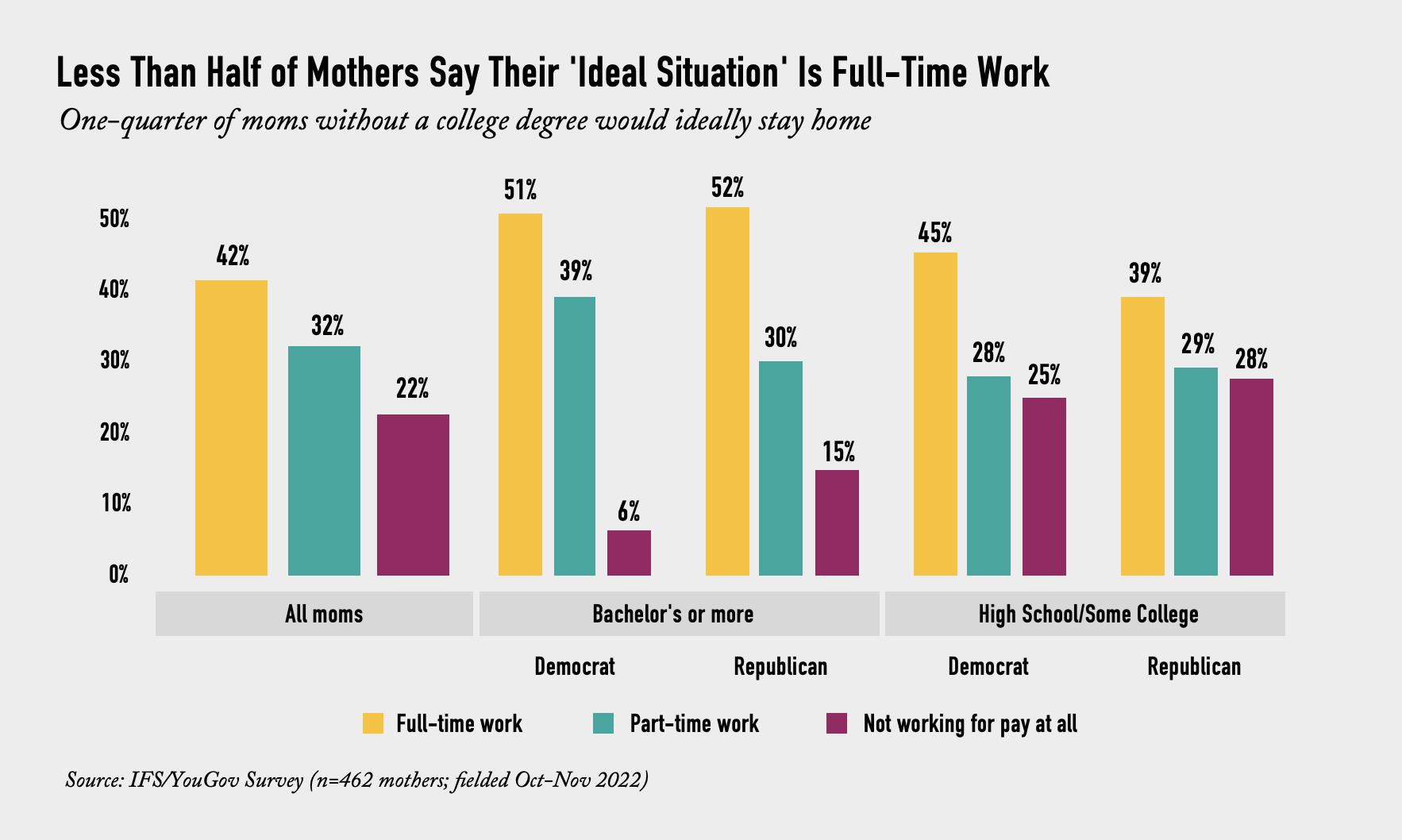
Many of these gaps reflect a difference along class lines. For instance, our polling reinforced prior work indicating an educational divide in mothers’ ideal work-life situation, one that does not map cleanly to partisan breakdowns. Just under half of women with children said their “ideal” situation was to work full time, including an equal share of Republican and Democratic mothers with college degrees. Meanwhile, 15% of college-educated Republican mothers, and 7% of their peers who voted Democrat, said their ideal situation would be not working for pay.
Among mothers without a college degree, however, more moms (among both Democrats and Republicans) said they’d prefer to work either part time or not at all. This diversity of values suggests that a pro-family legislative agenda should seek to expand the choices available to families rather than funding large-scale programs that assume a certain attitude towards work and family life.
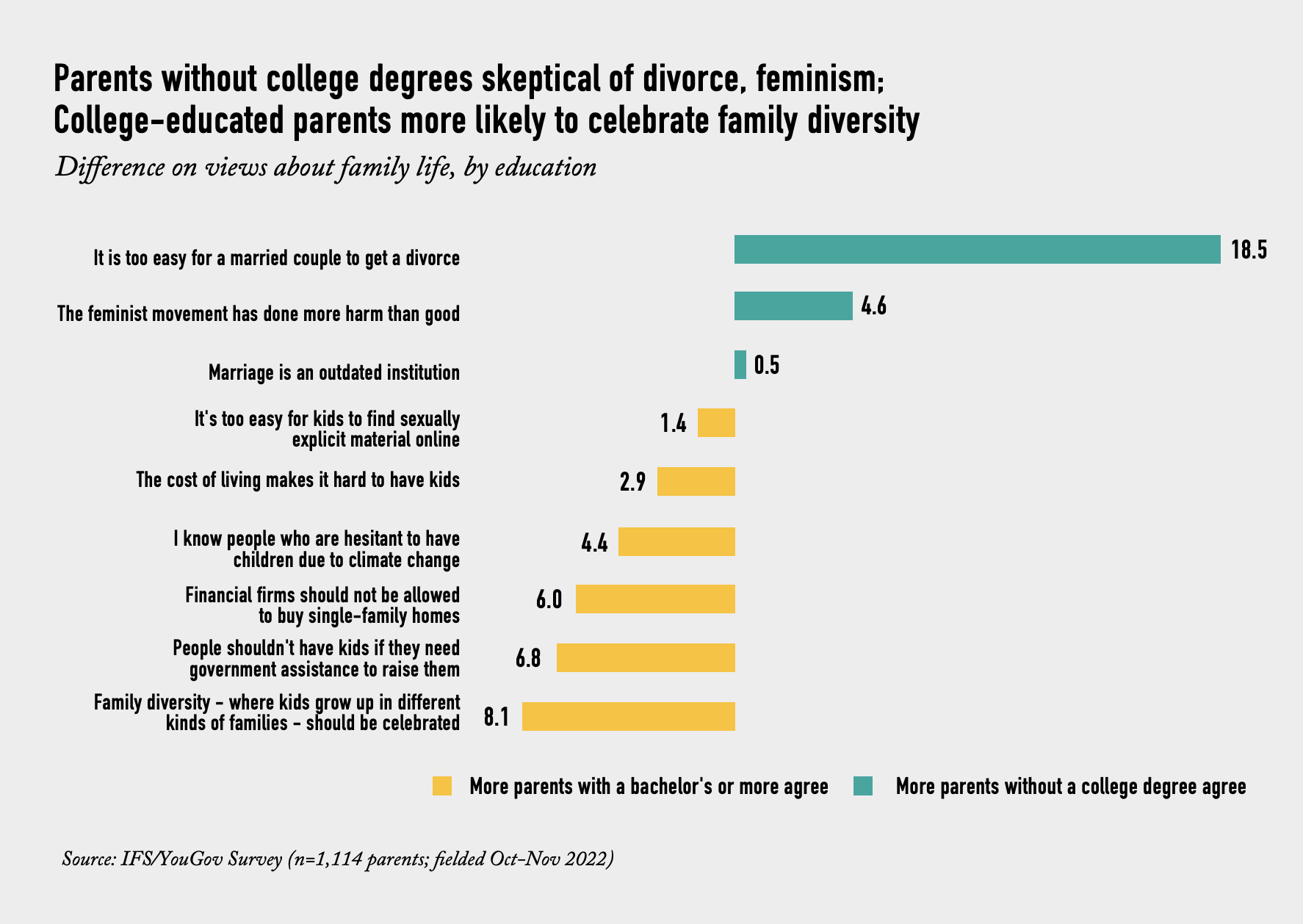
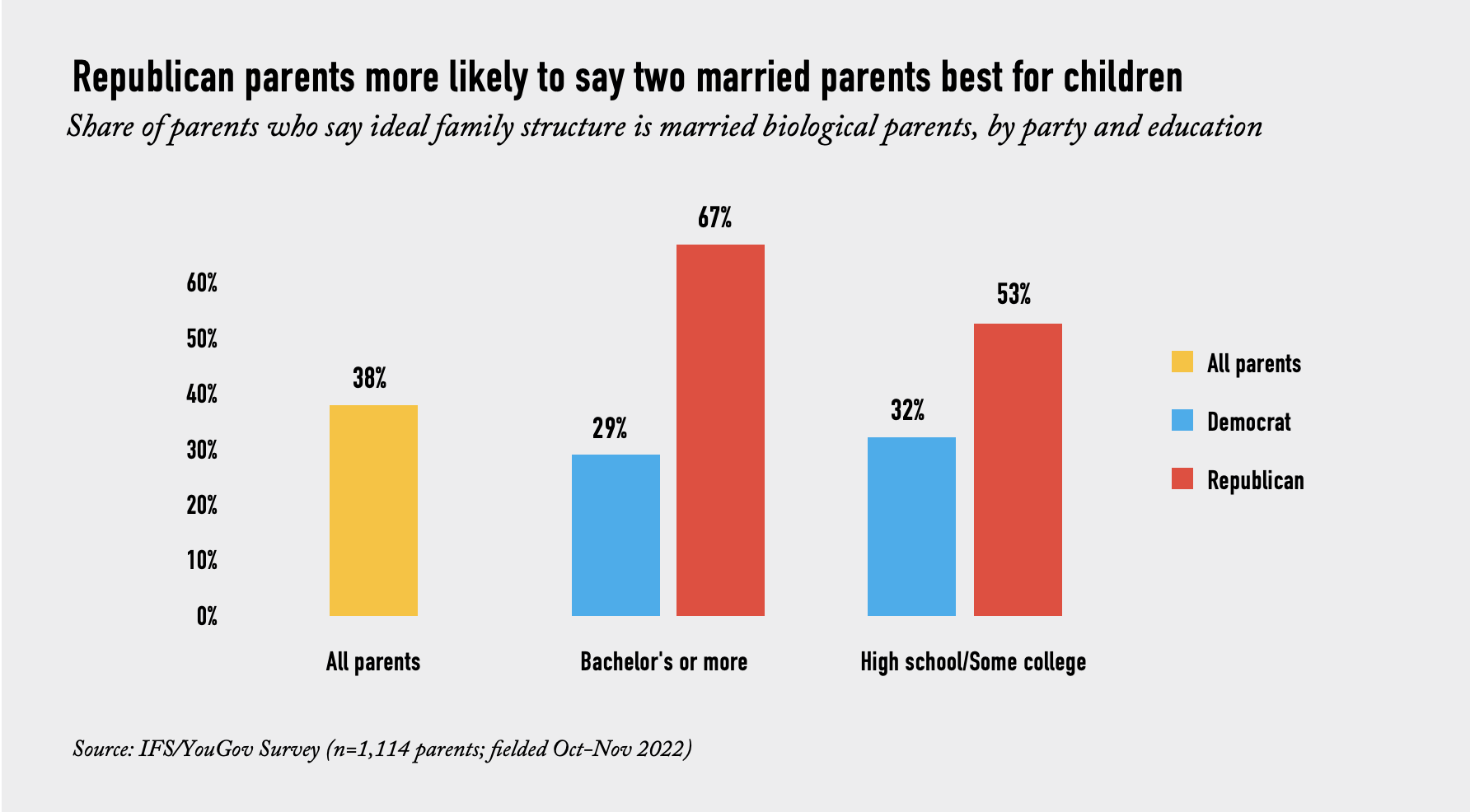
Educational polarization is also seen in some of the traditional culture-war issues that galvanize some conservatives. Parents without a college degree were more likely to have concerns about the impact of feminism and the availability of divorce, while college-educated parents were more likely to celebrate the idea of “family diversity.” About 38% of all parents polled said that a household of two married parents was the best environment for raising a child, while about 30% said that family structure “made no difference.”
Within the cohort of Republican parents, there was a notable education gap regarding family structure. Among Republican parents with a bachelor’s degree or more, 67% thought the best environment for children is with two married parents. Among those without a college degree, 53% agreed with this sentiment.
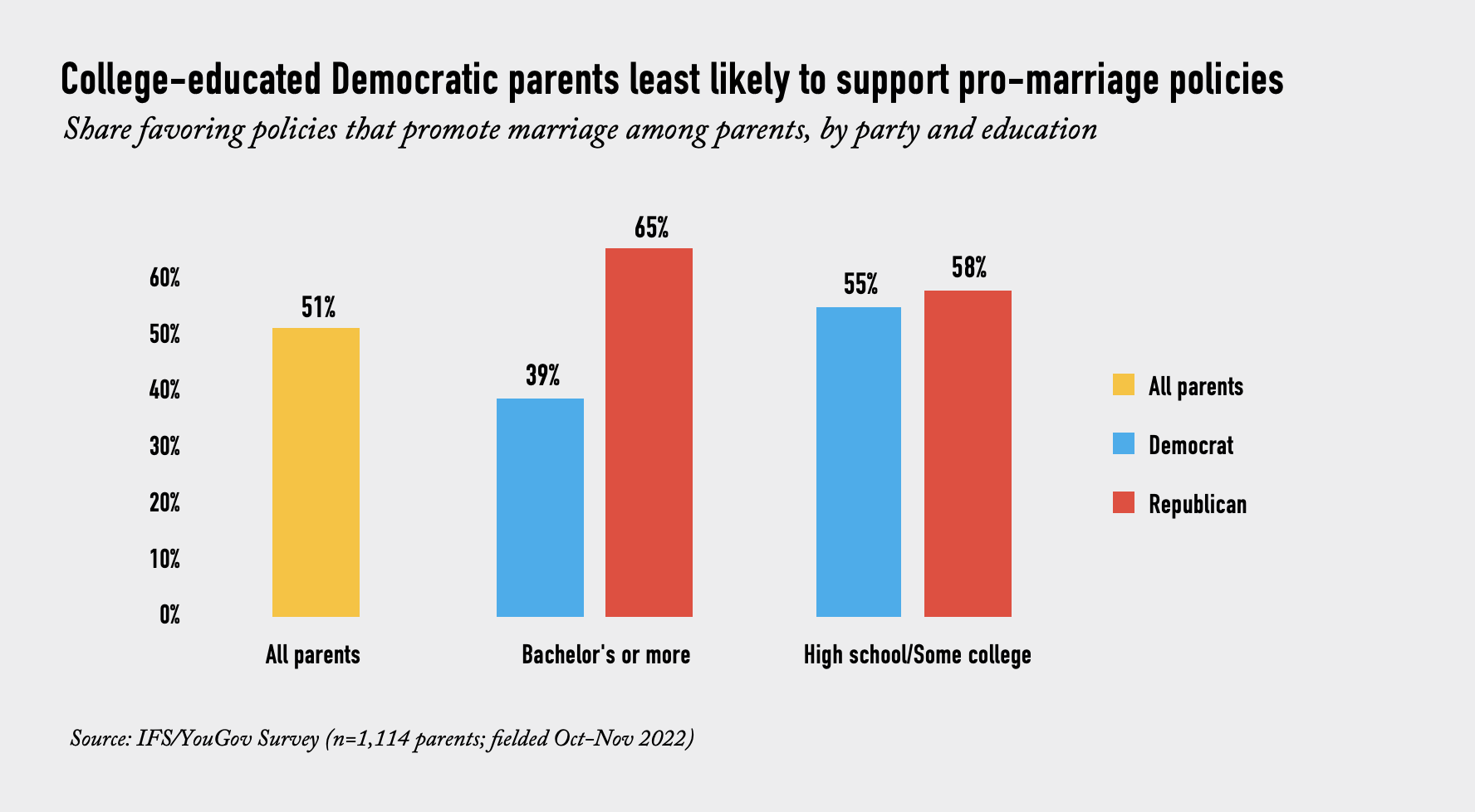
Overall, two-thirds of parents disagreed with the idea that marriage is an “outdated institution.” Proactive policy measures to promote marriage received somewhat less support, with about half of parents agreeing that government should promote marriage. When presented with evidence about the marriage gap between the rich and poor, the share of all parents agreeing that government should promote marriage rose by a couple percentage points.5
Notably, college-educated Democrats were the least likely to support pro-marriage measures. The share of Republican and non-college-educated Democratic parents who believed government should adopt pro-marriage polices was over half.
Explicitly pro-natal policy was largely unpopular, at least initially—just 22% of all parents believed policymakers should prioritize making it easier to have children, while 70% believed fertility decisions were inappropriate for policymakers to weigh in on (7% of parents, and 11% of non-parents, thought politicians should seek to lower the birth rate.) Here, college-educated Republicans were the outlier, with more than one-third expressing support for pro-natal policies, followed by Democrats without a college degree.
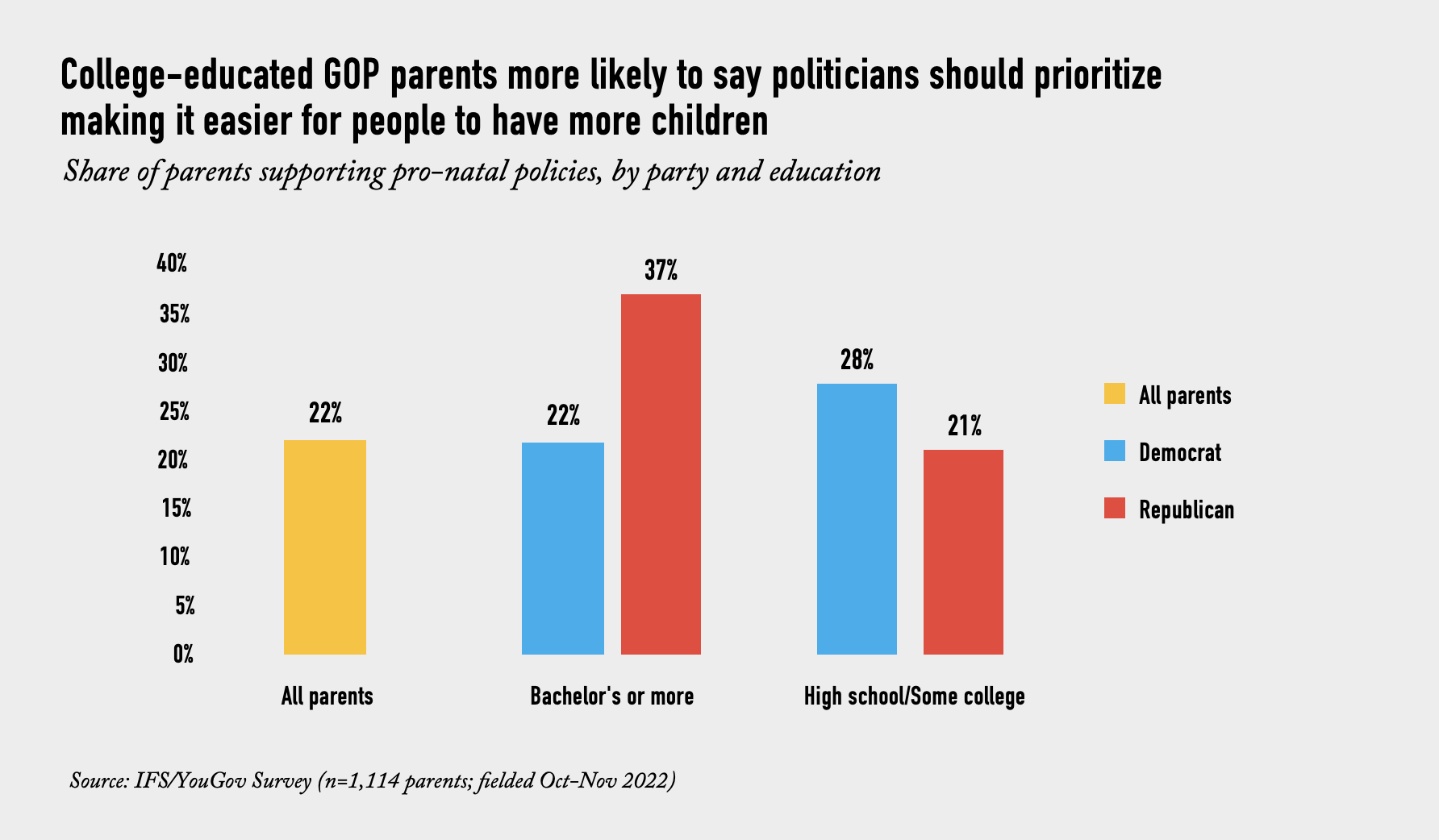
But part of the skepticism towards pro-natal policymaking may be partly due to a lack of information. When informed about the gap between Americans’ ideal and actual fertility, the share who believed government should make it easier to have kids rose by about 10 percentage points among parents (from 22% to 32%), and 5 percentage points among all adults.6 Among parents without a college degree, support for pro-natal policymaking jumped by about half when given additional information about the fertility gap (up to 42% support from Democrats without a college degree, and 32% from their Republican counterparts.) But even with additional context, most respondents still thought fertility decisions an inappropriate focus for government, suggesting limits to a full-fledged pro-natalist agenda.
Policy Recommendations
Focusing on strengthening the family unit against the pressures that would undermine it will require prudence. Left unchecked, state power can weaken the institutions of associational life; so, too, can the unfettered power of the market. A policy agenda to create space for families to flourish requires prioritizing parents’ values and their pocketbooks.
The five policy ideas discussed below seek to advance that vision. They would give parents a greater ability to raise their children in a healthy and supportive environment, balance work and life in the way they deem best, alleviate some of the costs associated with parenthood, remove barriers that discourage formation of strong marriages, and, above all, prioritize the bonds between father, mother, and child.
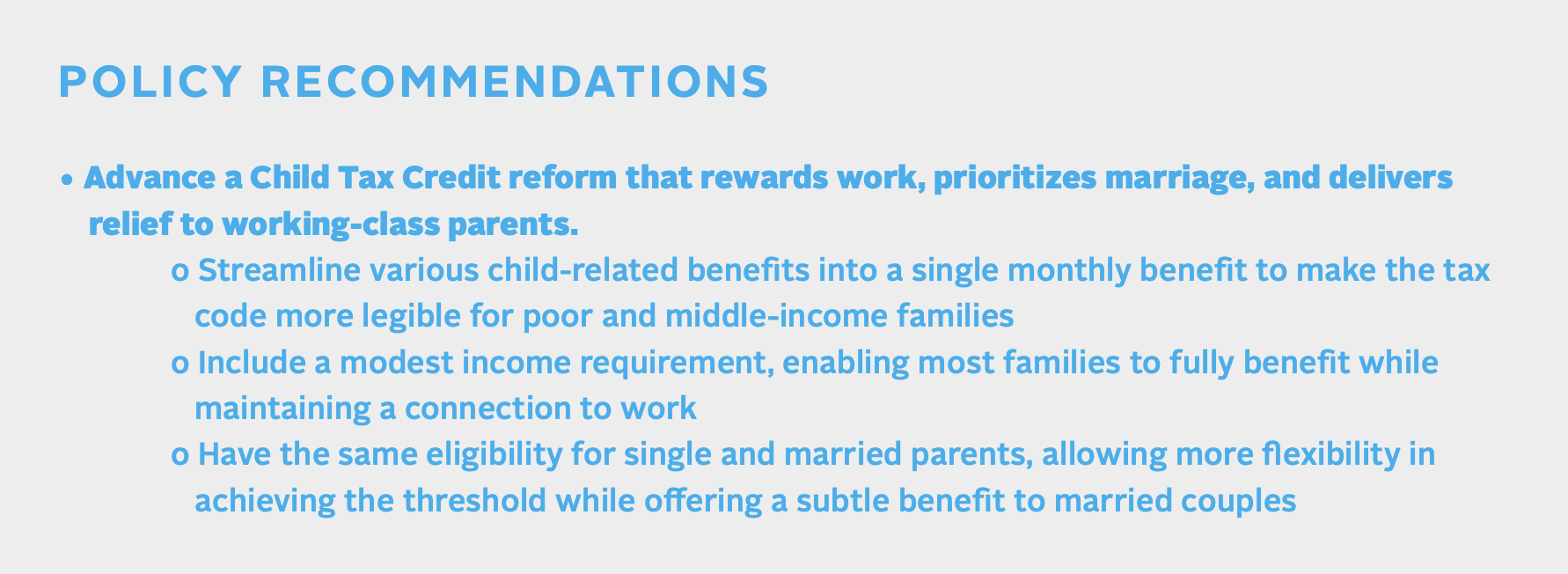
- Strengthen the child tax credit to bolster work and marriage in a fiscally prudent way
- Give parents more tools to protect their kids online
- Create a straightforward paid leave benefit for new parents with broad-based eligibility
- Advance policies that strengthen the fundamental bonds between fathers, mothers, and their children
- Reduce or eliminate marriage penalties facing low-income and working-class families
While support for active pro-family policies tended to be higher among left-leaning parents, Republican parents were especially likely to support action on kids and tech, eliminating marriage penalties, and teaching the “Success Sequence.” Republican parents were less likely to support safety-net spending, credits for newly-married couples, or housing benefits for large families.
These five policy proposals focus on the specific pressures facing families, and are popular, practical ways of prioritizing the family as the cornerstone of a healthy and flourishing society.
Strengthen the child tax credit to bolster work and marriage in a fiscally prudent way
82% of parents agree that a family with a worker present should be eligible for the full value of the Child Tax Credit
There is a simple imbalance at the heart of the modern economy. Workers receive income from wages as individuals, but those paychecks are blind to how many family members depend on that income. A marriedcouple family with a single breadwinner and three children; a single mom with a son with special needs; a childless worker nearing retirement with a boat and a vacation home—all might take home a paycheck with the same amount but face very different demands.
To a large extent, one of the most pro-family policies involves getting the macroeconomic conditions right to boost wage growth through tight labor markets and rising productivity. Exactly how to do that is outside the scope of this report. But even in a humming economy with rising wages, the same imbalance presents itself— parents earn wages as individual workers but use that income to support the dependents in their household.
A child benefit would redress this asymmetry. It recognizes that parents must bear the cost of raising a family, but that the benefits flow to the whole of society in the form of future workers and citizens. A child benefit materially supports parenthood and the important work of raising future generations.
Both right and left have supported the idea of reducing the tax burden on families, and the initial Child Tax Credit (CTC) was passed in 1997 thanks to a strange-bedfellows coalition of pro-family religious conservatives and progressive anti-poverty advocates. One major difference between the two parties is determining how parents should become eligible for the credit.
The American Rescue Plan included a kind of child allowance, sending $250 per child ($300 for those under six) per month to nearly all parents. This expanded CTC was passed as a temporary, six-month measure, and efforts to make it permanent were unsuccessful. The expanded CTC reduced point-in-time estimates for poverty but obviously was in effect for too short a time to measure its potential long-term impact. Many concerns around an unconditional cash benefit involve its potential impact on work incentives.7
Our polling shows that over half of Republican parents believe a household should have a worker present for CTC eligibility (60% of Democrats expressed their desire for a child benefit that went to all families, regardless of work status). To appeal across the aisle, this policy should be oriented towards not only materially supporting families but also increasing the likelihood children in those families can achieve a flourishing life.
Many critiques of the pre-1996 welfare system pointed to the percentage of children being raised in a household without a worker. Similarly, “most scholars now agree that children raised by two biological parents in a stable marriage do better than children in other family forms,” and that the parents themselves benefit from being able to share the responsibilities of parenting with a reliable partner.8 As such, any child benefit should strive to bolster the institutions of work and marriage.
Various proposals have been introduced to alter or expand the CTC.9 Our polling suggests that most parents are open to a child benefit, so long as it is structured to keep these tradeoffs and principles in mind. Combining the share who wanted to see the full value of the CTC go to all families with those who wanted it to go to all households with a worker present, 82% of parents thought eligible families should receive the full CTC.
Our polling builds on prior evidence that the framing of the CTC matters in its political popularity. While progressive audiences responded more strongly to a benefit targeted at low-income families, a provision to support all families equally was more compelling overall. It is worth noting that the current CTC structure, in which many upper-income households can take the full $2,000 credit off their taxes, while many lower-income and workingclass families cannot (comprising about one-third of all children),10 received poor marks.
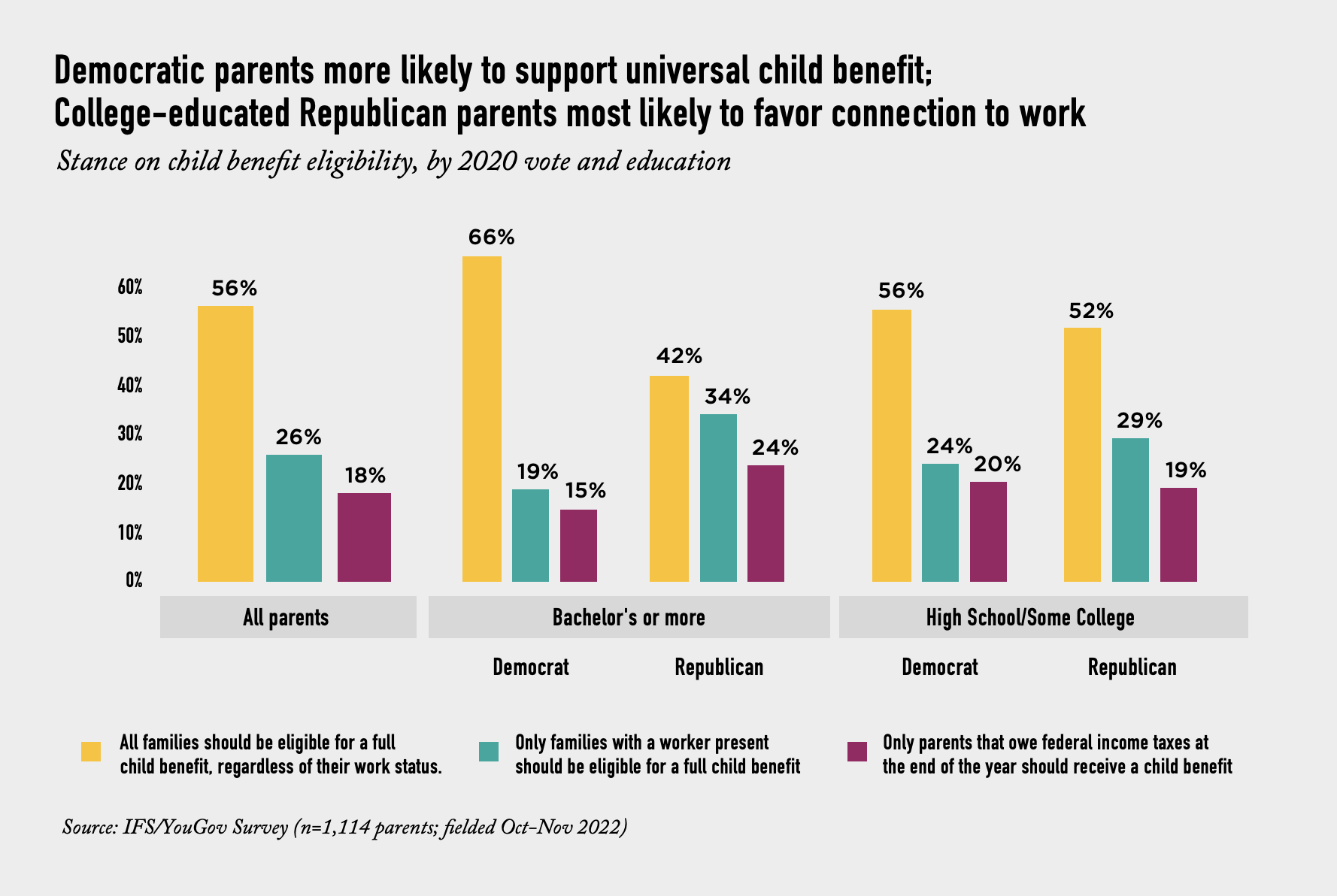
But increasing the size of the CTC itself was also popular: 56% of Republicans and 66% of Democrats thought the annual value of the credit should be $3,600 per child or more. College-educated Republican parents indicated the least support for raising the CTC from its current level. Only 10% of parents wanted to see it lowered from its current value of $2,000 per child, something Congress will need to keep in mind. With no additional action, the CTC is scheduled to revert to $1,000 per child in 2025.
Give parents more tools to protect their kids online
86% of parents agree it is too easy for kids to find sexually explicit content online
Most legislation aimed at preserving parental rights is best pursued at the state level. State lawmakers are closer to families and communities than elected representatives in D.C. and have a better sense of what sort of values their school systems, public libraries, or governmental agencies should be espousing. A national law that sought to dictate school curricula or parental involvement in library decisions, for example, would be legally and practically ill-suited for the task.
But the internet knows no state borders, and many parents express a growing frustration at their lack of ability to ensure their kids are not exposed to sexually explicit content online. In fact, 88% of all adults, and 95% of Republican parents, agreed that is “too easy for kids to find sexually explicit material online.” A recent study found three-quarters of teens have seen online pornography before age 17, with many saying they found it on accident.11 Beyond sexual content, social media companies’ own internal documents suggest that minors’ relationships with their platforms lead to anxiety, depression, and suicidal thoughts.12 Parents across the political aisle express worries about inappropriate content online,13 with potential dangers ranging from exposure to pornography to websites that promote self-harm.14
Parents who want to create more barriers around tech use for their kids face a collective action problem. Unless most families agree to move social life offline, minors who don’t have access to Instagram, TikTok, or Facebook may be missing out on crucial information or opportunities to socialize. Moreover, while some tools exist for helping keep kids safe online, they are often easily circumvented. Asking individual parents to be an expert on the plethora of user settings, filters, and options for keeping age-inappropriate content away from their kids places an undue burden on families.
Policymakers should reset the status quo around kids and tech with a comprehensive approach to giving parents more power to protect their kids online. The backlash against Big Tech has led many policymakers to re-evaluate what principles should be governing their approach to legislation. But beyond the ongoing philosophical realignment about tech’s place in society, prioritizing strong legislation that gives parents more power is a winning political issue that cuts across partisan lines.
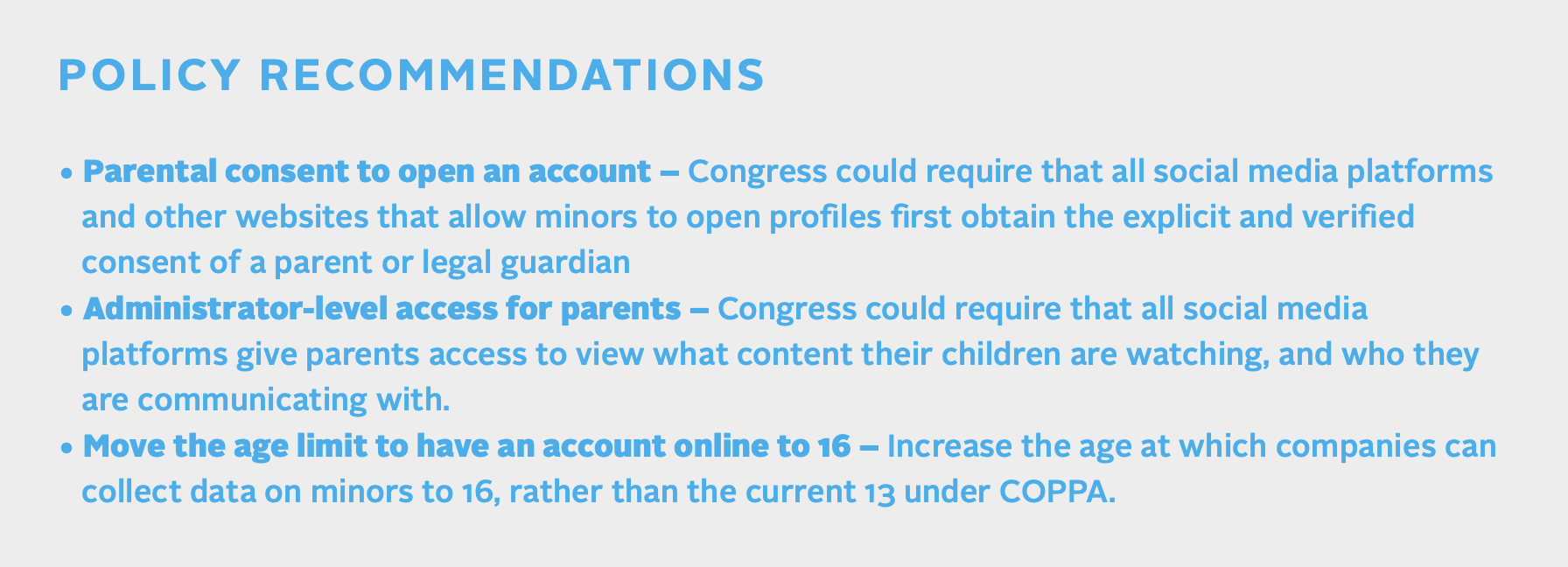
Nearly 9 in 10 Republican parents agreed with a proposal to require social media platforms to grant parents full access to what their children are seeing and who they are communicating with online, the most popular policy polled among that subgroup. Among all parents, 77% said they either strongly or somewhat supported that proposed legislation, and 80% were in favor of a law that would require social media platforms to get parents’ permission before allowing minors to open an account.
Under current law, websites are prevented from collecting data on users under age 13, meaning most major sites won’t formally accept users 12 and under. But in our polling, the preferred average age at which minors should be allowed to sign up for their own social media account was 16 among both parents and the public at large.
A proposal to require proof-of-age to view explicit material on the internet was also popular, though less overwhelmingly: 63% of parents agreed or strongly agreed that internet service providers should be required to obtain age verification (like a drivers’ license or credit card) before allowing individuals to view pornography; 72% of GOP-leaning parents said the same.
The unquestionably strong bipartisan support for better tools for parental access to social media accounts points a way forward for Congress.15 Giving the Department of Justice more tools and resources to go after illegal content online could help curb some of the worst examples. More-aggressive approaches, like establishing a “virtual red-light district” in which explicit content was registered under adult-only, top-level domains, should always be on the table. But policymakers need not wade into thorny constitutional debates over free speech to stress that parents need to be in the driver’s seat when it comes to protecting their kids online.
In the last Congress, the Kids Online Safety Act (KOSA), a bipartisan bill sponsored by Sens. Marsha Blackburn (R-Tenn.) and Richard Blumenthal (D-Conn.), would have established that social media platforms have a duty to prevent and mitigate harms, such as eating disorders and suicide, and required youth safeguards default to the strongest option. These approaches would be an essential first step, but our polling numbers suggest parents are looking for more.
A broad, cross-partisan coalition can be marshalled to empower parents. Even putting aside concerns about sexually explicit content, parents too often feel overwhelmed by concerns over cyberbullying, mental health threats, and the broader negative effects of a childhood intermediated by screens. Championing legislation to strengthen parents’ ability to protect their children online should be a top priority.
Create a straightforward paid leave benefit for new parents with broadbased eligibility
71% of parents support a federal six-week benefit for new moms
An agenda that puts families first should place special emphasis on childbirth. In an era of low birth rates, taking the plunge to become a parent deserves to receive support via public policy.
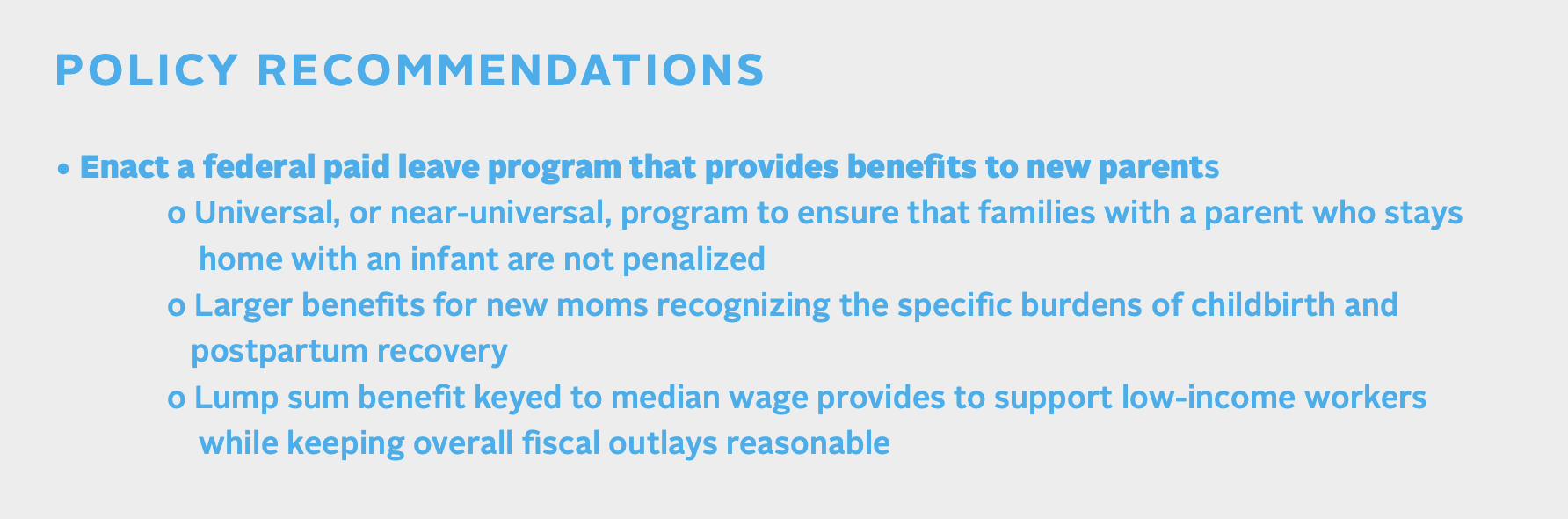
In our polling of parents’ views on family policy topics, paid leave received the highest levels of support behind protecting kids online and grants for family-friendly public spaces. Indeed, 71% of all parents, and 54% of Republican parents, somewhat or strongly supported the idea of a federal program to provide six weeks of paid parental leave to new moms, and three weeks to new dads or adoptive parents. Other polls have found even higher levels of support for paid maternity leave, but the fact that we specified a federal paid leave program (rather than a state-led one, or a mandate on employers) may explain the difference.
Paid parental leave is broadly popular and emphasizes the need to both improve outcomes for moms and strengthen families. However, the parameters of how a paid leave plan may be implemented require some hashing out.
For example, the BBB approach to paid leave would have based eligibility for the benefit on past work experience. This would have left out young and low-income parents, who tend to be minorities, have less education, and a lower earnings profile. Low-income workers also tend to have less access to paid leave in the first place.17 An approach that allows new parents to borrow from future benefits could expand access but would require individual workers to receive lower benefits later in life in exchange for having taken time off around childbirth.
Similarly, a paid leave plan that conditions assistance on workforce participation or an intent to return to work penalizes families who decide to have a parent stay home upon the birth of a child. A complicated childbirth, a change in financial circumstances, or even shifting personal priorities upon becoming a parent may cause some moms or dads to be less interested in returning to a 9-to-5 job a few days or weeks after birth. Expanding eligibility as broadly as possible would not only help make the program more efficient and equitable, but it would also avoid the potential circumstance of only supporting new parents who make certain decisions about work, while freezing others out.
A previous IFS/EPPC report that estimated a modest parental benefit to all parents—keyed to half the median wage for six weeks for mothers recovering from childbirth and three weeks for fathers or adoptive parents—would require a federal outlay of around $15-20 billion annually.18 This type of universal, or near-universal, parental benefit would likely have to be coupled with an expansion of job protections for women who take time off work to give birth and recover. For instance, just under half of all workers are ineligible for the unpaid job protections offered under the Family Medical Leave Act.19
Instead of broader approaches to paid family leave, focusing on childbirth would reduce program costs and provide a compelling rationale for the bill. At the same time, a straightforward baseline of benefits, focused specifically on the unique needs of women recovering from childbirth and the first sleepless weeks with a newborn, would likely allay fears about creating dependency, or enabling fraud or abuse, which could result from a more expansive benefit.
The goal of such an approach would not be to replace most or all of a workers’ income. Parents or parents-to-be could still negotiate for more generous paid leave policies from their employers, and firms could compete for workers by offering higher levels of wage replacement or longer time away from work. But it would recognize the burden on new parents, giving them a little breathing room from the demands of the workplace at a vulnerable time of life. As IFS’ Lyman Stone and the Center for Public Justice’s Rachel Anderson wrote in a policy brief, “policymakers should clearly understand that the main employment-related benefit of maternity leave is in empowering worker choices about labor supply, not necessary inducing return to work or reducing gender inequality.”20
Other options on the table include the approach in BBB, which would have created an employer-based approach to insuring access to paid leave for a number of personal circumstances, including parenthood. Paid leave proposals from the right have often centered around smoothing parents’ income across time—a plan proposed by Sens. Bill Cassidy (R-La.) and Kyrsten Sinema (I-Ariz.) would allow parents to pull forward the current value of their future CTC to fund paid leave around childbirth, while a plan proposed by Sens. Marco Rubio (R-Fla.) and Joni Ernst (R-Iowa) would allow parents to delay receipt of their future Social Security benefits to fund paid leave.
A universal or near-universal paid leave benefit would be targeted to the months around childbirth. Keeping it tightly focused on parenthood but having broad eligibility for parents to take advantage of it, would provide meaningful, tangible support to new parents.
Advance policies that strengthen the fundamental bonds between fathers, mothers, and their children
65% of parents support teaching the “Success Sequence” in schools, and 63% support enforcing child support during pregnancy
Any pro-family policy should aim to strengthen those bonds that are crucial to creating and raising a family—the relationship between parents, and those parents’ relationship with their children. This requires an intentional effort to renew the family as the social institution oriented towards the production and formation of new life in both culture and policy.
Pro-marriage and pro-family messages have traditionally played strongly on the political right, and our polling shows that still to be true. Most parents from both parties disagreed with the statement that marriage was an “outdated institution,” though twice as many Democrats (42%) as Republicans (22%) somewhat or strongly agreed that marriage was outdated. Two-thirds of college-educated Republican parents, and half of their non-college-educated counterparts, said two married biological parents provided the best environment for raising a child. Conversely, onethird of Democrats, across educational lines, said any type of family structure was as good as any other.
Some of the cultural trends that have made family life more precarious are beyond the reach of policy. But lawmakers should not assume they are helpless to impact awareness and incentives. Public policy could prioritize a focus on better education around family formation decisions, a more cohesive approach to building support for single mothers and the fathers of their children, and a willingness to address some of the forces that split families apart. All of these could bolster the institution of marriage and increase the likelihood of more kids benefiting from strong male and female role models. Many of these approaches fall under state, rather than federal, jurisdiction, but Congress could make it easier for state-level innovations.
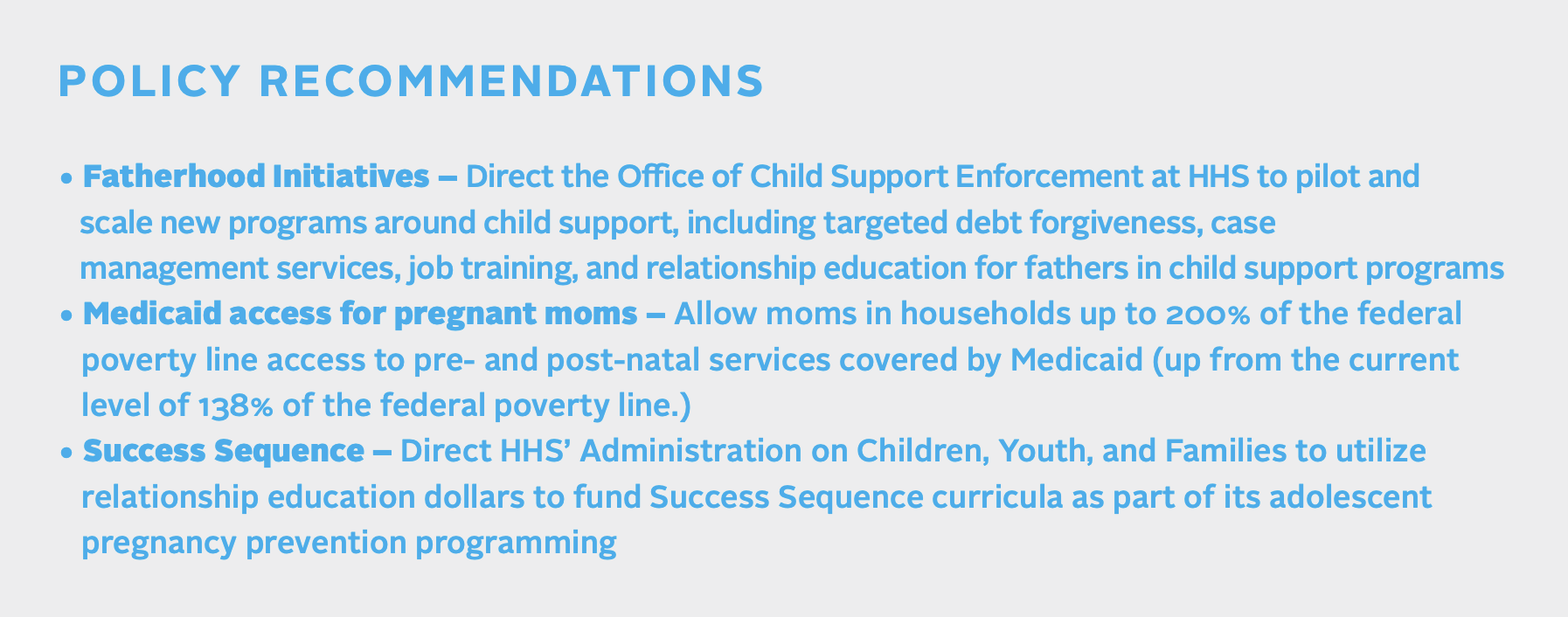
First, better education around the benefits of marriage could increase rates of marriage in low-income and workingclass communities (marriage rates for upper-income households, while down somewhat over time, remain relatively high.) The “Success Sequence” refers to the idea that an individual’s risk of poverty drops dramatically when they graduate from high school, work full-time, and wait until marriage before having children. Two-thirds of parents, and 72% of Republicans, support requiring public schools to include curriculum about this concept.
Similarly, a majority (63%) of parents somewhat or strongly support a plan to make men responsible for child support during pregnancy, as well as making job training and relationship counseling classes available for fathers. A more case management-style approach to child support has been shown to boost the level of connection between single men and their children (though their labor market outcomes did not show similar improvement.) And while family law has a very limited nexus with federal policymaking, it should be instructive for federal politicians to know that 64% of parents, including three-quarters of Republican parents, agree with the statement that “these days, it is too easy for a married couple to get a divorce.” Efforts to strengthen marriage can and should include steps to shore up weak marriages as well as encouraging cohabiting parents to tie the knot.
In a similar vein, a plan that would increase state spending on low-income mothers, including expanded Medicaid coverage of pre- and post-natal health care, was supported by two-thirds of parents, likely at least partially reflecting the dynamics of an America in the wake of the Dobbs decision. Republican parents were nearly equally split on the idea (41% agreeing, 38% disagreeing), while independent and left-leaning parents recorded much higher levels of support.
Many of the proposals that would improve the functioning of the child support system or redirect how public schools teach about marriage and family are best pursued at the state level. But there are federal examples. The “Unborn Child Support Act,” introduced by Sen. Kevin Cramer (R-Idaho), would make mothers eligible for child support payments during pregnancy, and Sen. Rubio’s “Providing for Life Act” would incentivize states to require a child’s biological father to pay at least half of the mother’s pregnancy-related health costs.
Reduce or eliminate marriage penalties facing low-income and working-class families
Nearly two-thirds of parents think Congress should reform safety net programs to remove marriage penalties
In 2017, the Tax Cuts and Jobs Act eliminated many of the major marriage penalties that made it more economically beneficial for middle- and upper-income couples to stay single than marry. Yet for many low-income and working-class households, the structure of our tax code effectively incentivizes cohabitation over the social institution associated with the best outcomes for men, women, and their children—marriage.
Research shows that the best environment in which to raise a child is a stable, two-parent home, making it crucial that policymakers examine what barriers stand in the way of single or cohabiting parents deciding to marry.22 Yet policy-created barriers often make marriage a financially precarious choice for low-income couples.
Take, for example, a hypothetical single mother making $20,000 a year who may be eligible for Medicaid coverage for her and her children, which covers pregnancy-related services and preventative services for children without any copays or cost-sharing. If she were to marry her children’s father who makes $30,000 a year, their combined income could make the household ineligible for Medicaid coverage, leaving them facing a large increase in their health insurance premiums or paying out of pocket for medical care. Similarly, the same cohabiting couple, making $30,000 and $20,000 as individuals, would pay almost $4,400 higher federal income taxes if they were to marry—a marriage penalty of almost 9% of their total household income.23
This concern is far from hypothetical. Research suggests the average EITC-eligible single mother would lose about $1,300 in EITC benefits, on average, if she were to marry, and that her likelihood of getting married is about 2.5 percentage points lower than similar moms who do not face marriage penalties.24
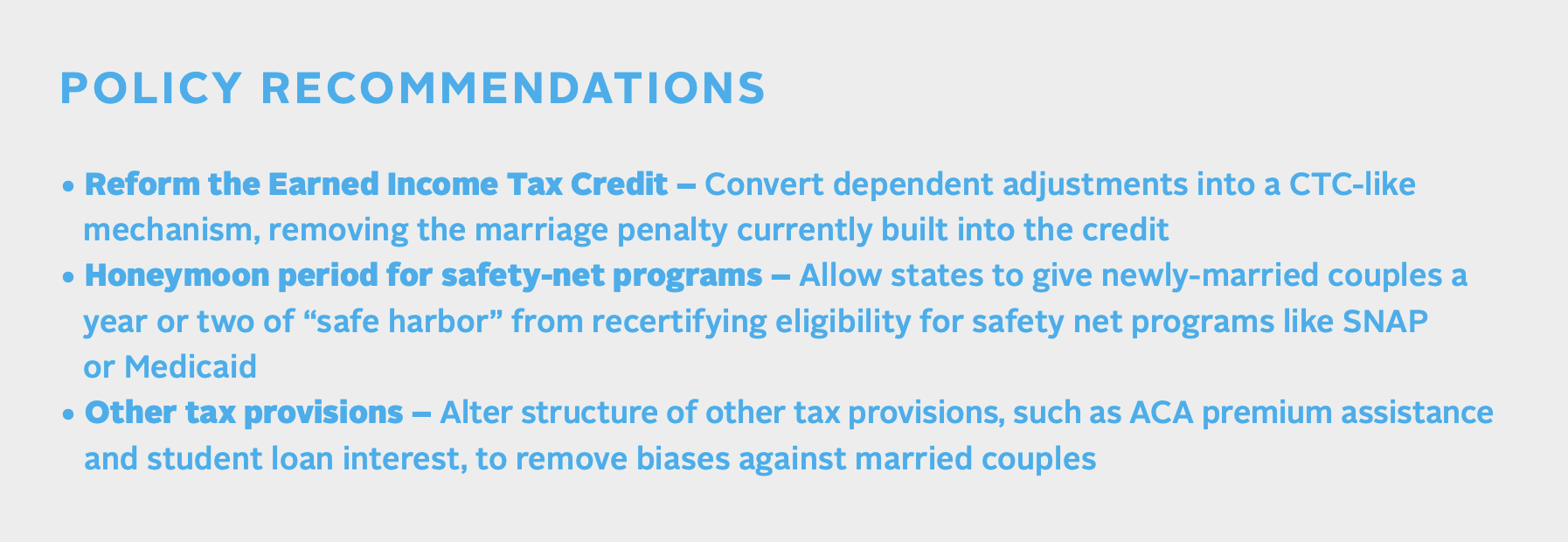
There are other marriage penalties in the tax code as well, some easier to address than others. For example, married and single filers both receive the same allowable deduction for student loan interest payments—$2,500. Doubling the amount for married filers to $5,000 is a straightforward way of removing a bias against married couples paying off education debt.25 In the Affordable Care Act, the so-called “family glitch” provides strong economic incentives for middle-income married couples to divorce when faced with steep health care costs.26
Additionally, the popularity of getting rid of marriage penalties in safety-net programs was stable across the board in our polling—63% of all respondents, 62% of parents, and 63% of Republicans parents all somewhat or strongly agreed with eliminating them. Less popular, particularly among conservative parents, are policy efforts to explicitly subsidize marriage. The second worst-polling item in our battery of ideas was a $10,000 tax credit to all first-time newly married couples to be used towards federal student loan forgiveness or down-payment on a new home, receiving 31% support among Republican parents and 56% support from all parents. (A plan that would have given large families additional money towards their home mortgage received a worse reception.)
Eliminating marriage penalties can be done as part of a broader effort to simply the tax code for low-income workers. One way of doing so was included in the Family Security Act 2.0, introduced by Sens. Romney and Daines in the last Congress. It would strip the household adjustments from the EITC and funnel the per-child amount into an expanded CTC. That approach, or others like it, would have the added benefit of removing marriage disincentives from the EITC, allowing it to function more like a straightforward low-wage income supplement.
At the same time, redressing marriage penalties in the tax code or smoothing benefit cliffs in safety-net programs can be expensive propositions. Reforming existing programs, or finding savings in other programs, could help ameliorate some of the costs associated with treating married couples fairly.
Conclusion
The conversation around pro-family policy needs a reset. In recent years, a full-throated progressive vision of what it means to support families was on offer in the form of the American Families Plan. Billed as a “once-in-a-generation investment in our nation’s future,” it would have spent roughly $1.8 trillion over 10 years on a permanent child allowance, universal pre-kindergarten, free community college, child care subsidies, paid family and medical leave, and other social spending programs.27
Political exigencies and the highest rates of inflation in four decades meant the plan never came up for a vote. But its commitment to expanded social spending laid down a marker for what a full-throated progressive vision of family policy might look like. In response, some politicians have suggested parents just want the federal government to get out of the way.28 But our polling suggests parents are facing economic and cultural challenges that need to be addressed by something other than statism or libertarianism. As such, the five policy priorities highlighted here seek to chart a middle course with broad appeal, supported by most parents in both political parties.
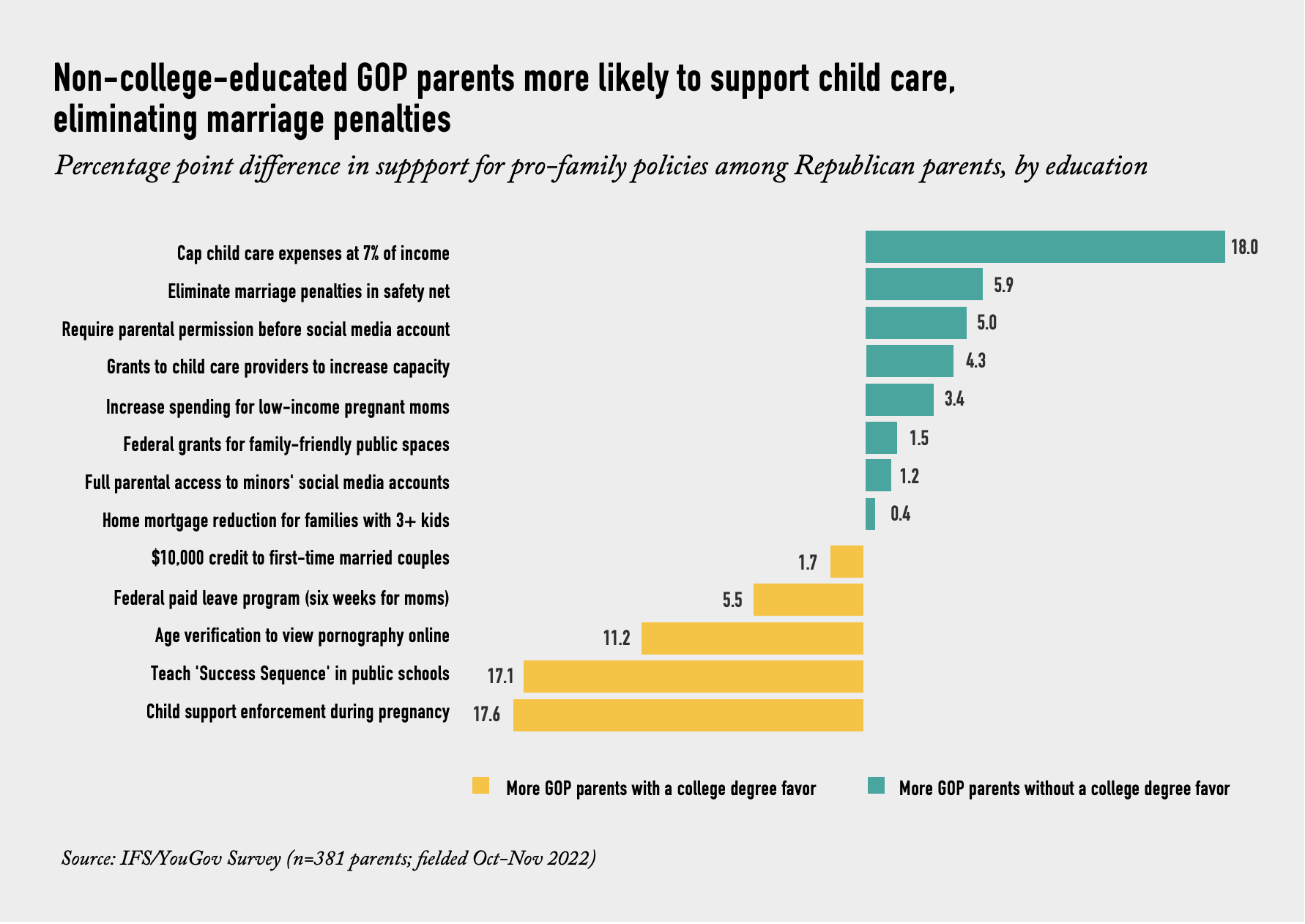
Among Republican parents, there was a split on social spending along educational lines. Parents who voted Republican in 2020 and did not have a college degree were more likely to support child care programs, safety-net spending on low-income moms, and paid leave. On the other hand, college-educated Republicans were more comfortable adopting a moralistic approach to politics, such as requiring child support during pregnancy and favoring policies to actively promote marriage, like teaching the “Success Sequence” in public schools.29
An approach to politics that stresses bully pulpit initiatives around family values certainly reflects the preferences of college-educated Republican parents, but their counterparts without college degrees are more likely to be open to material aid—and seem more open to breaking with conventional conservative orthodoxy on spending and the size of government.30
When asked how to pay for new family policy programs, parents were more likely than the general population to favor increasing income taxes on those making over $250,000. They were about 10 percentage points less likely to say government should not add new pro-family spending. About 4 in 10 college-educated Republican parents said politicians should not spend more on family policy measures, and more suggested cutting safety net spending or taxing corporations. Republican parents without a college degree, however, were modestly more open to increasing the federal budget deficit or increasing taxes on high earners.
Democratic parents were generally more likely to support most of the pro-family spending proposals we polled, with support strongest among college-educated parents. College-educated Democrats were over 15 percentage points more likely to support the paid leave and child care proposals, and slightly less likely to support promoting the “Success Sequence” in schools.
Lastly, while voters tend not to vote solely on family policy topics, each political coalition has some rationale for prioritizing constructive pro-family proposals. When asked which political party was better at standing up for parents, 10% of Republicans said the Democratic party did a better job (4% of Democrats said the inverse.) More than half of parents who did not vote for either President Biden or former President Trump in the 2020 election saw both parties as doing an equally poor job in standing up for parents.
To be politically successful, pro-family measures may need to stretch beyond the usual political coalitions and appeal to both right- and left-leaning parents. Our five policy priorities seek to strike a balance between being widely popular across the political spectrum and having the most impact in promoting strong families as the fundamental building block of society.
A pro-parent agenda should stand up for families as the core social and economic unit of a strong and healthy society, and this toolkit is intended to flesh out that vision. When it comes to pro-family policies, lip service is no longer enough; it will be up to future lawmakers to build off these ideas and respond to the needs of parents in substantive ways.
Endnotes
- W. Brad Wilcox and Wendy Wang, “The Married-Mom Advantage,” The Atlantic, Dec. 27, 2022; and Julia Carpenter, “Inflation Widens Married Couples’ Money Lead Over Their Single Friends,” The Wall Street Journal, Aug. 16, 2022.
- This report refers to “Republican” and “Democratic” parents based on their vote for President in 2020. The well-known decline in partisan identification, especially among younger adults, means party self-ID would miss a slice of politically engaged independents that are potential swing voters. There are almost assuredly some parents who would self-identify as one party yet voted for the Presidential candidate from the other party in 2020 (or did not vote at all). But the forced choice of a Presidential election allows for a handy first approximation of where the dominant political coalitions stand on these questions.
- Unless otherwise stated, all the statistics in this report come from the sample of parents with children under 18.
- The term “folk libertarianism” was popularized by New York Times columnist Ross Douthat, to distinguish it from a more academic sense of the term, referring to a “deeply American” tendency towards “a reflexive individualism” disconnected from policy considerations.
- We asked two questions sequentially: “Some politicians have proposed public policies that would promote marriage. Which of these views best describes your own?” followed by “As you may know, 80% of those in the top 20% of household incomes are married, while 38% of those in the lowest 20% of household incomes are married, and some research suggests children do best when raised in a married, two-parent home. Knowing this, should government seek to promote marriage?”
- We asked two questions sequentially: “Some politicians have proposed public policies to make it easier for people to have more children. Which of these views best describes your own?” followed by “As you may know, the U.S. birth rate has recently hit all-time lows. Some surveys suggest that the average American says they would ideally like to have two or three kids, but more often end up only having one or two. Knowing this, should government try to make it easier for people to have more children?”
- Prior qualitative work conducted by IFS has shown a heavy rhetorical emphasis on the importance of there being a worker in the home. See Patrick T. Brown, Working-Class Americans’ Views on Family Policy (Charlottesville: Institute for Family Studies, Sept. 2021).
- Sara McLanahan and Isabel Sawhill, “Marriage and Child Wellbeing Revisited: Introducing the Issue,” Future of Children 25, no. 2 (Fall 2015).
- These plans include a proposal from Sens. Marco Rubio (R-Fla.) and Mike Lee (R-Utah) that would keep the current structure but increase the credit size to $3,300 per child and the phase-in rate from 15% to 15.3%; one from Sen. Josh Hawley (R-Mo.) would give married parents a $12,000 tax credit, and single parents a $6,000 credit on top of the existing CTC; an approach in Build Back Better that would have created a monthly child benefit based on the pandemic-era America Rescue Plan; and Sen. Mitt Romney’s (R-Utah) plan would give a monthly child benefit to all households that earned $10,000 in income the prior year, with a smaller amount for other households.
- Jacob Goldin and Katherine Michelmore, “Who Benefits from the Child Tax Credit?” NBER Working Paper No. 27940, Oct. 2020, rev. Oct. 2021.
- Cecilia Kang, “Most Teenagers Have Seen Online Porn, Report Says,” New York Times, Jan. 10, 2023.
- Georgia Wells, Jeff Horwitz, and Deepa Seetharaman, “Facebook Knows Instagram Is Toxic for Teen Girls, Company Documents Show,” Wall Street Journal, Sept. 14, 2021.
- Judith Shulevitz, “On PornHub, Nobody Knows You’re a Kid,” New York Times, July 17, 2016.
- There is evidence that kids from non-intact families struggle more with issues related to tech. Jean Twenge, Wendy Wang, Jenet Erickson, and W. Brad Wilcox, Teens and Tech: What Difference Does Family Structure Make? (Charlottesville: Institute for Family Studies, Oct. 2022).
- States, too, could take the lead on action around kids and tech. See: Clare Morell, Adam Candeub, Jean Twenge, and W. Bradford Wilcox, Protecting Teens from Big Tech: Five Policy Ideas for States (Charlottesville: Institute for Family Studies, Aug. 2022).
- Juliana M. Horowitz, et al., “Americans Widely Support Paid Family and Medical Leave, but Differ Over Specific Policies,” Pew Research Center, March 23, 2017.
- U.S. Bureau of Labor Statistics, National Compensation Survey, March 2022.
- Patrick T. Brown, Exploring Parents’ Perspectives on Paid Leave (Charlottesville: Institute for Family Studies, March 2022).
- “The Effects of FMLA Eligibility and Awareness on Family Leave-Taking,” Issue Brief, IMPAQ International LLC and Institute for Women’s Policy Research, Jan. 2017.
- Rachel Anderson and Lyman Stone, A Child-Focused Paid Parental Leave Policy for the U.S. (Charlottesville: Institute for Family Studies, May 2020).
- “Child Support Noncustodial Parent Employment Demonstration Evaluation (CSPED),” Institute for Research on Poverty, University of Wisconsin-Madison, March 2019.
- The literature on the benefits of marriage is too long to summarize in this space, but one report offers proof that it is two parents, not just two incomes, that makes the difference in children’s lives: Kimberly Howard and Richard V. Reeves, “The Marriage Effect: Money or Parenting?” (Washington, DC: The Brookings Institution, Sept. 4, 2014).
- Calculated with Tax Policy Center’s Marriage Calculator.
- Katherine Michelmore, “The Earned Income Tax Credit and Union Formation: The Impact of Expected Spouse Earnings,” Review of Economics of the Household 16 (2018):377–406.Patrick T. Brown,
- Patrick T. Brown, Examining the Relationship Between Higher Education and Family Formation (Washington, DC: U.S. Congress Joint Economic Committee, Nov. 3, 2021).
- The Biden administration has proposed a rule to address the “family glitch” through executive action, but legislation could provide a more permanent solution. See: Matthew Buettgens and Jessica Banthin, “Changing the “Family Glitch” Would Make Health Coverage More Affordable for Many Families,” Urban Institute Health Policy Center, May 2021.
- The White House, “FACT SHEET: The American Families Plan” April 28, 2021.
- Rob Mentzer, “US Sen. Ron Johnson Defends Saying Taking Care of Children Isn’t ‘Society’s Responsibility,’” Wisconsin Public Radio, Jan. 27, 2022.
- As the parties increasingly sort along educational lines, it is important to note that in a two-way table of parents along 2020 voter and educational attainment, the share of college-educated parents who voted Republican was the smallest of the four subgroups, though at n=381 still statistically viable.
- Some of the other policies that didn’t make the final list included grants to improve public spaces for families, like parks and family-friendly recreation centers, which polled very well but fall more under the type of quality-of-life initiatives where states could take the lead. Republican parents were more likely to support federal grants to child care providers to boost capacity than measures that would cap families’ out-of-pocket costs. Both of those proposals, while popular with parents from both parties, had lower levels of support than the CTC, paid leave, or reducing marriage penalties. And while housing is a large weight on family’s minds, most levers to reduce the cost of housing are better suited to the state level. But Congress could always be mindful of ways to encourage new housing and reduce the specific barriers to homeownership facing young families.
About the Author:
Patrick T. Brown is a fellow with the Ethics and Public Policy Center, where he works on family policy. He was previously a senior policy advisor for the Joint Economic Committee and a government relations staffer for Catholic Charities USA, and holds a master’s in public affairs from Princeton University.
About the Data:
This report is based on a new Institute for Family Studies survey conducted by YouGov of 2,557 American adults, including an oversample of parents with children under age 18, about their views on a battery of social stances and policy preferences. Our survey was fielded Oct. 20 to Nov. 3, 2022, and was propensity-score weighted on age, gender, race/ethnicity, years of education, and region.
Acknowledgments:
This report is made possible by support from the Institute for Family Studies and the Ethics and Public Policy Center. The opinions, analysis, and recommendations expressed in this report are those of the author and do not necessarily reflect the opinions of the sponsoring organizations. Special thanks to Wells King and Brad Wilcox for their thoughtful comments on an earlier draft of this report, and to Lyman Stone and Wendy Wang for their valuable input into survey wording and methodology. This report was edited by Alysse ElHage. Michael Toscano facilitated its production.