Executive Summary
Religious affiliation and participation in the United States have declined steadily over the past several decades. Fewer Americans now attend worship services regularly, identify with a faith tradition, or describe religion as central to their daily lives. This shift is especially pronounced among younger cohorts, who are more likely than previous generations to report no religious affiliation and less likely to engage in institutional religious practices. While belief has not disappeared, it has become more individualized and less connected to church life. As a result, many religious communities now face a sustained pattern of generational decline rather than temporary fluctuation, raising concerns for churches and church members alike about the long-term vitality of their congregation.
Research consistently shows that families are the single most important factor in whether children adopt and maintain faith into adulthood. Congregational programs, clergy leadership, and peer networks matter as well, but they are most effective when reinforced within the home. Studies demonstrate that parental modeling, shared faith practices, and the quality of parent–child relationships are among the strongest predictors of adult religiosity. When faith is embedded in everyday routines through conversation, ritual, and visible commitment, children are more likely to internalize it as part of their enduring identity. Taken together, this body of evidence underscores the need for analysis of how family processes operate in practice and which specific parental behaviors most effectively foster durable Christian commitment.
Using data on American adults aged 25+ who were raised in a Christian faith, we examine how parents most effectively transmit faith to their children. Consistent with past research, we show:
- Religious practice in childhood is highly predictive of religious practice in adulthood.
- Higher parent–child relationship quality in childhood is associated with stronger retention of religious belief and practice in adulthood.
- Higher parental marital quality is associated with greater faith transmission.
- Congregational involvement on the part of both parents and adolescents is linked to higher levels of faith commitment when children reach adulthood.
Our findings suggest that if faith transmission from parents to children is to remain viable, efforts must focus on equipping both families and churches with practical tools and guidance for intergenerational faith formation. This includes helping parents integrate faith into everyday family life, providing robust faith communities and supports, promoting loving and stable family relationships in the household, and more. By centering families and supporting them intentionally, church communities can better address the decline of Christianity and sustain faith across generations.
We make the following recommendations for parents and pastors, which we elaborate on more fully in the report:
Recommendations for Parents
1) Be your children’s role model for faith
2) Prioritize strong marriages and parent-child relationships
3) Make faith formation a joint effort
4) Build religion into everyday family life
5) Make faith a regular topic of family conversation
Recommendations for Pastors
1) Guide parents—not just children—as part of religious education
2) Support strong marriages and coparenting relationships
3) Actively engage fathers
4) Create space for community
5) Invest in youth ministry
Introduction: The State of American Religion
Religious families in America are in a challenging situation. Religion in the United States is in decline by virtually every measure. Religious identification, worship attendance, and belief in God have all dropped by double-digit margins since the 1990s. Furthermore, research shows most of this decline is intergenerational. That is, rather than people becoming less religious over their adult lives, each new generation enters adulthood less faithful than the last one. This points to a decline that looks slow at first, since generational replacement is a slow process, but cascades into an avalanche over time as the most devout generations disappear and are replaced by more secular ones.
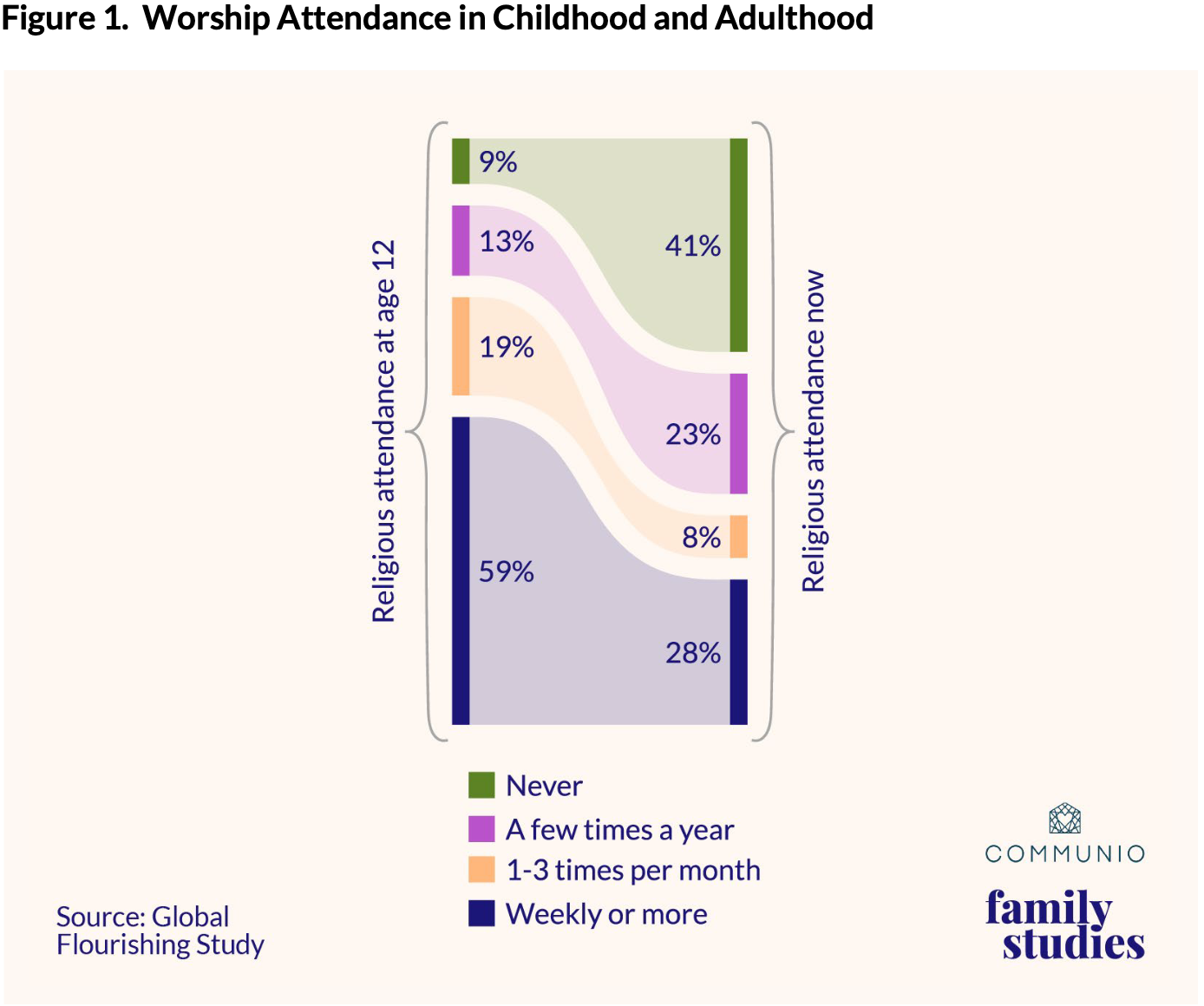
There is not any one reason for this decline, but rather several factors working together in a kind of “perfect storm.”
- Social values have shifted away from authority and tradition, and toward individualism and autonomy. Children growing up in this cultural shift are primed to look at long-established religious institutions with suspicion.
- The end of the Cold War created a change in American identity where faith in God became less central.
- Early internet discourse in the mid-2000s and subsequent social media platforms exposed younger generations to doubts and atheist arguments and enabled them to form communities outside religious boundaries.
- Moral scandals on the part of Catholics and Protestants alike turned a lot of people off to organized religion.
- The partisan culture war led many on the political left and center to look askance at traditional religion, which they see as incompatible with their worldviews.
- Increased education and delayed family formation led young adults to stray further away from faith for longer periods of time, making return more difficult.
- As extracurricular activities in the teenage years and professional demands in adulthood have increased, for many people, faith was not so much abandoned as just crowded out.
In short, the decline of American Christianity is not due to any one thing, but rather multiple forces all working together.
Those who want to instill faith in younger generations are thus facing an uphill battle, and parents are the front line in that battle. While pastors and churches play a vital supporting role, they cannot minister to youth who never pass through their doors in the first place. Furthermore, they have lost the support of the larger culture, and so are not naturally viewed by younger generations as legitimate authorities. If children are going to learn the importance of religion, carry it with them into adulthood, and pass it on to their own children, this must happen most centrally in the home.
While the challenge is formidable, there is some good news. Research confirms that there is quite a lot parents can do to maximize the chances that their kids will carry on the faith.1 While these steps may be difficult or demanding at times, they are not mysterious. Indeed, for the most part they line up with common sense. Parents can pass down faith by practicing it themselves and preaching what they practice. Specifically:
- By modeling religion, they show their kids what it should look like.
- By making religion a family activity, they let their children practice it themselves and make it feel like a natural part of life.
- By talking about faith at home, they help their children understand religion and why it matters.
All this should be done in the context of a loving and stable home, and with the support of a strong church community, so children have a powerful sense of the many goods Christianity can provide. If parents do these things, it is far more likely that their children will develop faith commitments that endure even after they leave the nest, and someday build their own.
This report provides an overview of what empirical research tells us about what helps parents pass down the faith to the next generation. Drawing on a number of data sources, it examines the specific practices that are most effective in the task of faith formation. Though our primary focus is on family life, parents cannot do it alone. They not only need guidance and moral support but—as this report will show—they need programmatic support from their congregations as well. The key ingredients for passing on the faith are devoted parents embedded in strong, active church communities where pastors and leaders take faith formation seriously.
Faith Environment in Childhood
In previous eras of American history, parents could have a realistic expectation that Christian beliefs and values would be reinforced for their children by their larger social contexts, including friends, neighbors, schools, and the media. In most parts of the country, that is no longer the case today. If children are going to learn Christian beliefs and practices, this must happen first and foremost in the home and be guided by parents.
Parents Are the First Role Models
Research confirms that the strongest predictor of how religious children become is how religious their parents were during their upbringing. Parents are the most important spiritual role models.
Religious commitment has multiple dimensions, with core characteristics including worship attendance, subjective importance of religion in people’s lives, and personal practices, such as regular prayer. The figures below show that when parents rate highly on these dimensions, their children are more likely to do the same later in adulthood. For instance, when parents reported attending church weekly while raising their children, a predicted 26% of their children did the same in their 30s and 40s, compared to only 12% whose parents were not weekly attenders.
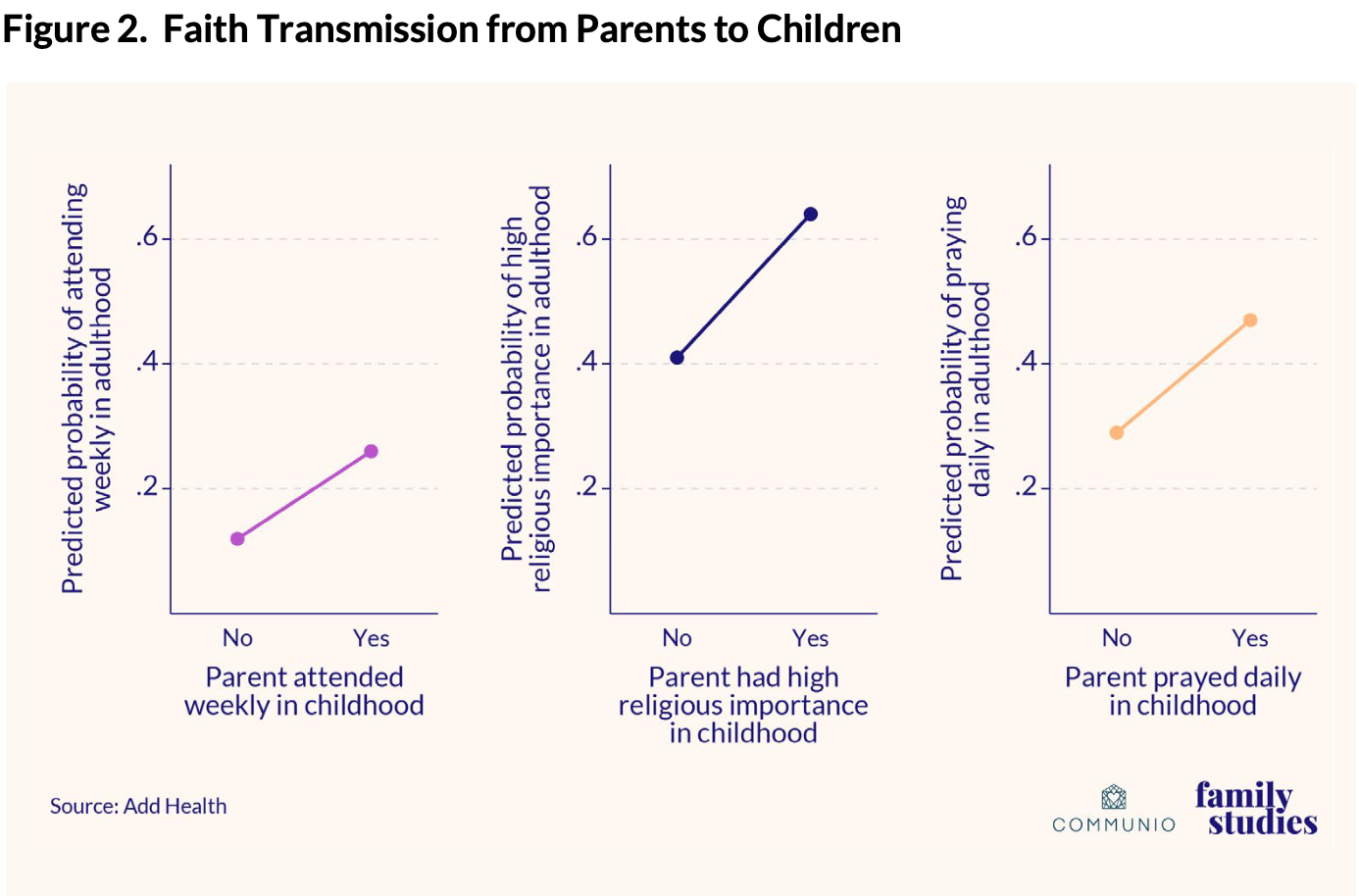
Similarly, when parents identified religion as being very important in their lives, nearly two-thirds of their children were predicted to say the same as adults, compared to less than half of those whose parents did not affirm the high importance of religion. Finally, parents who prayed daily had a 47% chance of having children who did the same as adults, compared to less than one-third when parents did not pray daily.
Taken together, these patterns underscore a central point: children tend to mirror what they consistently observe in their parents’ lives.
Putting the "Practice" in Religious Practice
While modeling religious commitment is a good start, parents who want to raise faithful children must go beyond this and involve them in religious practices. While it is not always clear from the data, it is safe to assume that most parents who attend church are bringing their children with them, particularly when their children are younger. Such participation is critical for cultivating religious habits, transmitting teachings, and fostering a sense of embeddedness within a church community.
At the same time, focusing only on weekly attendance may lead children to see faith as something limited to Sundays. To mitigate this, parents should make efforts to work faith into the rhythm of family life throughout the week.
Results from the National Study of Youth and Religion highlight two family-based spiritual practices that can make a difference: 1) saying grace before meals, and 2) praying together as a family (in addition to prayer at mealtimes or church services). Families that engage in these practices are more likely to raise children who remain faithful into adulthood, as reflected across multiple measures. Children who participate in these practices with their parents are more likely to go to church, say religion is very important to them, pray regularly, identify as Christian, and report belief in the divinity of Jesus Christ by the time they reach their mid-to-late 20s.
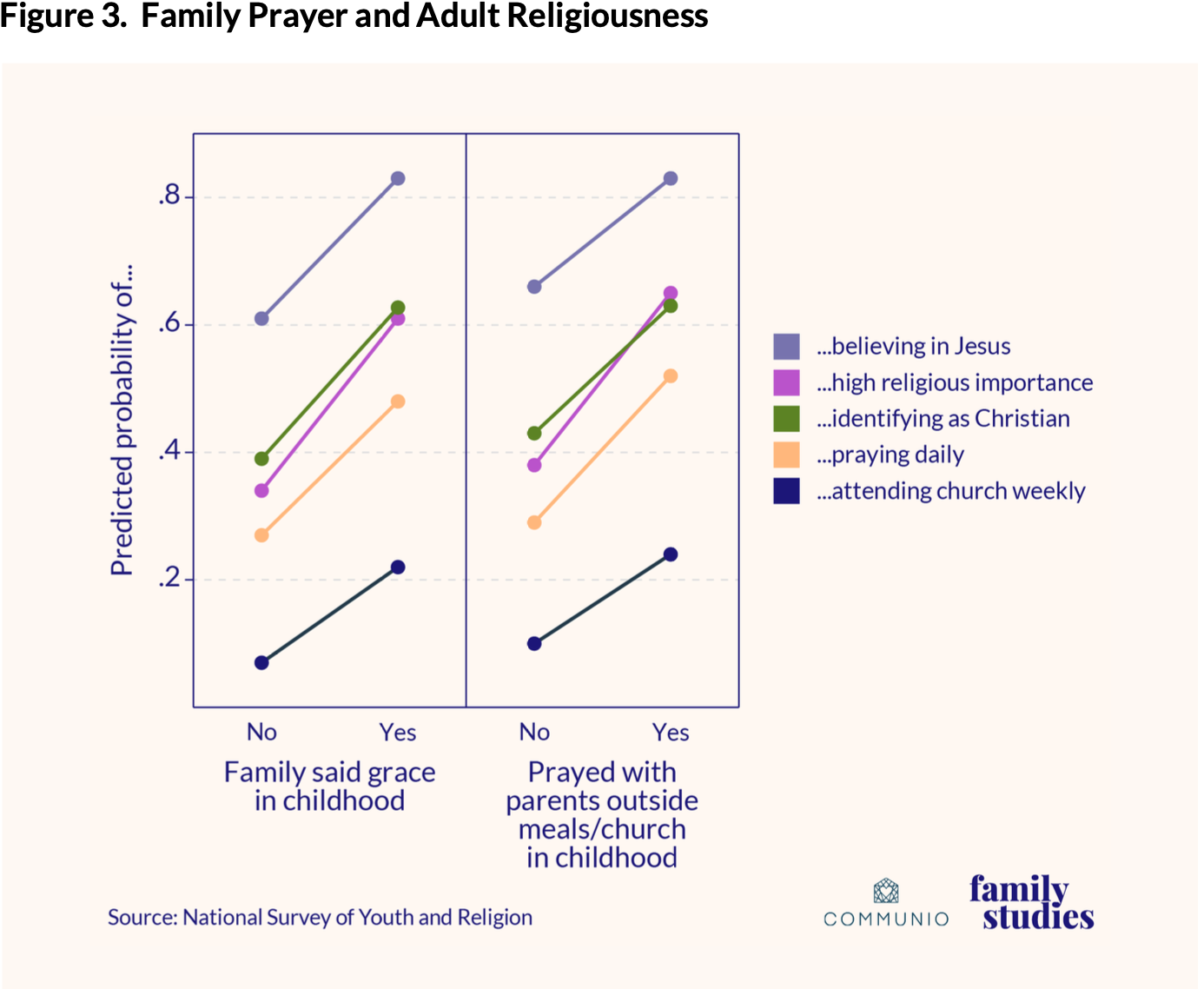
The results in this figure show that the foundations of Christian faith are more durable when they are formed in the rhythms of daily life in a family context.
Preaching What You Practice
A great deal of emphasis is rightly placed on religious practice in the family. Church attendance, acts of worship, prayer, scripture reading, and similar behaviors are all central to Christian life, not only as ways of turning toward God but also a way of developing faithful habits, feelings, and a sense of a shared community that bring Christianity to life and make it part of time and physical space. The importance of these practices for faith formation cannot be overstated.
Yet they are also not enough. Parents need to be willing to not only practice but also talk about religion regularly at home. This is for several reasons:
- Theological teachings can be complicated and nonintuitive, so children need instruction to understand them.
- In a secularizing culture, even children in religious households may develop a sense that their religious lives at home, however positive, don’t have much to do with the concerns of the outside world like getting good grades, engaging in hobbies or extracurricular activities, or maintaining good friendships.
- As kids get older and encounter arguments against Christian beliefs, they may find their faith shaken if they haven’t been prepared.
In short, to sustain faith commitments in a world that doesn’t support them, children need to understand the “What?” and “Why?” of religion, and it is up to parents (with the support of their churches and other sources) to articulate the answers to those questions. Spiritual formation must feed the mind as well as the body and soul.
This is clear in the data, which show that talking about religion at home growing up is one of the strongest predictors of becoming a religious adult. Children who grew up in a household where faith was discussed several times a week or more were over twice as likely to attend church, say religion was very important to them, and pray daily in young adulthood, and around 20 percentage points more likely to identify as a Christian and believe in the divinity of Jesus Christ.
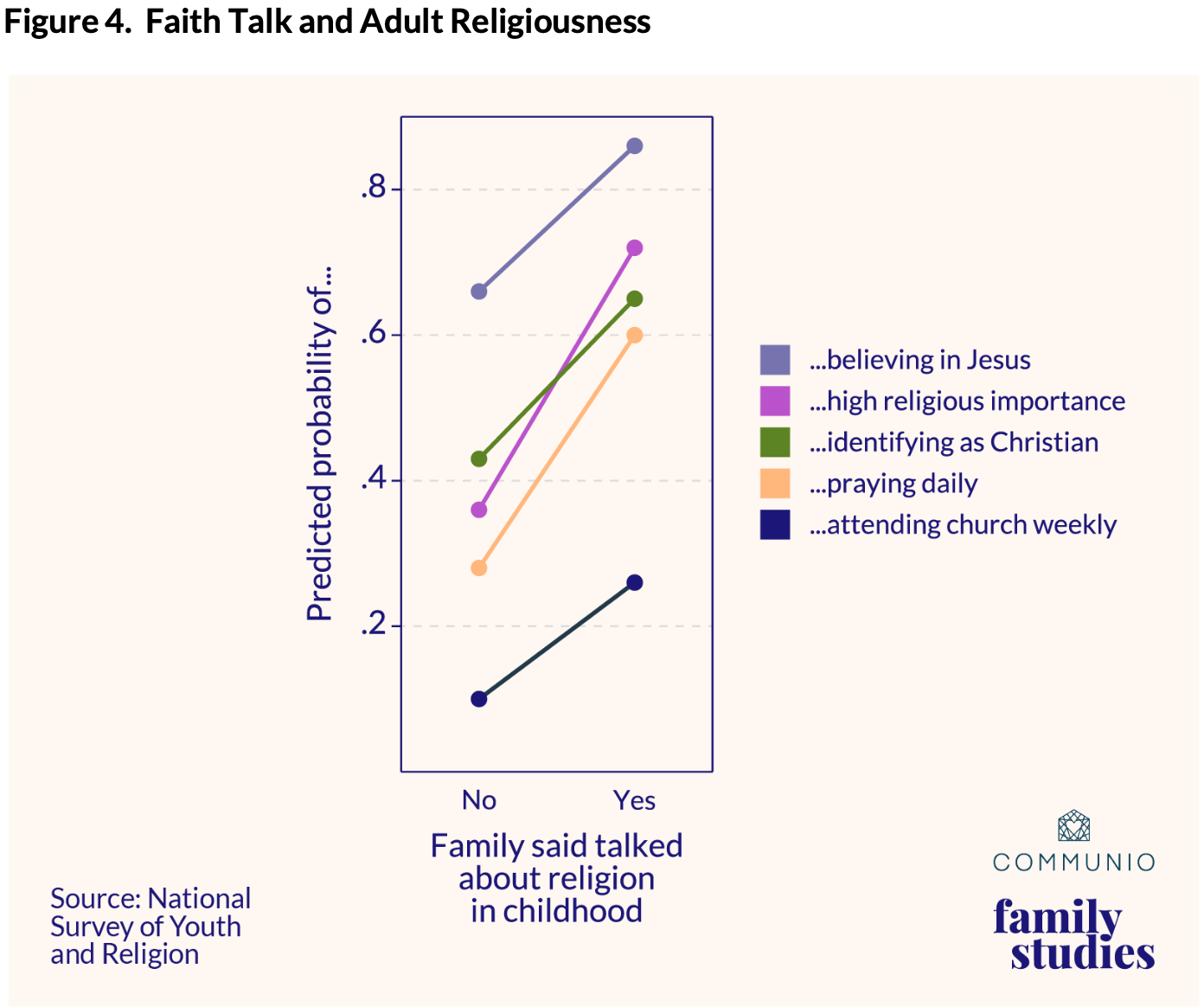
These results contain an important lesson that runs counter to some modern conventional wisdom. Many parents worry about bringing up faith too much with their children for fear of driving them away or “jamming it down their throats.” Some may worry that they’ll be unable to answer their children’s questions, or shy away from talking about moral teachings that conflict with many modern views, especially about sex and marriage. Parents may hope that quietly modeling faithful lives and putting a good face on religion will be enough, and that too much religion talk might seem strange, off-putting, or drift into uncomfortable topics. We should not dismiss these concerns altogether. Some people do report being turned off to religion when their parents came on too strong, or having their faith shaken when adults could not answer their questions or when difficult conversations were handled poorly. Such discussions can come at a cost when parents come off as dogmatic, preachy, or ill-prepared.
Yet, according to the data, efforts to pass on the faith are more often undermined not by parents laying it on too thick, but by taking too light a touch. The relevance of Christianity in modern life isn’t affirmed by the larger culture, and if kids aren’t taught why and how faith matters, they are likely to assume that it does not matter—or at best, that faith is just one “lifestyle choice” among others. If they are not free to ask hard questions about religion, they may assume there are no answers. It thus falls on parents to set a tone in the household where talk of religion is normal and to prepare for the hard theological or moral conversations, especially as their kids get older. This is a key area where churches and religious leaders are in a position to offer guidance and serve as key resources for both parents and youth.
Parents must also work together to provide consistency. If parents present a united front on the importance of faith as well as the content of theological teachings, children are more likely to internalize these messages. On the other hand, if parents send their children mixed messages or undermine one another’s efforts, whether intentionally or not, children are more likely to conclude that faith is something optional rather than central. When parents are in religious tension, it will further be harder to integrate faith into the rhythms of family life where children are especially likely to feel its importance and develop religious attachments. Parent efforts oriented around a shared family vision are thus vital for both the concentration and consistency of faith formation.
When comparing religious outcomes for adult children based on shared parent faith, we see that when parents are religiously alike, their children are more likely to exhibit religious commitments in adulthood.
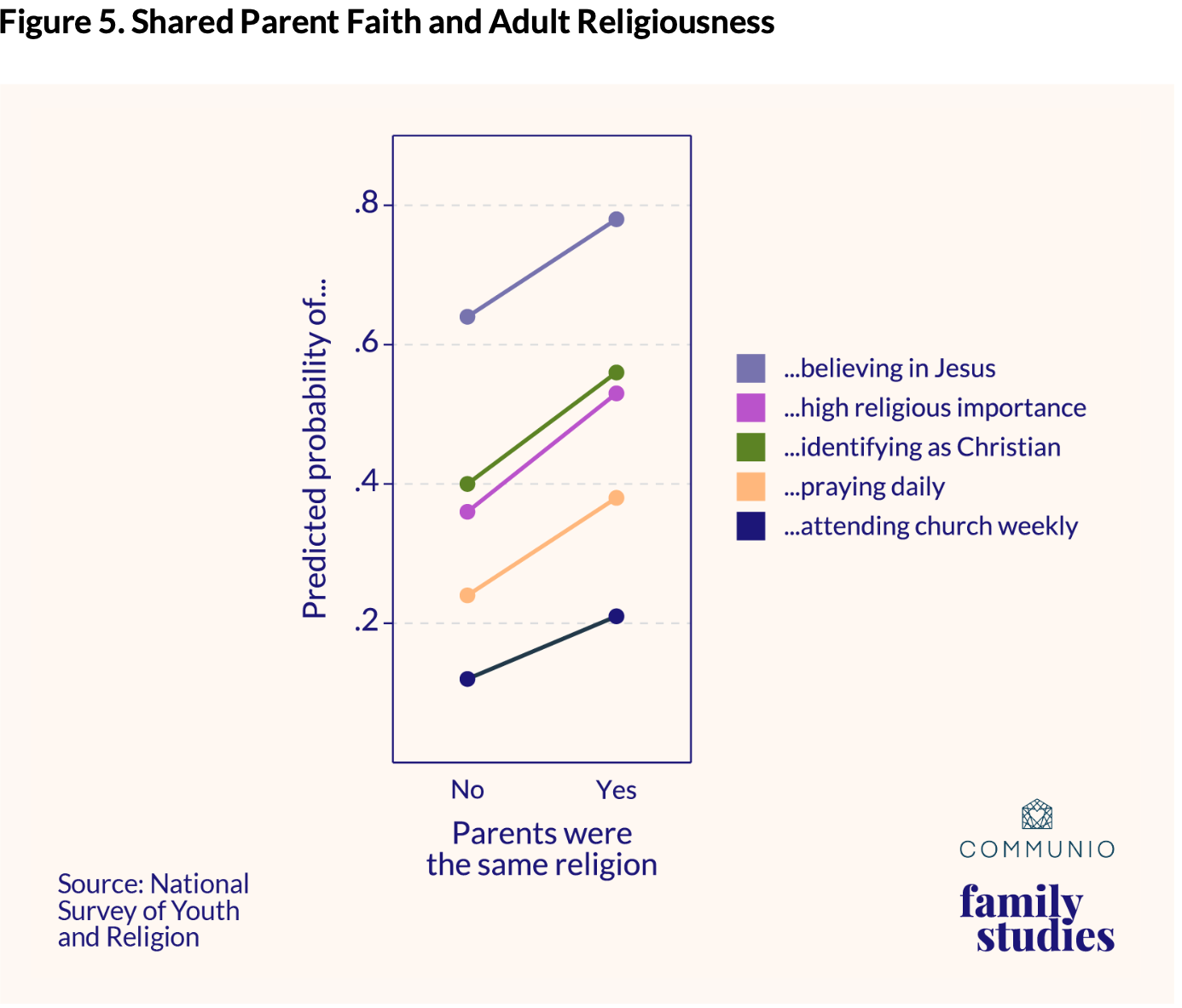
Interfaith parents sometimes respond to theological differences by adopting a “choose for yourself” approach, emphasizing autonomy and delaying firm guidance until children are older. While well-intentioned, this strategy appears to weaken religious transmission. Research suggests children raised by interfaith or religiously discordant parents, especially those who leave religious choice entirely up to the child, exhibit lower levels of religious practice and belief in adulthood. This pattern reflects a broader sociological principle: identities are more likely to be adopted and maintained when they are modeled, reinforced, and treated as meaningful by authoritative figures, rather than presented as one option among many.
Mixed-faith parents who share a goal of raising religious children but differ in preferred approach will face additional challenges. Still, the more they can find common ground around a shared religious messaging and practices, the more likely their children are to grow up valuing religion
In the United States, responsibility for children’s faith formation is disproportionately carried by mothers, even in households where both parents identify as devout. Mothers tend to take the lead in parent-child religious communication, initiating faith conversations more frequently than fathers and participating more consistently in religious discussions at home. For example:
- When asked “Who is more responsible for how your children learn about religion?” just 17% of dads cited themselves, compared to 39% of moms.
- Teenagers who attend church are most likely to attend with both their mother and father. However, among those who only attend with one parent, 79% attend with their mother, compared with 21% who attend with their father.
- Even among regular churchgoers, mothers report significantly more frequent faith-encouraging conversations with their children than fathers.
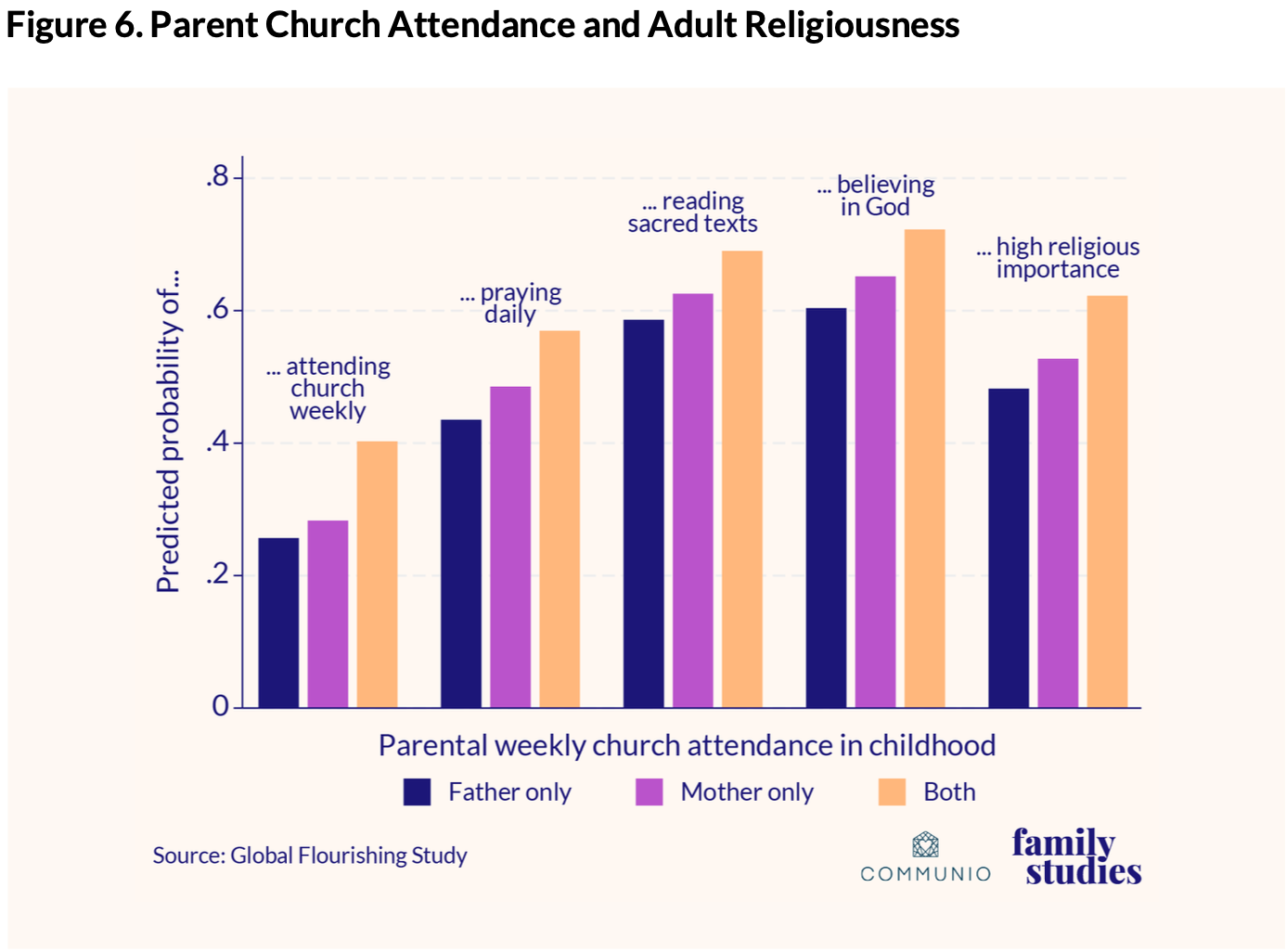
Yet intergenerational transmission of religion is strongest when both parents actively promote faith within the home. Children are more likely to retain Christian beliefs and practices into adulthood when they receive consistent messaging from both mothers and fathers rather than relying on one parent alone. In other words, two involved parents are better than one.
- 41% of children who attend church weekly with both parents will go on to attend church weekly as an adult. This percentage drops to 29% if children attend with only one parent.
- Similar patterns exist for prayer, reading sacred texts, belief in God, and religious importance.
Individuals who had faith conversations with both parents in childhood also had significantly more faith conversations with their own children (p < .001), suggesting that parent–child religious interactions in one generation may shape how faith is transmitted in the next.
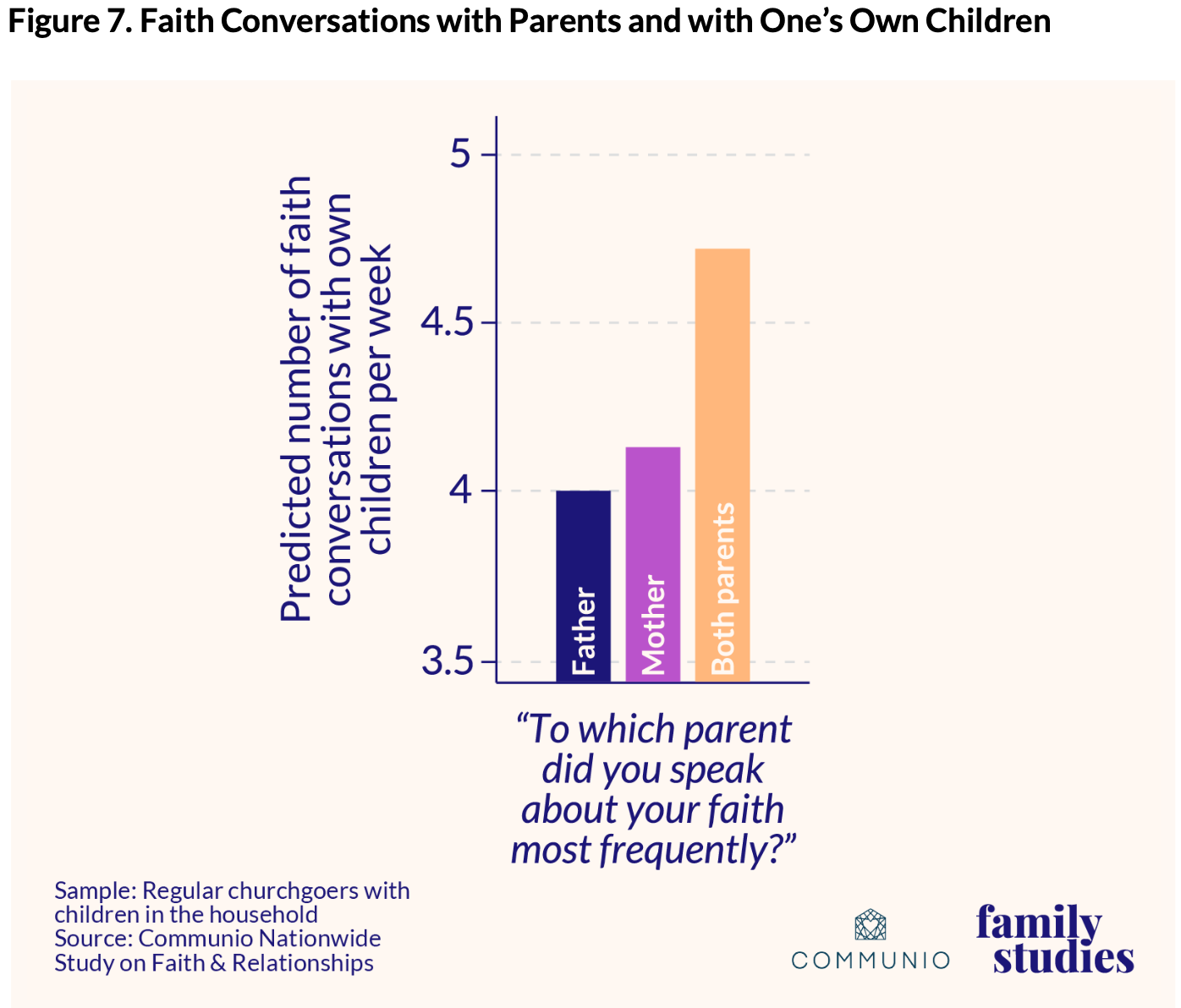
Thus, the evidence suggests that faith formation is most effective when it is a shared parental responsibility.
Making the Home a Haven
If the home provides the foundation for children’s faith formation, parents must do everything they can to ensure that this foundation is strong. Since religious life and family life are deeply intertwined, providing a happy and healthy family life helps children appreciate the value of religion. In contrast, kids who grow up with more negative or distant feelings toward their families are likely to feel detached from their childhood faith as well. Research points to two areas of family life that play a key role for faith formation: marital stability and family closeness.
Marital Stability
Children are most likely to grow up religious when they were raised by two married parents. This relationship can be explained by at least two possible direct pathways.
First, as noted above, faith formation takes a lot of concentrated effort, and two committed parents may have the most time and energy to devote to these tasks. Establishing and maintaining religious routines, applying time and expertise to family religious discussions, recognizing and responding to children’s particular spiritual needs and struggles, and facilitating logistical or financial support for children’s religious activities are all demanding tasks for which more “manpower” might make a difference. If children’s faith formation is seen as a kind of investment, then two married parents will simply have more to invest, not only for particular children but for fostering an overall faith-based family culture. This pathway has received limited attention in existing research, but is consistent with both theories of religious investment and our findings:
- Compared to non-married individuals, married individuals have significantly more faith conversations with their children, suggesting more frequent and intentional engagement within the home.
- Consistent with this pattern, individuals who grew up with married parents have a higher likelihood of attending church weekly, praying daily, reading sacred texts, believing in God, and having high religious importance in adulthood.
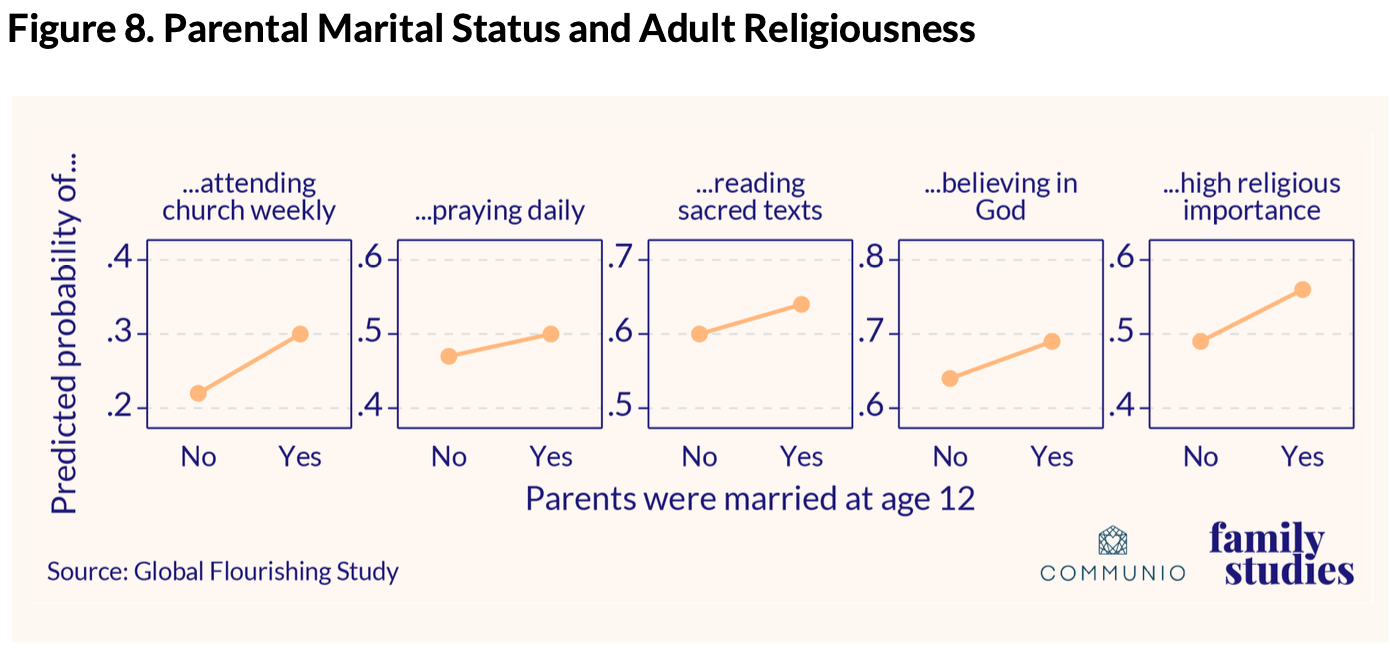
A second plausible pathway relates to the perceived contradiction between Christian doctrine on marriage and a child’s lived experience. Catholic and Protestant denominations alike teach that marriage is an image or icon of Christ’s relationship with the church. When a child’s lived experience at home differs from the marriage “ideal” presented in the Bible, in sermons, or in Sunday school, this may create a form of cognitive dissonance that makes maintaining religious commitment more difficult as a child moves into adulthood.
The pathway may also be more indirect. For children, the experience of family breakups or single parents being stretched thin produces distress, and this may lead them to distance themselves from their childhood origins, both socially and emotionally in adulthood. This distance may extend to their Christian background. Whatever the reason, research is clear that children raised in a household with their own married parents will tend to be the most religious in adulthood.
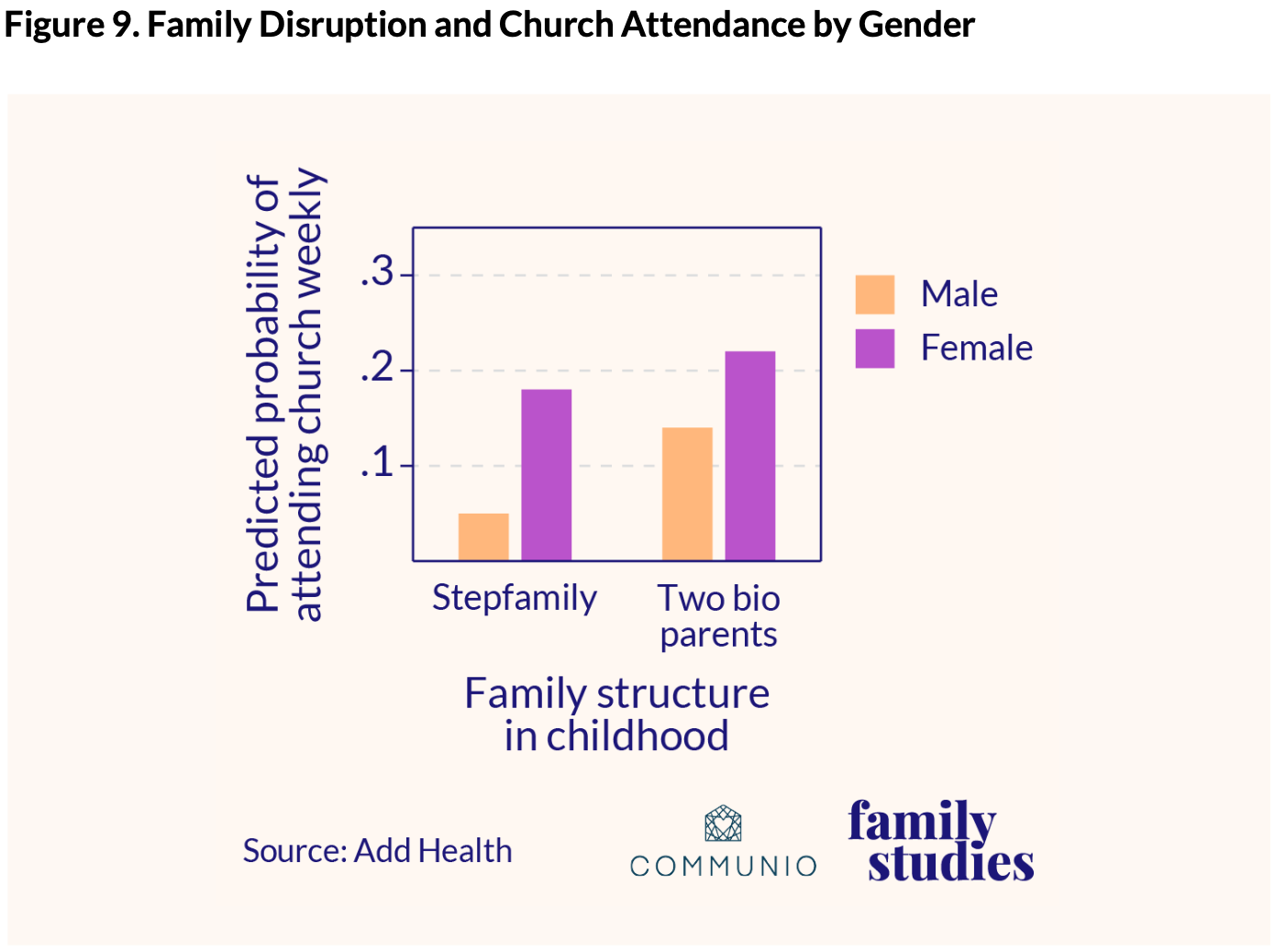
While the benefits of having married parents for religious transmission is a consistent finding, patterns for other family structures are less clear. In the Add Health data set, two distinctive results emerge. First, children are least likely to grow up to attend worship when they come from stepfamilies, and second, this effect is much stronger for boys than girls. Specifically, boys who grow up in married households have a 14% probability of attending regular worship in adulthood, compared to 5% for boys from stepfamilies—a gap of 9 percentage points. For girls, this gap is only 4 percentage points, and it is not statistically significant.
When examining the NSYR data set, however, we arrive at different findings. Here, the key difference is between married and single-parent households. Specifically, children from married households have a 19% probability of attending weekly worship in adulthood, compared to only 10% for those from single-parent households. In this case, the gap between married and cohabiting or stepfamily households is smaller and not statistically significant. We also see no differences between boys and girls.
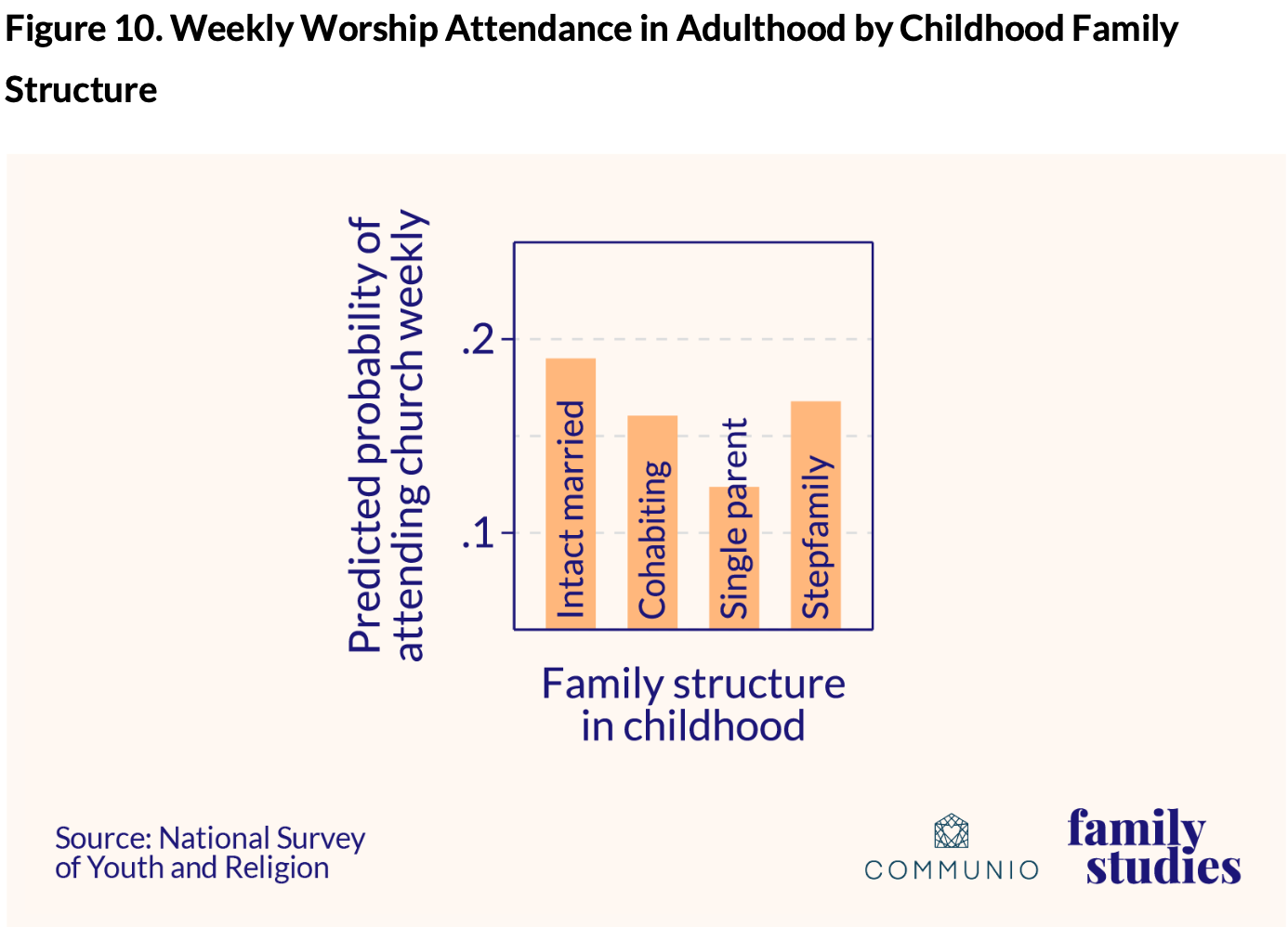
This mix of findings makes it difficult to draw strong conclusions about what religious transmission looks like for different family forms. The pattern does support the general point, however, that married parents have the most advantages when it comes to the faith formation of their children.
Marital Satisfaction
Importantly, religious transmission is shaped not just by marital stability, but also marital quality. When parents are in unhappy or high-conflict marriages, this may undermine their effectiveness in handing down the faith. Parents in troubled marriages are likely to have more difficulty coordinating the time and effort needed for effective faith formation. When children see loving, harmonious marriages preached at church but witness marital strife at home, this creates cognitive dissonance that makes Christianity harder to internalize. The distress of these experiences can contribute to distancing from both family and faith after children leave the home. Efforts to pass on faith thus benefit from not only stable but also happy and healthy marriages.
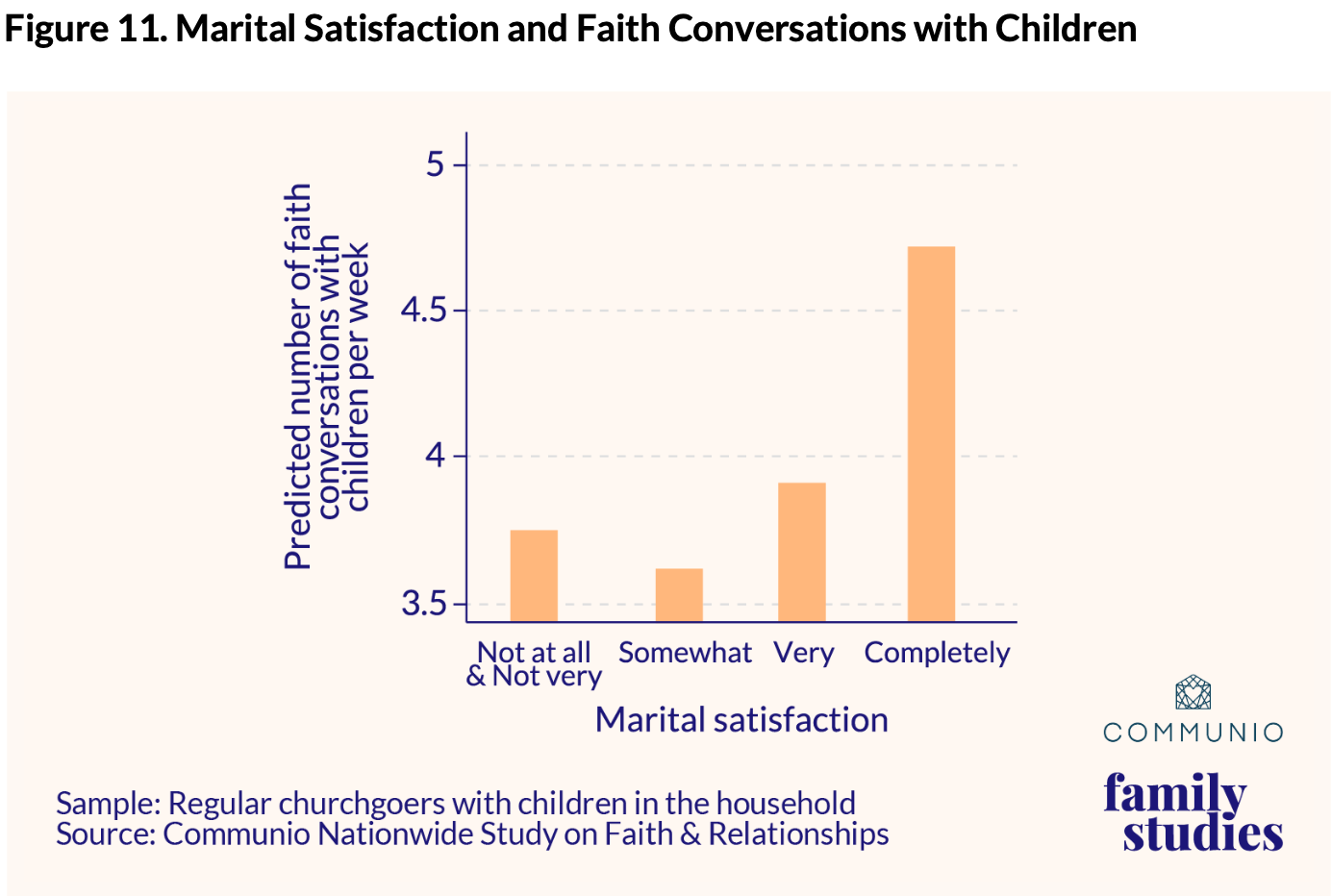
The importance of happy marriages is affirmed in our analyses. Among parents currently raising children, those who were “completely” satisfied in their marriages reported having nearly five faith-related conversations with their children per week, compared to less than four when parents were “not very” or “not at all” satisfied.
This reduced religious socialization may have long-term effects. Our longitudinal results showed that when parents reported being very happy in their marriages, their children showed a predicted 46% probability of praying daily in adulthood, compared to only 41% when parents had less happy marriages.
In summary, stable marriages support consistent religious practice, reinforce parental modeling, and provide a relational environment in which Christian beliefs and practices are more easily internalized and sustained into adulthood. In contrast, family structure disruptions, including divorce, are associated with declines in religious participation among adolescents and young adults. Overall, evidence suggests that marital stability creates social and relational conditions that make religious transmission more likely to succeed.
Parent-Child Relationship Quality
In order for parents’ faith modeling, practicing, and preaching to be effective, they must form and maintain close and loving relationships with their children. Children who feel loved and understood are more likely to identify with their parents and remain open to their guidance. Strong relationships also improve communication, allowing parents to convey religious beliefs and practices more clearly and credibly. In this way, the quality of the parent–child relationship serves as a foundation for faith formation.
Consistent with this, individuals who report close, supportive, and communicative relationships with their parents—particularly during adolescence—are more likely to retain their parents’ religious affiliation, attend services, and report higher levels of religiosity later in life. High-quality relationships appear to strengthen the intergenerational transmission of religion by increasing the credibility of parental modeling and making children more receptive to parents’ values and practices. Conversely, conflictual or distant relationships weaken this transmission process, even when parents are themselves highly religious.
Our findings align with this broader literature: the quality of the father–child relationship is strongly associated with faith in adulthood. Compared to those who had a very bad, somewhat bad, or somewhat good relationship with their father growing up, those who had a very good relationship have…
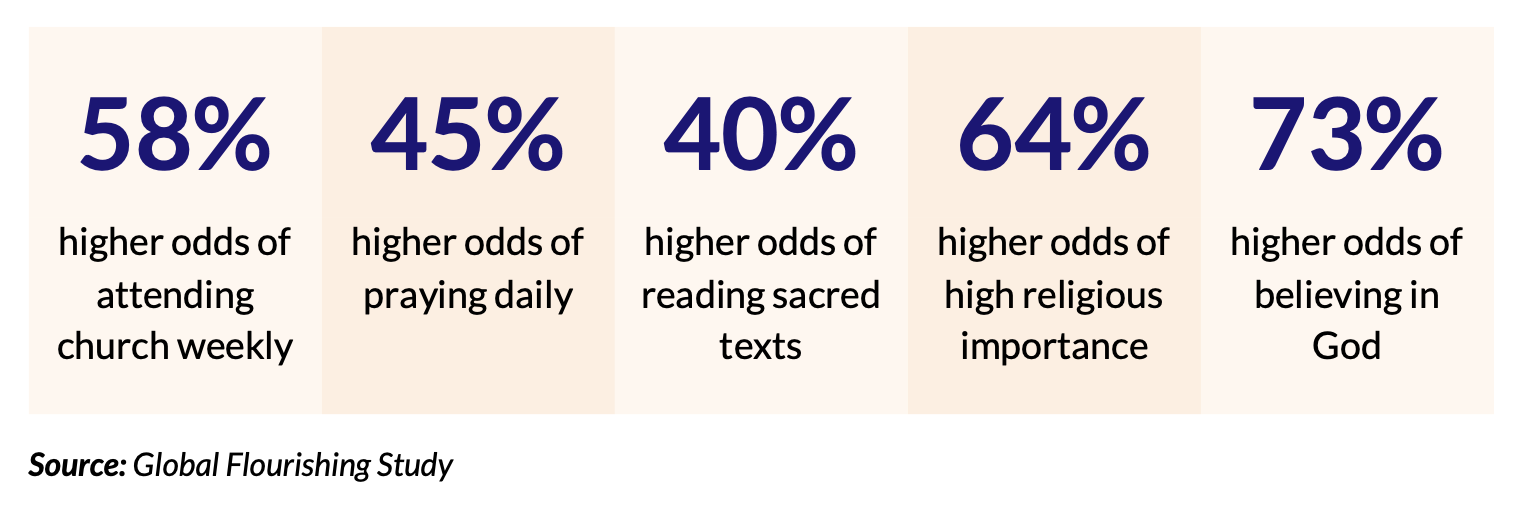
The same pattern appears when examining relationships with mothers. Those who had a very good relationship with their mother in childhood have…
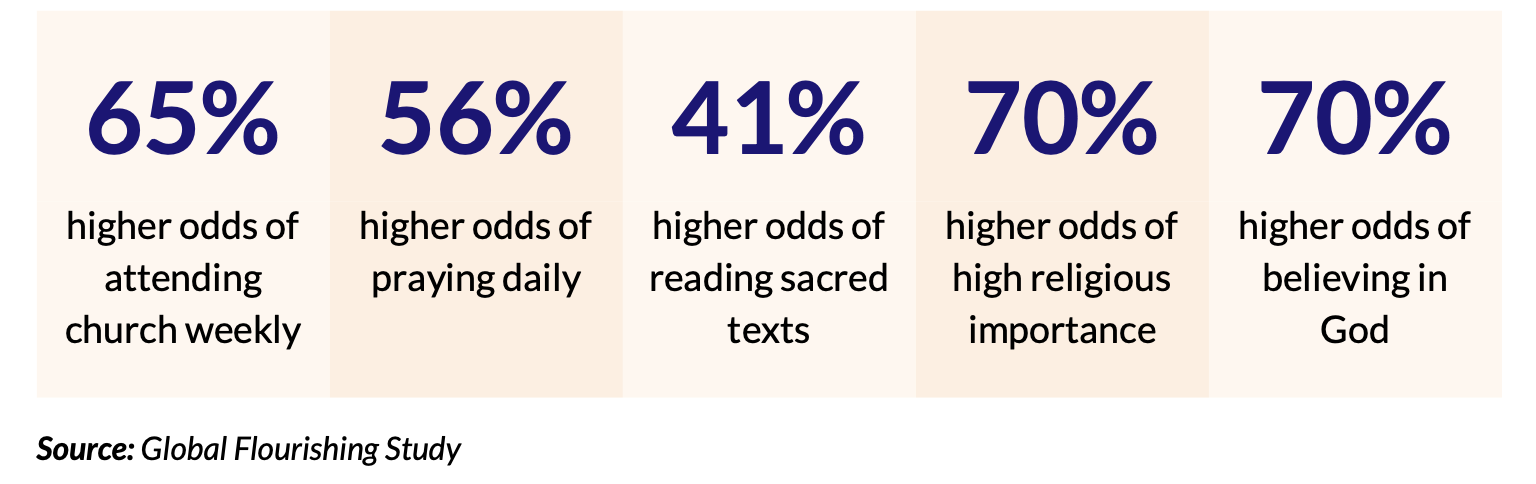
Once again, there is a compounding effect: adults who report strong relationships with both parents exhibit the highest levels of religiosity across measures. Those who had a very good relationship with both parents in childhood have…
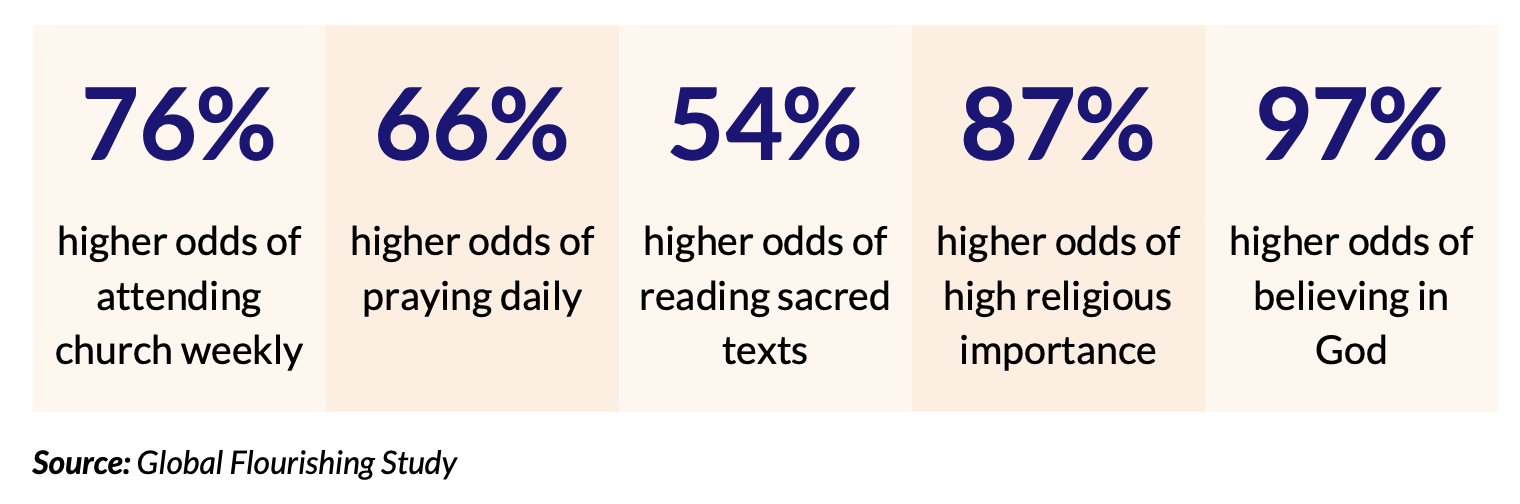
Research suggests parent–child relationship quality does not transmit religion by itself, but it creates the relational conditions under which transmission becomes more likely. Warm, supportive relationships make parental modeling credible, increase openness to instruction, and strengthen identification with parents—processes that collectively raise the probability that children retain Christian beliefs and practices into adulthood.
Media Oversight
One of the challenges of parenthood is striking a balance between being a friend on the one hand and an authority figure on the other. Parents are responsible for establishing warm and loving relationships with their children, but also for setting rules and boundaries. According to psychologist Diana Baumrind, children do best when their parents love them unconditionally but also hold them to a high standard. This insight can be applied to faith formation.
One way that parents can set appropriate boundaries is by paying close attention to the children’s media diet. This is especially important today, when much of the available content is unfriendly to Christian values, social media addiction is rampant, and the threat of pornography looms large.
Our findings confirm that when parents monitor their teens’ media more closely, they are more likely to produce religious children. When parents closely monitored TV time, their kids were more likely to attend worship, say religion is very important, pray daily, identify as Christian, and believe in Jesus in young adulthood. When they closely monitored internet access, the same result held for each outcome except weekly attendance, as the figure shows.
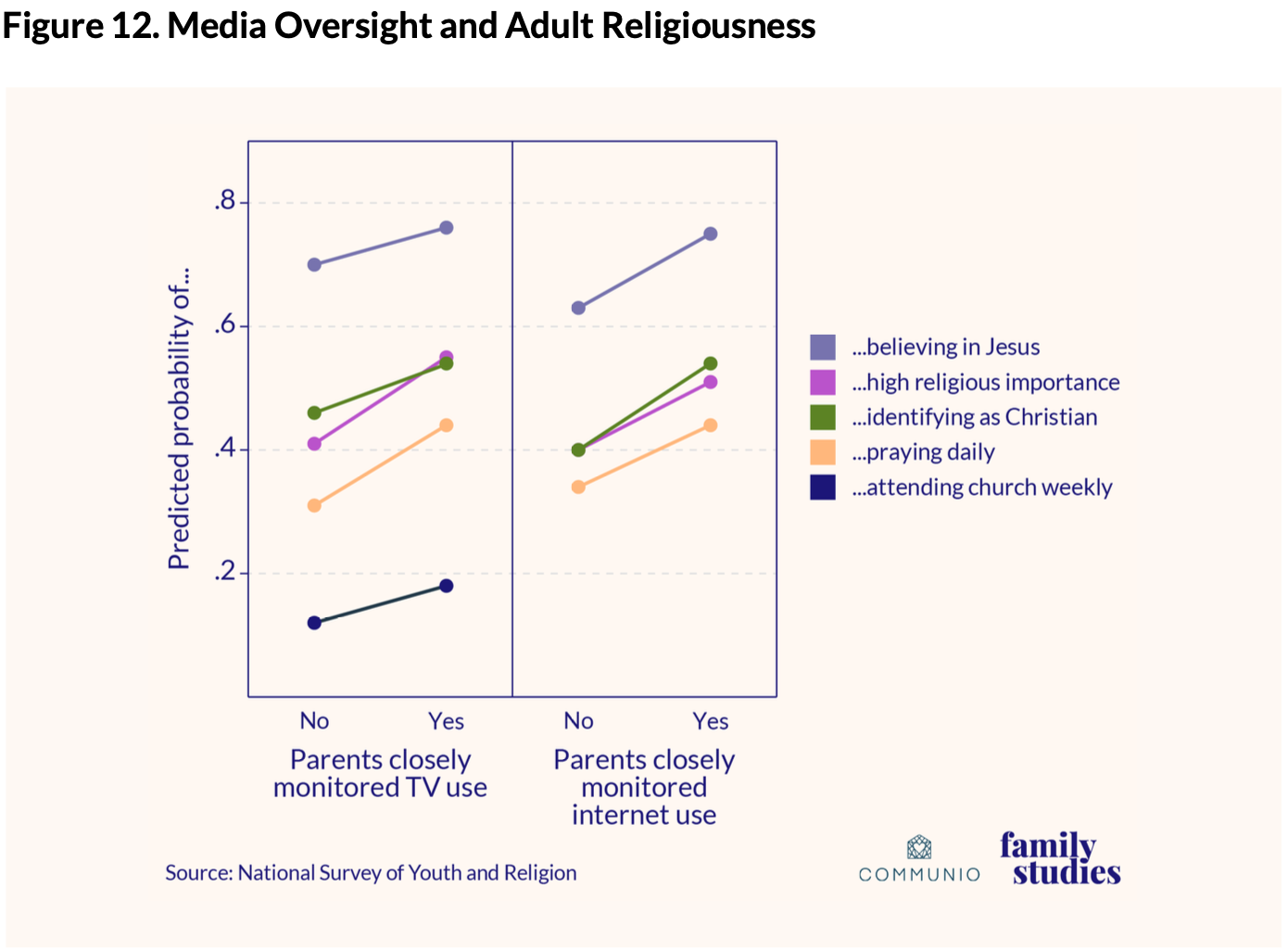
It’s worth noting the data on media exposure in childhood were collected in 2003, before widespread high-speed internet, social media, and the advent of smartphones. The long-term effects of contemporary children’s media environments—which are both more pervasive and more immersive—on adult religiosity have yet to fully emerge, though existing evidence raises significant concerns about their trajectories. As such, the importance of monitoring electronics in childhood is almost certainly even more central now than it was in previous decades.
The Importance of Congregation and Community
This report has emphasized that parents play the single most important role in passing on faith to the next generation. A wealth of evidence supports this conclusion. But this does not mean that church leaders or congregations are left sitting on the sideline. For one thing, they make communal religious practice possible in the first place. Parents seeking to practice Christianity with their children need a church to worship in and a pastor to lead the service. At a bare minimum, religious leaders are needed to keep Christian institutions functional and available for the souls who need them, and this is no small task.
But the role of churches is much more than this. Parents need support, not only from clergy and ministers but from other believers, and supportive community is best fostered in the context of congregations. By embedding themselves in church communities, parents are able to show their children how religion can meet social, civic, psychological, or even professional, as well as spiritual needs. By intentionally creating communities that welcome youth and young adults, pastors can show that faith provides resources for navigating challenges at any stage of life. Though parents may be the front line, faith formation can be viewed as a partnership between parents, pastors, and congregations.
Church Isn't Just for Sundays
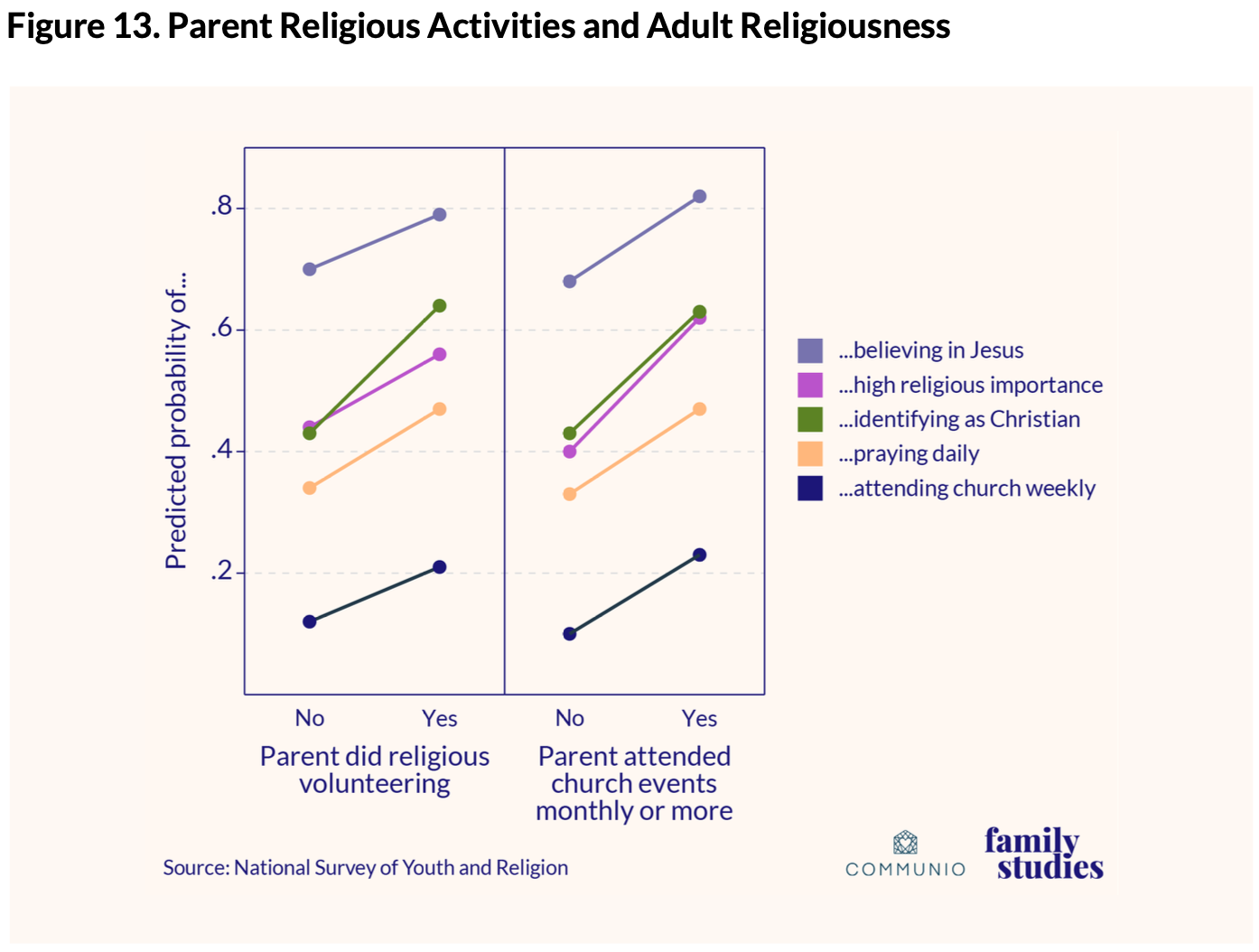
Parents can both embed their families in religious contexts and model strong commitment by attending church activities outside of Sunday services. By attending gatherings such as potlucks, holiday festivals, competitions, and similar programs, parents establish a social network with others who share their beliefs and commitments, reinforcing these for their children. This helps create a social world where religious commitment is not only normal but desirable—and establishes a buffer for children against a world where religion is either ignored, treated as a lifestyle choice, or viewed as an outright pathology.
Institutional religion provides not just spiritual benefits or opportunities for socializing but also acts as a concrete vehicle for doing good in the world, whether aimed at fellow congregants or larger social causes. Through volunteering and ministry, parents can show their children the immense social benefits religion provides not only for individuals but for society as a whole.
When parents either attend church activities outside of worship services at least once a month or engage in any amount of religious volunteering, their children are more likely to be highly religious in young adulthood 10 years later, as the figure illustrates.
Youth Programming Matters
Though parents play the central role in their children’s faith formation, this role changes as children get older. As they enter adolescence, kids develop a stronger desire for independence and both a mental and a social world more differentiated from their family environments. As many parents can attest, teenagers often appear more invested in their friend groups than their families. While this shift away from parents and towards peers is sometimes overstated, it is nonetheless a real phenomenon that parents and pastors alike must take seriously.
This means youth programming and ministries serve a vital function in keeping kids engaged. Our data suggest the availability of these programs can have a lasting impact on children’s spiritual trajectories. When parents encourage their children to participate in a youth group, they were more likely to exhibit high religiosity in young adulthood across multiple indicators. For instance, 22% of children who were encouraged to attend youth group as teenagers attended church weekly at ages 25–28, compared to only 9% who were not similarly encouraged.
We see similar effects for the availability of youth ministries. When parents reported attending a congregation that prioritized youth ministry, their children were once again more likely to exhibit high religious commitment across multiple outcomes.
The importance of religious programming is further underscored when examining activities such as church camps and retreats. Children who reported having ever attended either of these when they were growing up were more likely to exhibit high religious commitment 10 years later, as shown in the figure.
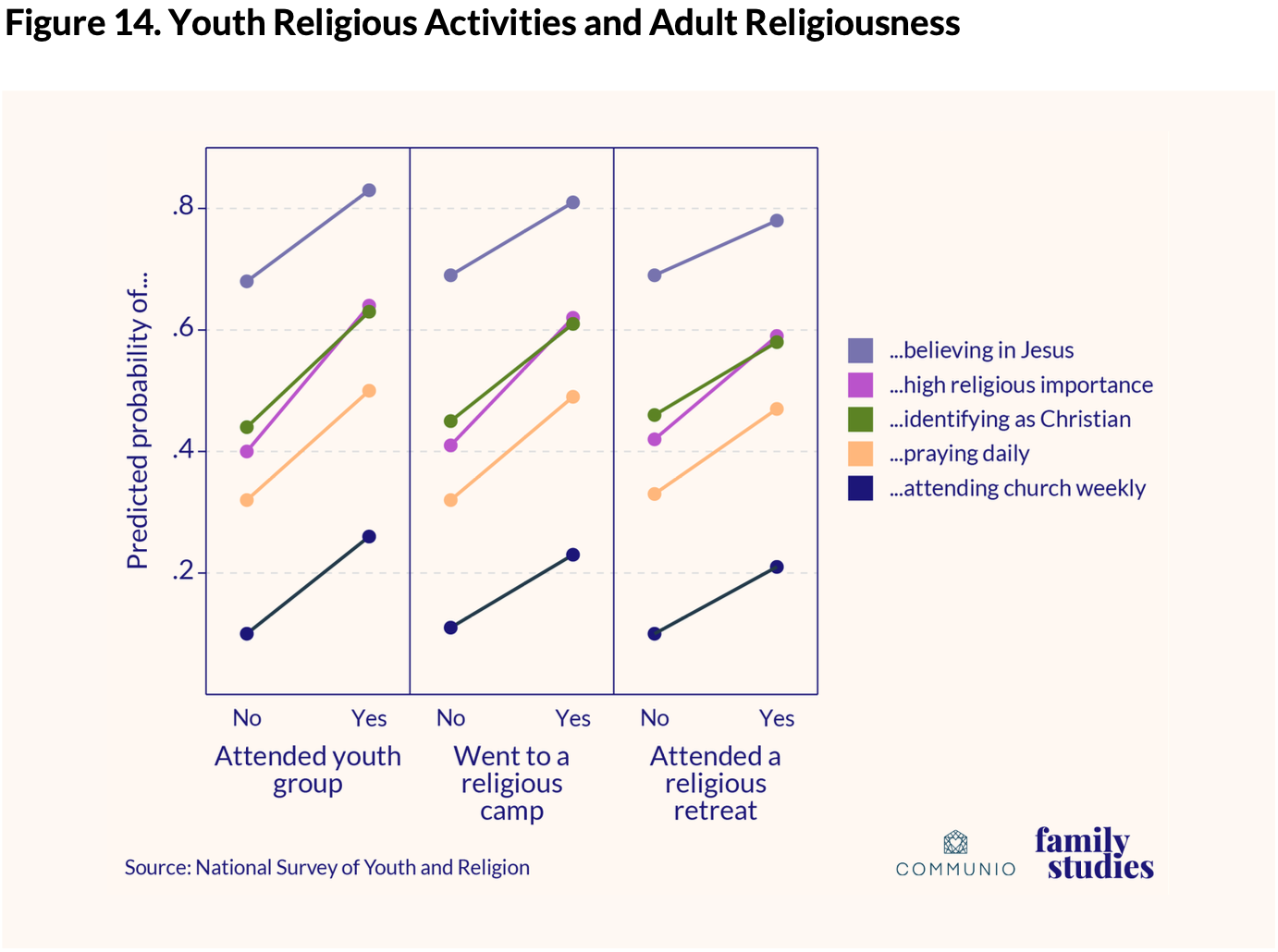
This means it is both incumbent upon churches to provide these ministries, and upon parents to seek out congregations that offer this kind of support for their teenagers.
Tying It All Together
Taken together, our analyses support a kind of nested model of effective religious transmission down through generations.
The first layer of this nest is the family household. Here, parents’ first priority should be to establish close, stable, and loving relationships both with one another and with their children. A happy, healthy home provides an ideal context where children look up to and identify with their parents, and so will be most open to their guidance. Once this “nest” is secure, parents are ready to lay a strong faith foundation in family life. This involves modeling strong religious commitments for children, facilitating their children’s own practices through regular worship and family rituals and routines, and making faith a regular topic of conversation so children develop a rational understanding of why and how religion matters. Faith should serve as a kind of glue that helps keep family bonds strong, and should be present seven days a week, not just one.
The second layer of the “nest” is the religious congregation. The congregation provides the supportive community and guidance that parents need as they take on the challenging task of their children’s faith formation. It provides a means of religious involvement outside the home and weekly services and therefore gives children a broader view of the expansive role Christianity can play in their lives. It provides opportunities for engagement and a social world that meets the needs of the whole human person, as well as a buffer against secularizing influences in the larger culture. It also provides programming to meet the distinctive social and developmental needs that come with the transition to adolescence, helping parents and teens alike to navigate what can sometimes be rocky territory.
As our data and an expansive body of existing research confirm, children raised in a strong religious nest of this kind are the most likely to carry their faith with them into adulthood—and hopefully, to their own children as well. Even with all these supports in place, many children still fall away. The challenges to maintaining strong religious commitments in a secularizing culture, both for our children and for ourselves, are formidable. But this report shows that there is plenty that parents and pastors can do to maximize the chances of their kids keeping the faith. Beyond these steps, there is no substitute for steady prayer and trust in the grace of God.
10 Recommendations for Fostering Lasting Religiousity
FOR PARENTS:
1) Be your children’s role model for faith
You are the first and most important religious figure in your children’s lives. You must show them what it means to live a life founded on faith.
In practice, this may look like:
- Attending worship with children on a regular basis;
- Letting them see you pray, read scripture, and engage in other devotional activities;
- Making Christian images or symbols visible in the home and other regular environments;
- Letting them know how faith shapes how you live life and make decisions; and
- Prioritizing faith and church commitments over other things (going to social events, watching the game, traveling) when they conflict.
2) Prioritize strong marriages and parent-child relationships
Shared norms and beliefs are more readily established in families where parents form warm, close relationships with both one another and their children.
In practice, for marriage this may look like:
- Continuing to date one another regularly, even if it’s something as simple as a coffee outing or movie night at home;
- Having daily wind-down times for spouses to talk to one another without distraction, process the day, and share challenges and success; and
- Annually participating in skills-based marriage retreats or classes that can enhance marital success.
For parenthood, this may look like:
- Spending shared time (e.g., reading, talking at meals, playing, or working on small tasks together) to build familiarity and trust, which strengthens the emotional bond between all family members;
- Listening attentively to children and taking their perspective seriously, ensuring that they feel heard;
- Expressing affection and encouragement for children in order to communicate acceptance and support; and
- Setting clear rules and maintaining calm, predictable responses during conflict to help children feel secure even when discipline is necessary.
3) Make faith formation a joint effort
Both mothers and fathers should take active, intentional roles in children’s faith formation.
In practice, this may look like:
- Engaging in religious activities like going to church, praying, or reading scripture as a family;
- Coordinating with one another to ensure consistency in what is taught to children;
- Finding ways for each parent to engage and lead in ways they feel are consistent with their gifts. For example, if one parent is more inclined toward prayer and another more inclined toward study, the parent inclined toward prayer can be the one who calls the family to prayer, while the parent inclined toward study can lead in teaching. In either case, the other parent should be seen as being supportive;
- In mixed-faith households, identifying what both parents agree on and organizing household religious activities around that; and
- In households with only one religious parent, allowing the religious parent to take the lead and securing the support of the nonreligious parent as much as possible.
4) Build religion into everyday family life
Religion must be part of the normal family routine, not just something for Sundays.
In practice, this may look like:
- Saying grace before meals;
- Saying family prayers at bedtime or other points throughout the day;
- Regularly reading scriptures or devotionals;
- Having Christian music, TV, or other programming in the household; and
- Normalizing Christian imagery or symbols in family culture, whether through artwork, clothing, bumper stickers, or whatever else feels comfortable.
5) Make faith a regular topic of family conversation
In a secularizing society, children need to be taught to engage with what faith means and how it is relevant to their lives. If they don’t learn this from their families, they likely won’t learn it at all.
In practice, this may look like:
- Initiating conversations about scripture, church sermons, or other faith topics through a simple question or prompt during a car ride or while running errands;
- Finding ways to insert Christian teachings, Bible stories, or other faith material in conversations where it is relevant;
- Narrating the role of religion in personal thinking and decision-making (e.g., giving credit to God for blessings in life or work);
- Listening as well as talking, ensuring children can express what they find compelling, confusing, or difficult in their religious lives;
- Talking about moral situations children encounter at school or in the news and how we should think about them as Christians; and
- Seeking avenues to develop one’s own moral and theological knowledge to be able to discuss it with children more effectively.
FOR PASTORS:
1) Guide parents—not just children—as part of religious education
Parents need a strong understanding of the central role they play in children’s faith formation, and support in carrying out that role.
In practice, this may look like:
- Emphasizing the importance of parents in sermons and other messaging;
- Balancing efforts at prompting parents to take their role seriously, affirm their efforts and struggles, and consult with them on particular challenges they face;
- Providing classes, support groups, or other programming to offer parents assistance in faith formation;
- Creating literature based on observed parental needs that provides guidance in faith formation; and
- Encouraging specific podcasts, audiobooks, or small group pathways for adults to become more educated on scripture and their faith to feel comfortable guiding their children.
2) Support strong marriages and coparenting relationships
Many parents need help working together before they are ready to take on the challenging tasks of their children’s faith formation.
In practice, this may look like:
- Preaching regularly (ideally monthly and not less than quarterly) on the importance of investing in your own marriage and discipling your children;
- Developing an ongoing relationship and marriage ministry with multiple pathways to building both the spiritual and the human skills of living out Christian marriage, including skills-based programs that are delivered one-to-many, one-to-some, and one-to-one;
- Having church leaders set a strong example where leaders are the first to participate in the relationship and marriage ministry appropriate for their situation. This helps everyone know that this is a ministry for the whole church and not just for people who are struggling;
- Providing date night or other bonding opportunities for parents through organized activities or targeted provision of child care;
- Finding ways to recognize and reward couples who complete and participate in a church’s marriage ministry, such as an annual, invite-only dinner in the pastor’s home for couples who completed the marriage ministry;
- Providing qualified pastoral counseling for parents seeking to improve relationships; and
- Identifying resources for different family situations (e.g., married couples, stepfamilies, and single parents in coparenting arrangements) based on congregant needs.
3) Actively engage fathers
Religious foundation is stronger when fathers are involved.
In practice, this may look like:
- Emphasizing the importance of the father’s involvement in faith formation sermons and other religious messaging;
- Encouraging fathers to adopt specific, distinctive roles at home such as regularly leading family prayer, so that men have a dedicated domain of responsibility;
- Organizing men’s groups where fathers can both share challenges and hold one another accountable for involvement in the religious life of their families;
- Thinking of ways to appeal to men specifically when developing marriage and family ministries; and
- Organizing father-child activities such as dances (for daughters) or wilderness trips (for sons) that specifically target father involvement.
4) Create space for community
Parents need supportive communities to help with their children’s faith formation, both formally and informally.
In practice, this may look like:
- Hosting potlucks, holiday celebrations, and other shared, informal social events;
- Establishing hobby or shared interest affinity groups (e.g., hiking groups, fantasy football leagues);
- Organizing informal athletic events (e.g., park “pick-up” sessions); and
- Creating “skill-swap” volunteer events that bring congregants together for church maintenance.
5) Invest in youth ministry
Youth have distinctive needs. Teens in particular need their own spaces.
In practice, this may look like:
- Hiring, where possible, a dedicated youth minister with demonstrated ability for engaging teenagers;
- Hosting regular youth group meetings;
- Hosting camps and retreats for more intensive experiences of youth spiritual formation;
- Meeting youth where they are as individuals, such as by listening to their struggles and taking an interest in their activities; and developing “rite of passage” milestones, such as formal blessings, wilderness trips, or confirmation celebrations so that youth associate maturity with spiritual practices.
Editor's Note: Download the full report for the Data and Methods, Reference, and Appendix sections.