Introduction
When it comes to adolescent mental health, public health science has broken down. Since the outbreak of the pandemic in 2020, 18 times more U.S. teenagers have died from deaths of despair than from COVID-19 between 2020 and 2023, according to my analysis of national mortality records. Yet, the nation’s leading public health organizations are not adequately addressing the causes of and solutions to adolescent mental health problems.
Among its responsibilities, the U.S. Centers for Disease Control and Prevention (CDC) is charged with documenting mental health problems and identifying the most effective ways to prevent disease. This is especially urgent matter for adolescents, given the well-known rise in severe mental health problems that has occurred over the past decade.
The agency’s summary pages and recommendations on youth mental health, however, almost completely ignore the most important known determinant of youth mental health: parent-child relationships. The same benchmark public health surveys that document declining teenage mental health do not even ask about parental-youth relationships.
Instead, the agency emphasizes diagnosis, access to mental health services, and the avoidance of racial/ethnic discrimination as among the most important issues in youth mental health. Deeper in the agency’s archives, one can find resources mentioning that “a child’s mental health is supported by their parents,” but the page discusses the issue as providing motivation to improve parental mental health.
These are relevant issues, but they are odd things to emphasize for several reasons. The availability of diagnostic resources and treatment for youth mental illness has arguably never been higher, given rising household incomes, school-based resources, and insurance coverage. A recent study, facing many measurement limitations, found no change in treatment rates for youth mental health problems over the past 30 years.
As for racial or ethnic discrimination, the available evidence would suggest that it has declined in recent decades, and there is no evidence suggesting it has risen. Moreover, mental health problems are roughly as prevalent among non-Hispanic White children, as they are among other racial and ethnic groups. By some measures, Black adolescents have the lowest rates of major depression. Likewise, non-Hispanic White adults have been at higher risk of deaths of despair than Black and Hispanic adults over the past two decades. I have yet to find a scholar who has studied rising youth mental health problems and concluded that it is explained by racial or ethnic discrimination.
Along these lines, the American Academy of Pediatrics, the American Academy of Child and Adolescent Psychiatry, and the Children’s Hospital Association issued a joint statement in October 2021 declaring “a national emergency in child and adolescent mental health.” They issued 10 points for advocates to focus on. The word “parents” or “parenting” were never mentioned. Instead, the focus was on expanding funding for the services that their members provide (doctors and hospitals) at great expense to the public. You might think that a scientific organization alarmed by rising mental health problems would offer advice to the public about how to prevent mental health problems. But these groups seem to take rising mental health problems as biologically pre-determined, as if adolescent biology had meaningfully changed in recent decades.
What Research Links Parenting to Youth Mental Health?
We have long understood that parents have distinct practices, and that these practices affect child development. In his book The Laws, Plato described how the wise, competent ruler Cyrus the Great nonetheless failed to raise wise and competent children by leaving their education to permissive caretakers who did not allow anyone to oppose the children and “compelled everyone to praise all that they said or did.”
In fact, the importance of parenting has been widely observed in non-humans. Psychiatrist John Bowlby famously developed attachment theory by describing the detailed parenting behaviors of birds and non-human primates that forge a healthy and secure attachment between the mother and offspring. The comfort and support sought by offspring and provided by primate parents is tantamount to the process of satiating hunger, in how it seems to fulfill a fundamental need. The theory has been borne out with empirical evidence. A recent meta-analysis finds that an insecure attachment in early childhood strongly predicts the onset of major depression in childhood and adolescence.
Empirical work on parenting took off in the second half of the 20th century. Until her death in 2018, Eleanor Maccoby was a leading psychologist based at Stanford University. In the 1950s, Maccoby and colleagues collected detailed data from several hundred mothers about the personality characteristics of their young children and their parenting practices. In this work, and important subsequent groundbreaking research by Diana Baumrind and G.R. Patterson, it became clear that parenting practices—especially the establishment of firm rules and parental control—were crucial to the development of socially competent and mentally healthy children.
As described by Maccoby, Baumrind’s insight—developed from her observations of adult leaders—was that “democratic parenting,” which was popularized in the 1960s, was not a good model because parents needed to both consider their child’s needs but retain authority in determining how to meet them. Building on prior work, Baumrind and colleagues collected detailed data on child behaviors, along several dimensions: likeability, friendliness, self-control, dependability, compliance, imaginativeness, adaptiveness, and confidence. Baumrind found that consistent discipline and parental warmth tended to be strong predictors of desirable childhood behavioral and personality outcomes. These parents were deemed to have an “authoritative” style of parenting, in contrast with a cold or harsh “authoritarian” parenting style or a lax “permissive” style.
As Maccoby summarized, authoritative parenting combines affection with attentive responsiveness to children’s needs, while imposing requirements for prosocial, responsible behavior. Achieving this required:
considerable negotiation—even confrontation—with children, and parents needed to be firm, as well as kind and understanding. Parents derive authority from their greater power and competence, and they cannot abdicate this authority without endangering the children.
In subsequent decades, over 1000 published studies have tested the relationship between parenting styles and internalizing symptoms of mental illness—such as anxiety and depression—as well as externalizing behavior, such as aggression and delinquency. The results—summarized in meta-analyses—are clear: Authoritative parenting predicts fewer mental health problems and delinquent behavior, both at the time of measurement and in the future. Both harsh and overly permissive parenting predicts higher risk of mental health problems and problematic behaviors, as does neglectful parenting.
There have been far too many studies to summarize them all, but a few examples will help illustrate. A recent large-scale study used machine-learning algorithms to rank the importance of variables and concluded that parenting behaviors—including warmth and expectations for children to spend time with and contribute to their families—were more important in explaining symptoms related to both internalizing (thoughts/feelings) and externalizing (behaviors) mental health problems than gender, intelligence, and child personality traits.
Clear and compelling evidence of the importance of parenting effects comes from the Bureau of Labor Statistics National Longitudinal Survey of Youth (NLSY97). The NLSY97 interviewed nearly 9,000 children between the ages of 12 and 16 in 1997. Most of these participants continued to fill out surveys regularly through 19 rounds of data collection, with the latest published data taking place from 2019 to 2020.
The 1997 and 1998 instruments collected data on parenting practices and relationships, including information on the overall quality of the parent-child relationships, as seen through the eyes of the child. The research also included several other parenting constructs:
- Parenting style was measured with two summary measures of the most important dimensions of parenting identified by Maccoby and others: 1) responsiveness (childcentered for parent-centered) and 2) demandingness (controlling vs permissive).
- The management of family life was measured by a scale that measures the prevalence of routine experiences, including eating dinner together, doing housework, doing activities, and participating in religious experiences (like church).
- The degree of limit setting, including whether the parent or child sets limits on social activities and recreation.
- The degree of monitoring, as measured by parenting knowledge about the child’s whereabouts, schooling, and social relationships.
A peer-reviewed analysis of these data found that higher-quality parental relationships were achieved with responsiveness, the establishment of routine experiences, and parental monitoring, and these things all predicted fewer problems, measured by internalizing and externalizing problems. My own analysis of the NLSY97 data finds that higher-quality parental relationships are more likely when parents take control of setting limits on youth behavior, and this too predicts better youth outcomes.
Importantly, the quality of the relationship is significantly higher for residential parents compared to non-residential parents, as are the effects on youth outcomes, in lowering risks for crime, substance abuse, and emotional problems. Thus, one way that single parenthood may harm children is that non-residential parents face obstacles in establishing high-quality relationships and exerting influence.
Scholars have also examined how the effects of parenting vary over time. One exceedingly long-term study found that receiving warm nurturing parenting in childhood was significantly related to the quality of adult relationships six decades later. The longitudinal nature of the NLSY97 allows for similar insights. Health was measured for participants at various ages well into adulthood, and adults who recorded better relationships with their parents 20 years earlier enjoyed significantly higher physical and mental health in their late 30s. The effects of parenting experienced in early-adolescence decay very slowly.
Parenting effects have been widely studied internationally. Using Australian data similar to the NLSY97, economists concluded that maternal warmth and discipline strongly predict non-cognitive skills, measured as desirable behavior, positive social relationships, and emotional health. These essential results have been found across every continent, suggesting that parental responsiveness and discipline may be universally beneficial to children.
One important limitation to parenting research is the difficulty in unravelling genetic components. It has been argued, with some empirical evidence, that children evoke different parenting responses through their unique genetic endowment and personality. Identical twins, for example, receive more similar parenting than non-identical twins. Further, parenting is itself partly genetically influenced, and it is theoretically possible that a favorable set of genes leads to both responsive-disciplined parenting and competent offspring.
Yet, there are several reasons to downplay concerns about genetic confounding. First, the NLSY data includes measures of parenting practices from parents with no-biological relationship with their children (e.g. adopted or foster parents), and the effects on externalizing and internalizing problems are indistinguishable when compared to effects from biological parents. Second, studies of twins suggest that only a small component of the parent-child relationship is attributable to the genes of the child. Third, several studies have attempted to train parents to use better parenting practices, and these studies tend to find positive outcomes for children that could not be due to genetic effects. Finally, the NLSY measures parenting in both 1997 and 1998 data samples. A positive change in the parent-child relationship predicts a significantly large positive change in adolescent mental health from 1997 to 2000. This effect could not flow through the child’s or parent’s genes.
The Present Study
While the scholarly literature on parenting is rich and vast, some basic questions remain unanswered: To what extent do optimal parenting practices lead to high-quality relationships between parents and children? How does parenting relate to social media use among teens and other problems confronting teens today? What percentage of children— or teenagers—have high quality-relationships with their parents? Does parenting differ by race, class, or other parental attributes?
One reason these questions have not been clearly answered is that most research on parenting has relied on detailed observations of small numbers of parents or convenience samples of larger numbers, from a school, single school district, or some other group. Apart from the NLSY, which fielded a handful of items on parenting 25 years ago, I could not find one nationally representative survey—or data collection effort—that thoroughly investigates parenting or parent-child relationships.
My colleagues and I at Gallup saw an opportunity to partly remedy this data gap. We have access to our Gallup Panel, which consists of approximately 90,000 U.S. adults who were randomly selected to take a Gallup survey in the recent past and agreed to be recontacted for future surveys. After weighting, the sample aligns with the U.S. distribution of parents by age, education, race/ethnicity, and sex. This allows us to summarize parenting nationally and examine the characteristics of the most effective parents.
About the Data: How We Measured Parenting
Informed by parenting and teen mental health research, Gallup fielded a survey in June of 2023 through its nationally representative probability-based panel. Data were collected from 6,643 parents and 1,580 adolescents living with a parent-respondent. The survey included measures of adolescent mental health, parental demographics, political views, attitudes toward marriage, parenting practices, and parent-child relationships. The parenting items were drawn from various sources, principally the Parenting Practices Questionnaire, developed by former BYU professor Clyde Robinson and colleagues. We also included information on social media use, and I analyzed those results in a recent publication for the Institute for Family Studies.
In a draft working paper utilizing the Gallup data, my colleague psychologist Telli Davoodi and I find evidence that four distinct factors related to parenting cluster together: responsive regulation, enforcement of rules, and the absence of traumatic experiences— such as parental alcohol abuse, death, or abandonment, and the quality of the overall childparent relationship.
Some of these, of course, are not under the control of the parent, or at least not entirely. A parent may lose a spouse to death, confront an unexpected burden from a spouse’s disease, or the spouse may prove to be an ineffective or even abusive parent once children enter the home. These and other factors can affect the quality of the parent-child relationship irrespective of parental practices.
Still, Davoodi and I find that parenting practices contribute a great deal to the overall relationship, consistent with previous studies. Parents who set boundaries, establish routines, convey warmth and affection, and enforce rules effectively report a less contentious relationship with their adolescent child than parents who do not do these things, and this relationship is recognized by that child to be stronger and more loving. Each of the two factors related to parenting practices has a similar effect on the relationship as an index of adverse experiences, related to parental drug abuse, death, or abandonment.
As discussed in the previous publication for IFS, we measured mental health using an index, which combines youth-reported measures of well-being and mental health with parent-reports, as well as parental concerns about self-harm. The index has strong reliability and also predicts objective measures of mental health problems, such as psychiatric visits and prescriptions. For the purposes of this analysis, I define good mental health as scoring above average on this index, which is true for 62% of respondents; similarly, 67% of adolescents report their own mental health as good or excellent, and the two measures are highly correlated.
For the present study, I test whether specific parenting practices relate to good mental health. To do so, I regress mental health—as defined above—on each parenting item, while controlling for child and parent-specific characteristics. Namely, I control for the adolescent’s age and sex, as well as parental race, ethnicity, age, number of children, education, self-reported financial security, and whether the parent has a household income below $60,000.
The final section examines which characteristics of parents, if any, predict parenting practices and relationship quality. For this analysis, I consider basic demographics as well as attitudinal data on the overall quality of the parent’s relationship with his or her spouse or partner, the parent’s attitudes toward marriage, the parent’s assessment of whether their needs were met during their own childhood, and their current political ideology.
The Effects of Parenting
Which parenting practices best predict mental health outcomes?
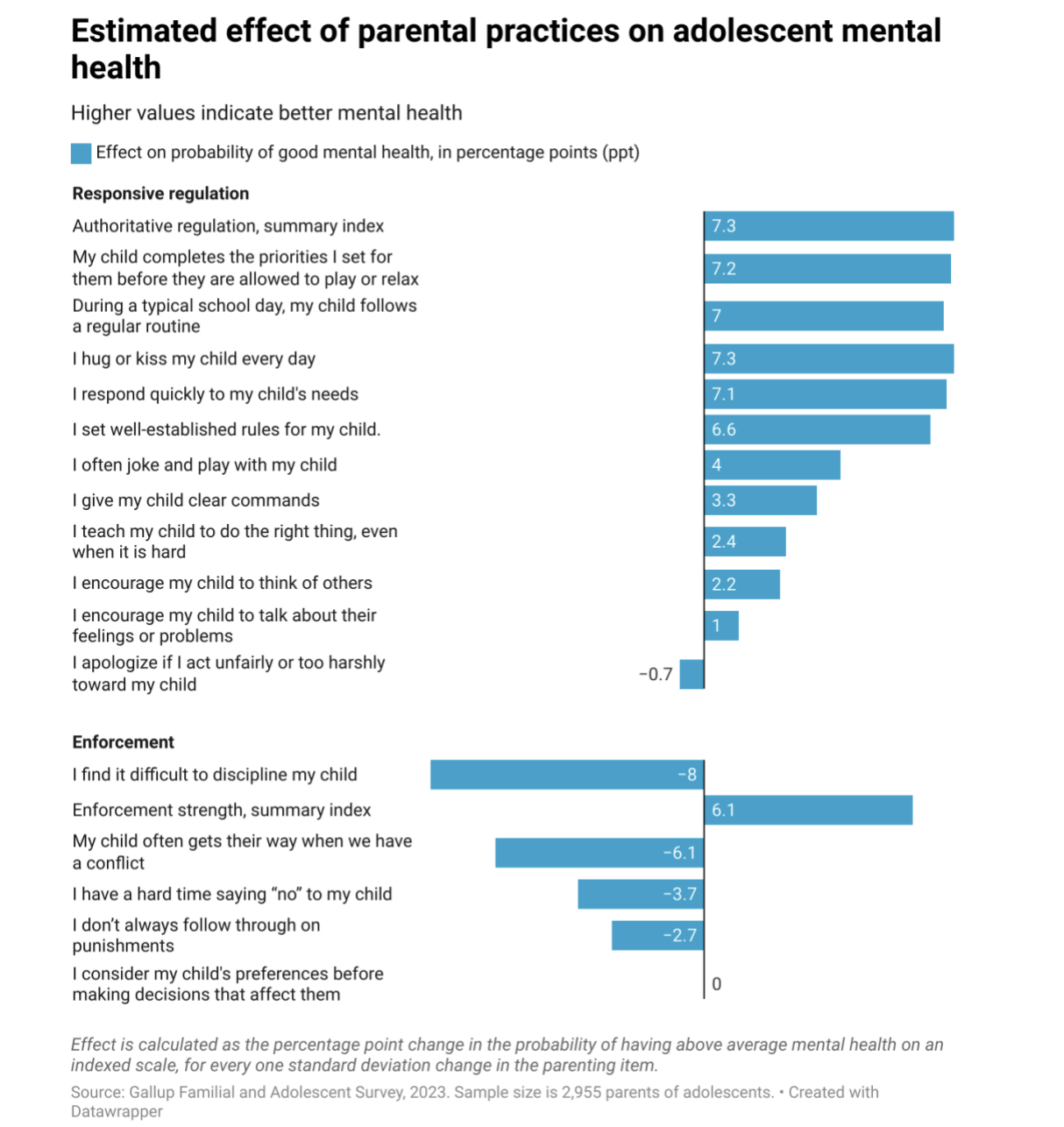
The most powerful parenting practices identified in the survey relate to regulation and enforcement. The percentage that an adolescent is in good mental health is 8 percentage points lower when the parents agree that they “find it “difficult to discipline their child. Likewise, the likelihood of having good mental health is 7.3 percentage points higher for adolescents of parents who agree that the child “must complete the priorities I set for them before they are allowed to play or relax.” Additionally, whether the child “follows a regular routine” during a typical school day has a large effect on mental health, and if the parent reports that the child gets his or her way in a conflict with the parent, it has a large deleterious association with mental health.
On the side of warm responsiveness, daily displays of affection and responding quickly to the child’s needs both predict better mental health. These practices increase the probability of good mental health by 7 percentage points each.
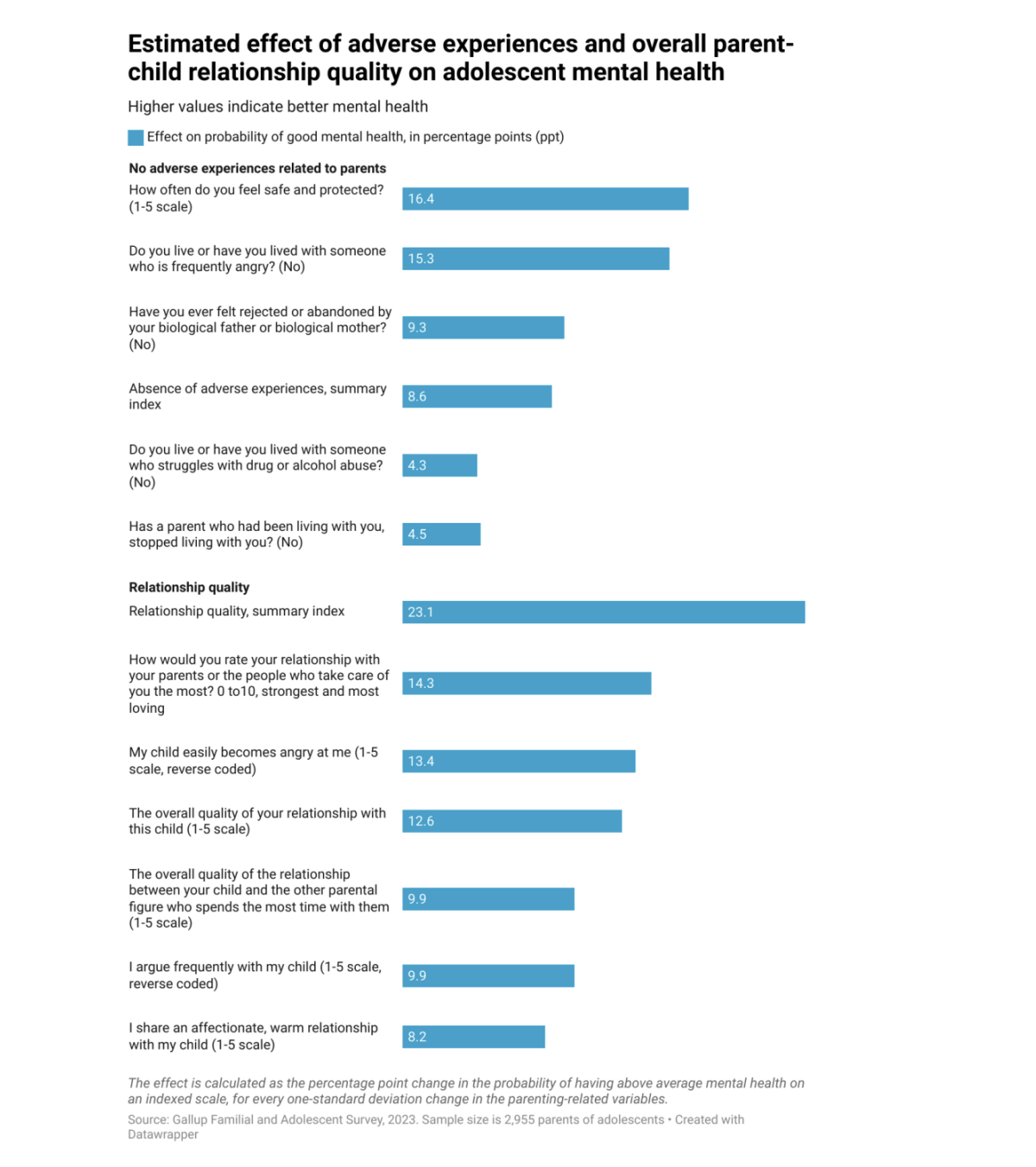
While parenting practices are important, most of their benefits come through enhancing the overall quality of the parent-child relationship, as Davoodi and I find using indices of parenting practices and child-parent relationships. In this figure, I present the item-specific results. I find that adolescents are 14 percentage points more likely to display good mental health for every standard deviation change (about 2 points on a 0-10 scale) in how they rate the overall relationship with their caretakers/parents. Parental reports of the relationship (on a 1-5 scale) show a similar effect (13 percentage points), as does the extent to which parents disagree with the statement (“My child easily becomes angry at me.”). Factor analysis shows that not feeling safe and living with someone who is frequently angry are more closely related to the overall relationship than they are to adverse experiences (such as living with someone who struggles with alcohol or drugs or losing a parent to death or abandonment). Combining the relevant survey items on the relationship yields a very large effect of 23 percentage points in the probability of achieving good mental health for every unit change in the relationship-quality index. Avoiding adverse experiences related to parents also has a large beneficial association with adolescent mental health (8.6 percentage points), but the overall quality of the relationship is the most powerful predictor.
The Characteristics of Effective Parents
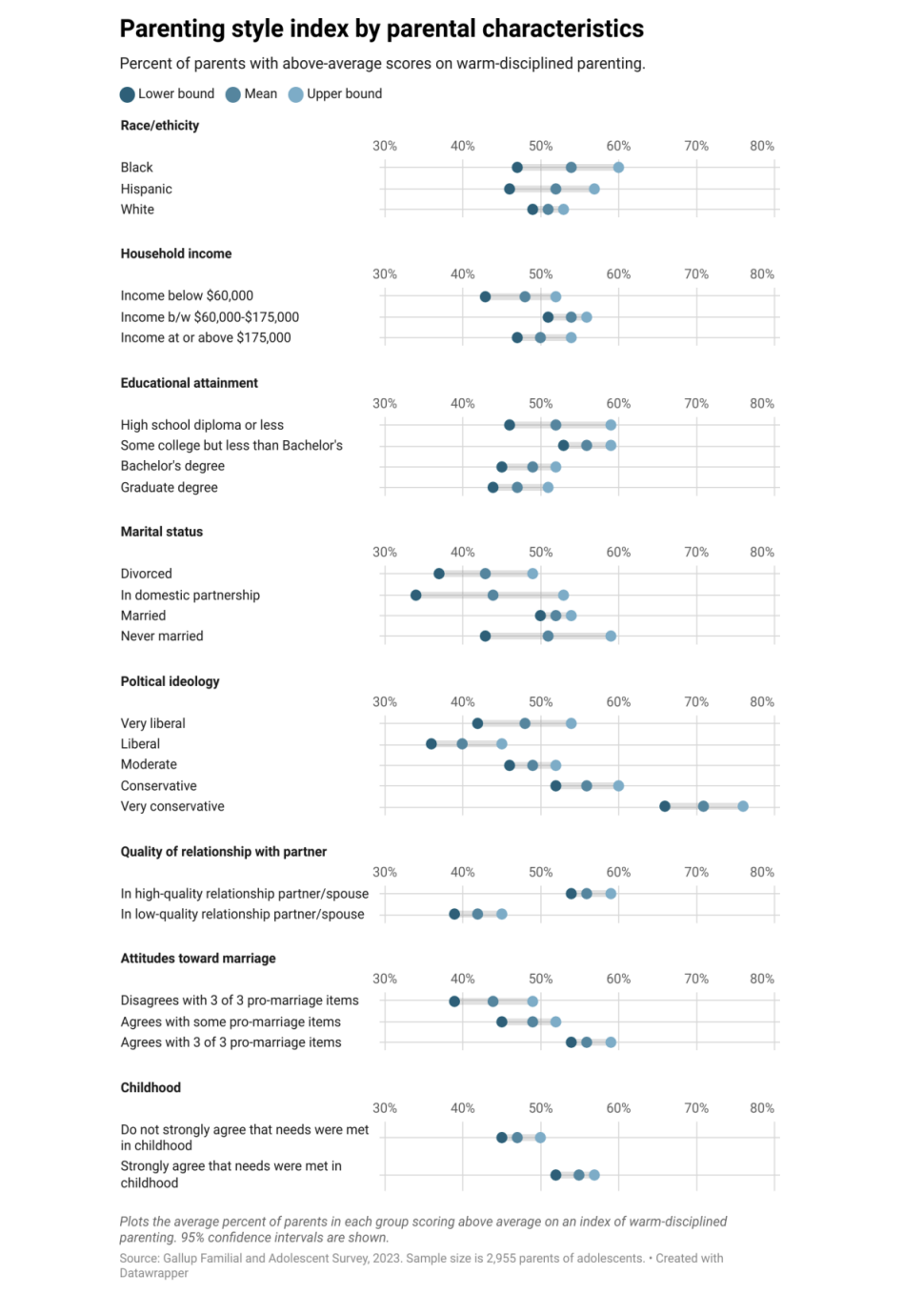
To begin, I examine how parenting practices relate to parent demographics using an index that measures parental responsiveness, as well as parental strength in regulating and disciplining their children. I classify parents as adopting these practices if they score above average on the index.
Notably, basic demographics explain almost none of the variation in parenting style: race, ethnicity, household income, education, and the sex of the parent are mostly unrelated to parenting style. There were no significant differences between Black, Hispanic, and White parents. Married scored higher than other parents, but the differences are only significant in comparison to divorced parents and the gap is small.
Nevertheless, some clear patterns emerged looking at attitudinal data. Most importantly, parents in high quality relationships with their spouse/partner are more likely to adopt best practices than those in lower quality relationships. Parents who rate the relationship with their spouse as an 8 out of 10 or better score approximately 14 percentage points more likely to adopt best-practice parenting strategies than parents who rate their spousal relationship below an 8.
Parental political ideology is another strong predictor of parenting style.1 Liberal parents had the lowest scores, meaning they were the least likely to endorse items indicating warm, disciplined parenting. Just 40% of liberal parents scored above average on the index, whereas 71% of very conservative parents and 56% of conservative parents did. Very liberal parents score roughly the same as moderate parents (48% and 49%, respectively). Disciplinary action shows the largest political divide. For example, 80% of very conservative parents disagreed with the statement “my child often gets their way when we have a conflict” compared to 66% of conservative parents, 64% of moderate parents, 53% of liberal parents, and 55% of very liberal parents. Very conservative parents are also somewhat more likely to report giving their child hugs and kisses every day. Generally speaking, political conservatism is associated with more responsive and discipline-oriented parenting, or what the child development literature would characterize as an “authoritative” style, in contrast to permissive or authoritarian styles. This relationship between conservativism and parenting remains significant even after controlling for an extensive list of parental demographic and socio-economic measures.
Two other significant factors emerge in predicting parenting style. Parents who report a better childhood—characterized by having their needs met more consistently—are more likely to engage in best-practice parenting. This relationship has been established in the developmental psychology literature. As in that research, I find that much of the negative effects of being raised in adverse circumstances can be offset by a strong relationship with one’s spouse/partner.
Finally, parent attitudes toward marriage also partly explain their parenting practices. Specifically, parents holding more pro-marriage attitudes are more likely to engage in bestpractice parenting. This was measured through level of agreement/disagreement with three items:
- Marriage improves partnerships by strengthening the commitment to one another.
- I hope my child marries someone, when the time is right.
- Marriage is an outdated institution. (Reverse coded)
Those agreeing with the top two items and disagreeing with the third demonstrate a strong pro-marriage attitude, and they are significantly more likely to employ responsivedisciplined parenting practices compared to parents who do not hold these views. The promarriage effect on parenting practices does not depend on the current marital status or political ideology of the parent, but it does seem to work largely through improving the quality of the spousal relationship.
How Relationship Quality Varies by Parental Characteristics
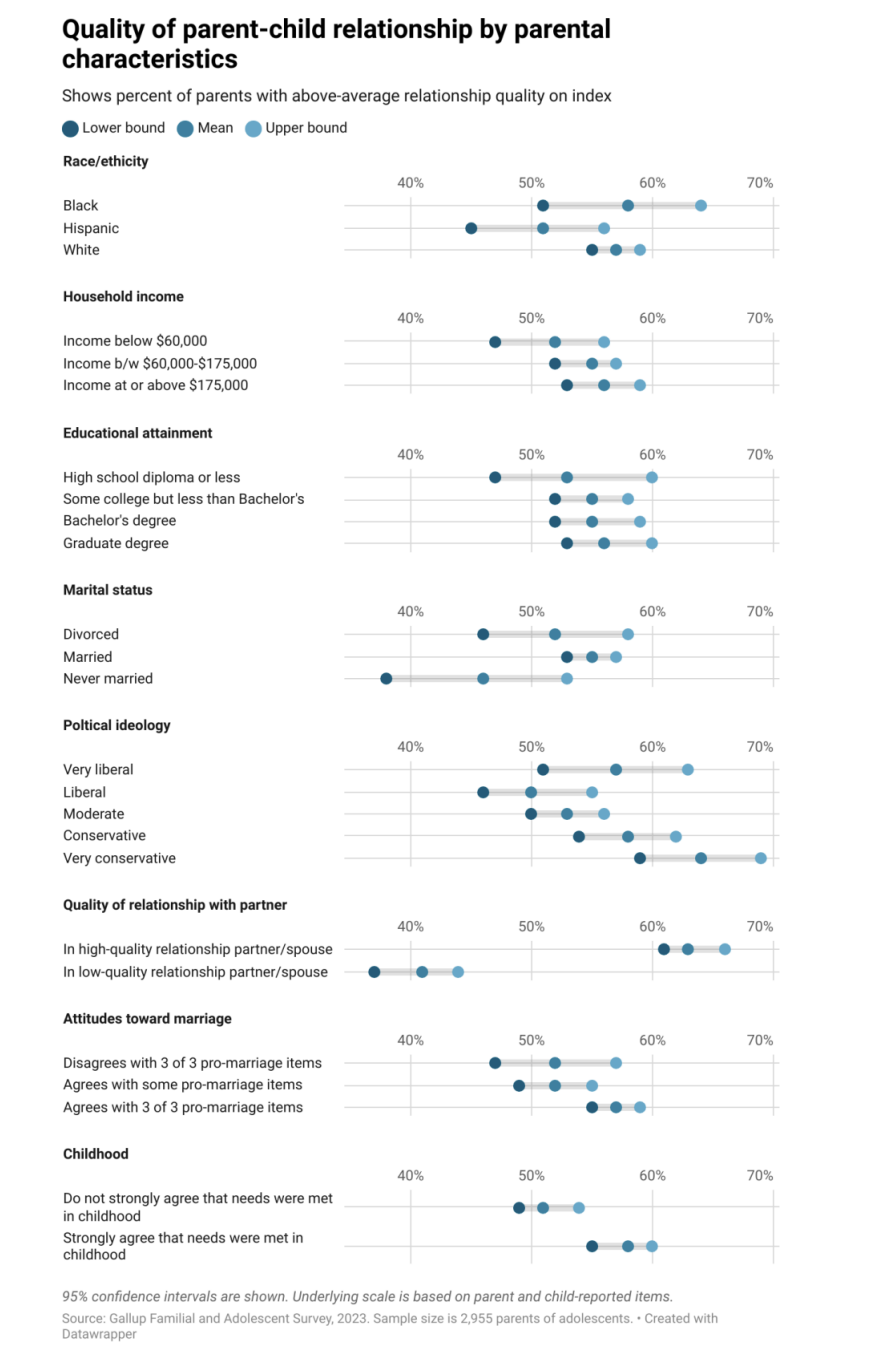
Turning to the overall quality of the parent-child relationship—as measured by an index of several survey items—we see very similar patterns to the parenting practices results. The summary data by socio-economic status and other core parental demographics reveal no significant differences. Neither parental income nor education afford higher quality relationships with children. Middle-income households have slightly better relationships with their children than affluent households, but the difference is not large enough to be significant. Married parents have the best relationships with their children, but the differences are not large and consistent enough to be statistically significant.
The single strongest predictor of child-parent relationship quality is parent-partner relationship quality. A parent who rates his or her spousal relationship as an 8 out of 10 is 23 percentage points more likely to be in a good (above average) relationship with his or her adolescent child, compared to a parent experiencing romantic discord. It is unclear what the causal relationship is in this case. A poor relationship with a child may cause marital tension and conflict. Structured, disciplined parenting likely reduces conflicts with children and reduces conflicts over how to manage children. If two parents agree on a routine structure for their children, their day-to-day interactions are spared from countless negotiations, each of which could trigger conflict. On the other hand, there could be underlying personality traits or psychological tendencies in parents that cause them to struggle in relationships with both their spouse and child.
As with parenting practices, political ideology and attitudes toward marriage are also strongly predictive of parent-child relationships. Very conservative parents, on average, enjoy the strongest relationships with their adolescent children, and liberals experience the worst. The difference is large and statistically significant at 95% confidence levels. Conservative parents are 8 percentage points more likely to be in a good relationship with their adolescent child than liberal parents, and the gap is 14 percentage points between very conservative and liberal parents. Interestingly, however, “very liberal” parents score much higher than liberal parents, only slightly behind conservatives, with no significant difference. Still, the relationship quality gap favors conservative over liberal parents whether it is self-reported or reported by the child.
Parents with pro-marriage attitudes who agree that marriage is an outdated institution score significantly below those who disagree with the statement. Other pro-marriage attitudes are moderately predictive of better parent-child relationships, as well.
Adversity in Teens’ Lives and Parental Characteristics
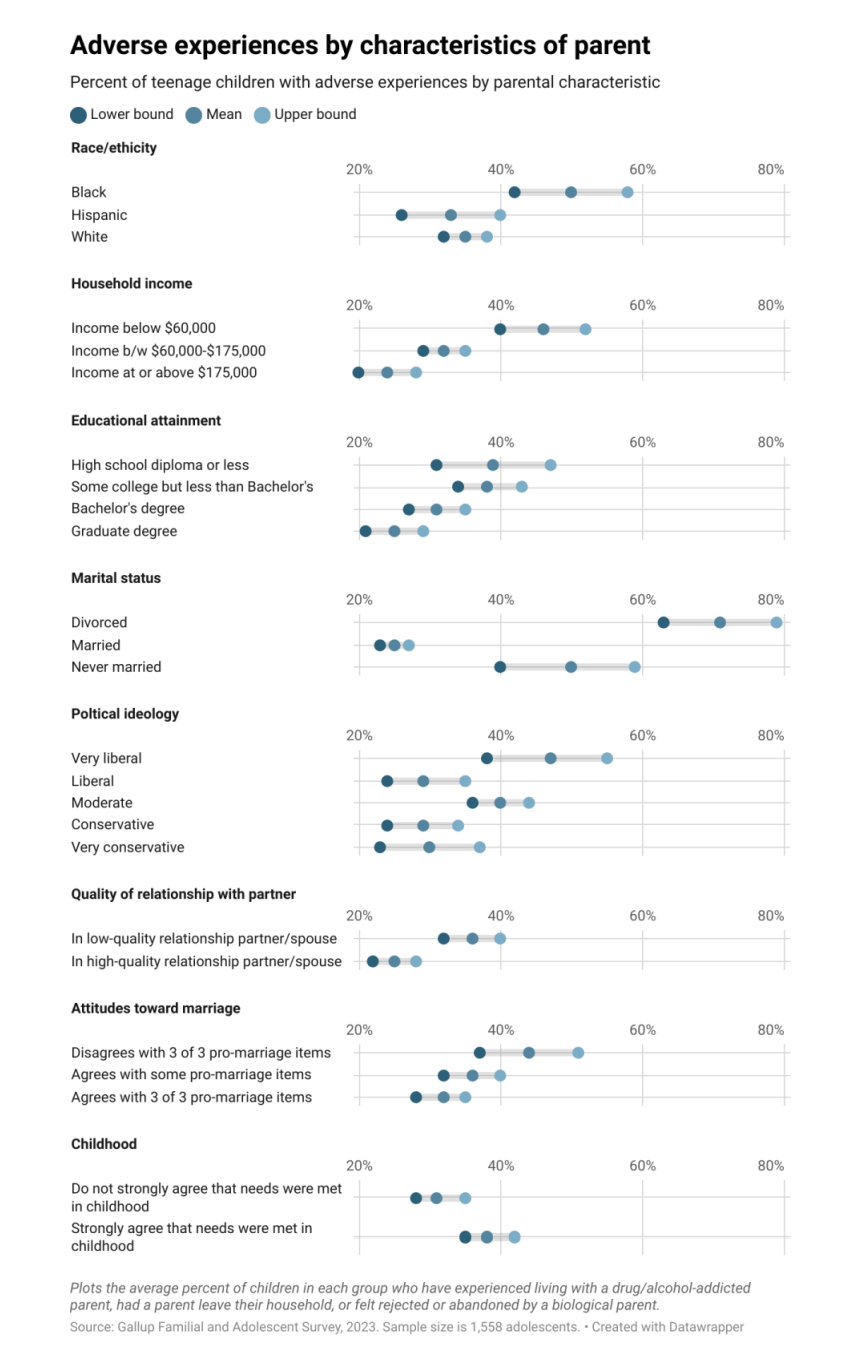
While much of the parent-child relationship can be influenced by parenting practices and investments—including time spent doing activities with the child—some things are out of any one parent’s control. These include unforeseen events, accidents, or deteriorating relationships with co-parents or other important figures in the child’s life. We asked adolescent children if a parent who had been living with them, stopped living with them; if they ever felt rejected or abandoned by a biological father or mother; or whether they ever lived with someone who abused drugs or alcohol. When combined, 35% of teens experienced at least one of these.
Unlike the previous items, these responses did vary according to socio-economic status and basic demographic characteristics. To respond to the survey, the parent had to be living at least part time with the child. More affluent parents were also much more likely to shelter their children from these adverse experiences, as were parents with higher education levels. Black adolescents were approximately 15 percentage points more likely than White adolescents and 17 percentage points more likely than Hispanic adolescents to report one of these adverse experiences.
Since divorce may initiate one parent giving up custody, it is not surprising that divorce is strongly associated with more adverse experiences. More surprisingly, adolescents living with a parent who never married also report more adverse experiences, despite never having gone through divorce. Stable marriage, therefore, shelters children from often painful experiences that are independently related to their mental health, apart from the overall parent-child relationship and parenting practices.2
Political ideology, parental childhood experiences, and attitudes toward marriage are relatively unimportant in offering protection against this list of adverse experiences, which is certainly not exhaustive. Yet, children report fewer adverse experiences when spousal relationship quality is high compared to when it is low.
Discussion
Decades of compelling research on the links between parenting and mental health have nonetheless been largely ignored by the major institutions charged with promoting mental health in the United States. One reason may be that the public health organizations like the CDC and American Academy of Pediatrics have increasingly focused on timely partisan issues ranging from COVID-19 policies to the desirability of medical interventions for youth with mental health problems. These issues allow the organizations to exercise cultural influence, but they are reactive and not built on a strong scientific foundation.
As it happens, being raised by liberal parents is a much larger risk factor for mental health problems in adolescence than being raised in a low-income household with parents who did not attend college. Children of conservative parents score significantly better on mental health using either a comprehensive measure of mental health based on several items, or just asking either parent or adolescents to summarize their mental health on a 1-5 scale. The gap is large.
Adolescents with very conservative parents are 16 to 17 percentage points more likely to be in good or excellent mental health compared to their peers with very liberal parents. Only 55% of adolescents of liberal parents reported good or excellent mental health compared to 77% of those with conservative or very conservative parents. This has largely gone unnoticed, but noted social psychologist Jonathan Haidt has described a similar pattern, using several sources.
Mental health problems in early adolescence predict mental health problems in adulthood, with wide-ranging implications for individuals, families, communities, and society. One’s capacity for developing and maintaining relationships and participating productively and competently in social affairs through paid or unpaid work depend upon mental health, and, as confirmed in the Gallup data presented here, parents with unpleasant childhoods are at greater risk of having more difficult relationships as adults. Finally, mental well-being is an end-in-itself, not merely a means to achieve some higher order goal.
Yet, while acknowledging a crisis, our national public health leaders have largely aimed to redress the issue with medicalization and scarcely mention family-centered or individual psychotherapy that could focus on healing or strengthening relationships. The work of distinguished scholars of human development, such as Eleanor Maccoby, John Bowlby, and Diana Baumrind and their peers, seems to have been forgotten at institutional levels, despite hundreds of empirical studies from around the world affirming their basic theoretical predictions. No organization—public or private—has created a database dedicated to child or adolescent psychology.
It could be argued that we know as much about the traits of high-quality parenting as we do about the ingredients of a high-quality diet. Yet, while few parents would consider a bowl of candy to be an adequate dinner for their developing child, many allow their adolescents to spend hours every day watching Tik Tok and YouTube videos.
The nation’s mental health leaders need to resist the temptation to be hip to the latest cultural fads and recommit to translating useful scientific research to the public. That means being honest about the youth mental health crisis: It is largely about parenting.
Endnotes:
1. In the sample, 19% of parents identified as liberal compared to 9% for very liberal parents; similarly, 10% identified as very conservative and 21% as conservative.
2. Children living with a biological parent also score much better than children who are not on these measures. These results were not shown to save space.
About the Author:
Jonathan Rothwell is the principal economist at Gallup and a nonresident senior fellow at The Brookings Institution
ABOUT THE INSTITUTE FOR FAMILY STUDIES:
The Institute for Family Studies is an independent, non-partisan organization whose mission is to strengthen marriage and family life and advance the well-being of children through research and public education.
ABOUT GALLUP
Gallup delivers analytics and advice to help leaders and organizations solve their most pressing problems. Combining more than 80 years of experience with its global reach, Gallup knows more about the attitudes and behaviors of employees, customers, students, and citizens than any other organization in the world.


